
Vandaag of morgen in huis

Kwaliteit gegarandeerd

Welkomstaanbiedingen ontgrendelen: GRATIS bezorging | Tot 80% korting | Gratis 30 dagen JoyPlus-proefperiode
Download de app
Buying a mango drink might seem straightforward, until you start comparing labels. One bottle is a fruit drink with mango purée, while another is a fizzy soft drink made mostly of water, sugar and flavouring. The sizes vary too: from a small bottle for on the go to a tray for the whole household.
With these practical selection points, you’ll quickly see what you’re actually buying and avoid disappointment over taste, ingredients or size.
The front of the pack often shows a large mango, but the actual mango content on the label can be limited. A sparkling mango drink, for example, contains carbonated water, sugar, mango purée and flavouring. With a fruit drink, the percentage of mango purée is usually much higher.
So always check:
A product with no added sugar can still contain naturally occurring sugars from fruit. Other drinks use sweeteners such as sucralose, acesulfame K, steviol glycosides or aspartame. These give a different taste profile compared to a mango soft drink with sugar.
Compare the nutritional values per 100 ml, not just per bottle or can. That way, you can fairly compare a 330 ml can with a 1 litre bottle.
A tray is handy for a family, party or store cupboard, but less suitable if you want to try a flavour first. Small bottles and cans are easier to take with you and can be drunk quickly when chilled. Also pay attention to the shelf life, storage space and the instruction to keep an opened pack refrigerated.
First, decide which kind of tropical drink you’re after:
For fruit drinks, look at the fruit percentage. Rubicon Still Mango Deluxe states 19% mango purée, while Maaza Mango Drink states 17% mango purée. These are verifiable differences that tell you more than a general claim about a “rich tropical taste”.
The ingredients list is in descending order by quantity. If sugar appears near the top, it makes up a significant part of the drink. For a product with sweeteners, you’ll see them listed on the label, even when the energy value is lower.
Examples from the range:
Use these figures as comparison points, not as health advice. The nutritional values and ingredients on the packaging are what matter.
For home use or with a meal, a 1 litre pack is practical. A 330 ml can or bottle fits better in a lunch, picnic or bag. If you want to stock up, check whether the tray consists of individual units and how much total drink you’re actually getting.
Also consider carbonation. A fizzy drink is best drunk straight after opening for the desired sparkle. A still mango fruit drink is more flexible for breakfast, lunch or use in a smoothie. Once opened, drinks usually need to be kept refrigerated according to the product information.
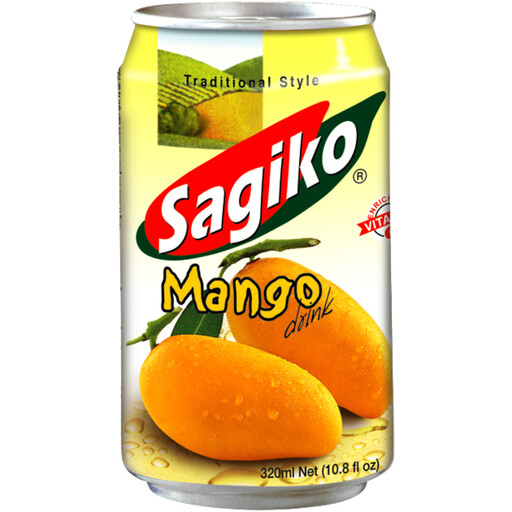
Why this fits the profile: A compact bottle to try an Asian mango drink first without buying a large pack straight away.
The size limits waste if the flavour isn’t quite right. The nutritional information and ingredients are clearly listed with the product.
320 ml content; 43.75 kcal and 11.9 g sugar per 100 ml according to the product information; none of the 14 major EU allergens listed.
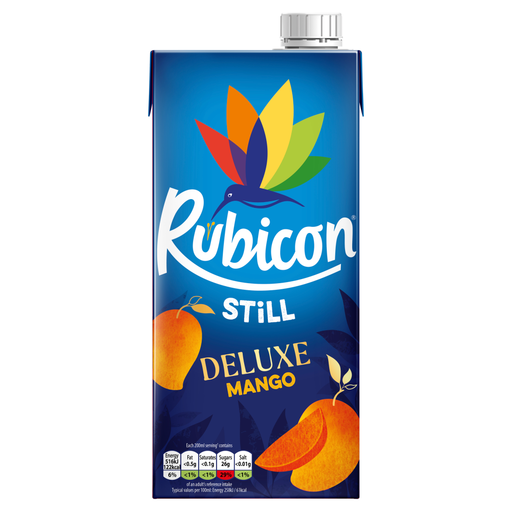
Why this fits the profile: Ideal for anyone looking for a still mango drink with a clearly stated mango purée percentage for home use.
The label states 19% mango purée, so you can judge the fruit content more accurately than by the front of the pack alone.
1 litre content; 19% mango purée; 61 kcal per 100 ml according to the stated nutritional information.

Why this fits the profile: A tray for households, the office or regular consumption where individual cans are convenient.
The product description states both the mango content and the total quantity. This makes it easier to compare the tray against individual bottles.
12 cans of 330 ml; according to the product description, 30% mango juice; 17 kcal per 100 ml and no added sugar.
We’ve put together a full, up-to-date list of products that fully meet these strict selection criteria and comply with current European safety regulations.
Mango juice consists of juice or purée from mango, possibly diluted with water. A mango fruit drink may also contain other fruit juices, sugar, sweeteners, acids and flavourings. Always check the fruit percentage and the full ingredients list.
For a party, trays with individual cans or bottles are practical. A product like Iam Superjuice Mango Drink contains 12 packs of 330 ml. If you want fizz, look at a sparkling option such as Rubicon Sparkling Mango. For a larger group, a 1-litre bottle is often more convenient with a meal.
Keep an opened mango drink refrigerated and seal the bottle or pack tightly. For fizzy drinks, the carbonation decreases after opening. Always check the packaging for the exact storage time, and don’t use any product where the seal is damaged at the time of purchase.
