
Vandaag of morgen in huis

Kwaliteit gegarandeerd

Welkomstaanbiedingen ontgrendelen: GRATIS bezorging | Tot 80% korting | Gratis 30 dagen JoyPlus-proefperiode
Download de app
A konjac jelly might look like a simple snack at first glance: fruity flavour, soft texture and often low in calories. But products vary widely in ingredients, portion size, sugar content and packaging. If you only look out for words like “light”, “vegan” or “keto”, you could end up buying a product that doesn’t suit your diet at all.
In this guide, you’ll learn what to look for when you buy konjac jelly, which varieties suit different needs, and what product information you should always check on the label.
A jelly can be low in calories yet still contain sugar, glucose syrup or fruit juice concentrate. For example, the Japanese Shimonita Konjac Jelly Mango lists sugar and glucose syrup as ingredients. According to the product information, its nutritional value is 100 kcal per 100g. That makes this snack quite different from a completely sugar-free option.
So don’t just look at the front of the packet. Always check:
Terms like “with collagen” or “with vitamin C” describe the composition, but they’re not a reason to assume medical or health benefits. According to the product information from Hethstia, some varieties contain collagen peptides and vitamin C. That only tells you what has been added to the product; it doesn’t replace a balanced diet.
“Vegan collagen” also needs extra attention. Delief’s ingredient list mentions plant-based collagen from carrot. If you follow a strict vegan diet, always check the full ingredient list and allergen information.
Konjac jelly has an elastic, soft or slightly chewy texture. That’s part of the snacking experience, but it’s not the same as a regular drink or yoghurt. Eat the jelly slowly and follow the usage instructions on the packet. Don’t give products with a firm jelly texture to young children without supervision. Also check whether you’re buying individual squeeze pouches, single portions or a multipack.
For a low-calorie snack, keto snack or low-carb diet, the nutritional values are decisive. Hethstia varieties, for example, state around 3 to 7 kcal per 100g or per portion, depending on the product. Delief Mango states 4 kcal per 100g, with 0.8g carbohydrates and 0g sugar per 100g.
Pay attention to the unit of measurement. “7 kcal per pouch” is not automatically comparable to “7 kcal per 100g”. A pouch of 150g or 155g may have a different total energy value than the table suggests.
If you’re looking for a sugar-free jelly, vegan konjac jelly or gluten-free snack, it’s worth checking these points individually:
“Fruit jelly snack” doesn’t always mean there’s a lot of real fruit in it. Some products combine a small percentage of fruit concentrate with flavouring. The ingredient list will tell you more than the product image.
A Japanese konjac jelly like Shimonita has a different portion format to a Korean squeeze variety. According to the product information, Jelly B and Delief products are made in South Korea; various Hethstia products list China or another country of origin. Origin isn’t a guarantee of quality, but it does help when comparing style, packaging and flavour.
Store unopened products according to the label in a cool, dry place. Some squeeze pouches need to be refrigerated after opening and consumed within one or two days. Always check the best-before date and don’t use any packaging that is damaged.
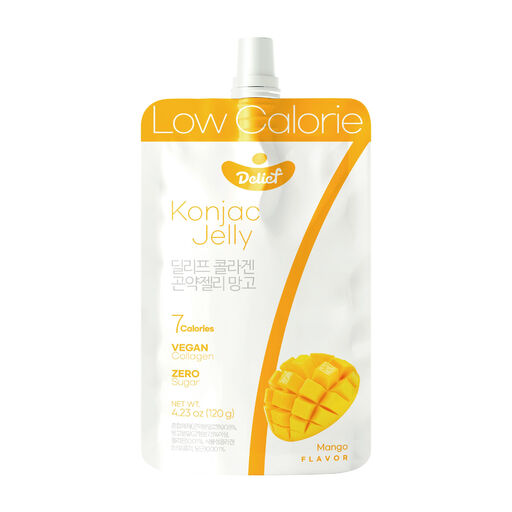
Why this fits the profile: A straightforward mango option for anyone trying a vegan konjac jelly for the first time and wanting to compare nutritional values easily.
The product information states 4 kcal, 0.8g carbohydrates and 0g sugar per 100g. Check the actual packaging to confirm.
120g, mango flavour, plant-based ingredients according to the product list, and made in South Korea.
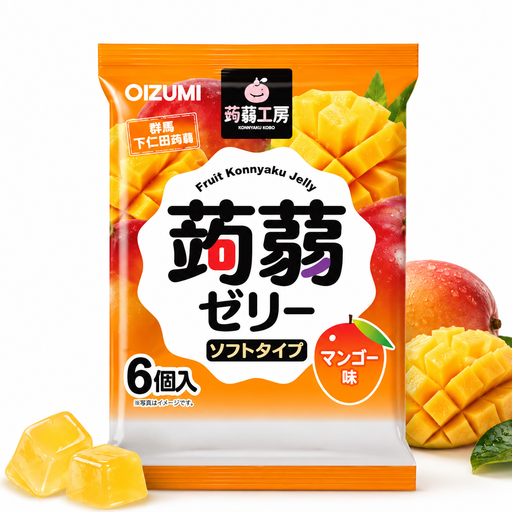
Why this fits the profile: For fans of Japanese konjac jelly who care most about origin, portion size and a recognisable fruity taste.
The product description clearly lists sugar and glucose syrup. This means you can consciously distinguish this variety from a sugar-free jelly.
Japanese origin according to the product information, 106g and 0g fat and protein per 100g.
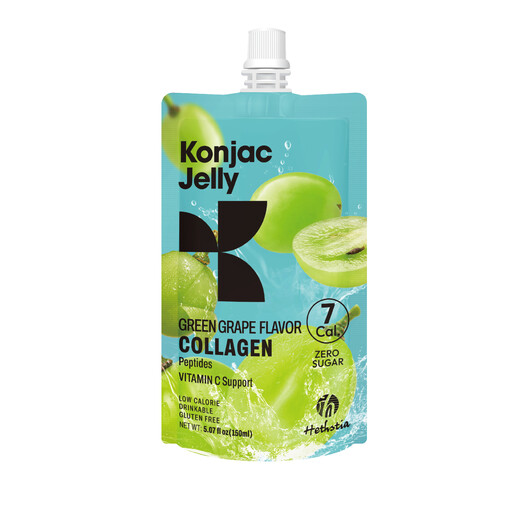
Why this fits the profile: The individual squeeze pouch is practical for work, travel, school or a snack after an activity.
The product information states 7 kcal per portion, 0g sugar and 0g fat. The ingredient list does mention collagen peptides, so this is not automatically vegan.
155g, green grape flavour, squeeze pouch and mention of vitamin C and collagen peptides in the ingredient list.
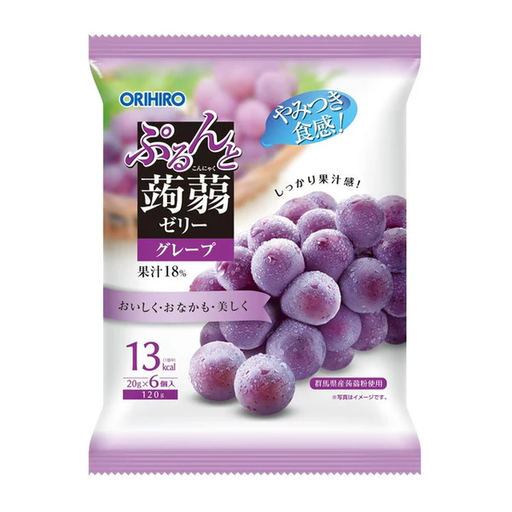
Why this fits the profile: Six individually wrapped portions are handy for lunchboxes, on the go, or when you want to plan several snacking moments.
The product information states 6 individual pieces and 7 kcal per 100g. Sugar is also listed in the ingredients, so compare it with your own dietary goals.
Japanese snack style, grape flavour, six individually wrapped portions and 120g total weight.
We’ve put together a full, up-to-date list of products that fully meet these strict selection criteria and comply with current European safety regulations.
No. Some products use sugar, glucose syrup or fruit juice. Other varieties use erythritol and other sweeteners. So always check the ingredient list and the nutritional information table. A Japanese konjac jelly with grape, for example, may contain sugar, while another konjac jelly with vitamin C is described as sugar-free.
Follow the instructions on the packet. Different squeeze pouches need to be refrigerated after opening and used within one or two days. Unopened jelly should generally be stored in a cool, dry place away from direct sunlight. Don’t use a pouch with damaged packaging.
That depends on your preference. Konjac jelly mango and peach are usually soft, sweet choices. Konjac jelly grape and lychee have a fresher fruit taste. If you fancy something sour, try passion fruit. It’s best to compare several individual flavours or choose a set, so you don’t end up with a large stock of just one flavour.
