
Vandaag of morgen in huis

Kwaliteit gegarandeerd

Welkomstaanbiedingen ontgrendelen: GRATIS bezorging | Tot 80% korting | Gratis 30 dagen JoyPlus-proefperiode
Download de app
A pouch of konjac jelly looks simple at first glance: open, squeeze and eat. However, these Asian snacks vary considerably in their ingredients, nutritional values, portion sizes and ease of use. If you only pay attention to words such as “light”, “fruit” or “vegan”, you could end up buying a product that does not suit your preferred eating habits.
This buying guide helps you buy konjac jelly based on verifiable information. You will discover what to look for in a drinkable jelly, how sugar-free varieties compare with fruit jelly, and which formats are convenient for home, on the go or sharing with the family.
The label may state 0 grams of sugar even though erythritol, sucralose, acesulfame-K or steviol glycosides have been added. This is not a problem if you are specifically looking for a sugar-free jelly, but the taste and composition may differ from jelly made with fruit juice and sugar.
So always check:
A lychee, mango or watermelon flavour may come from flavouring, juice concentrate or a combination of the two. For example, Keumkang Jelly B Lychee lists lychee juice concentrate alongside natural lychee flavourings in the ingredients. Strong Konjac Jelly states a fruit content of at least 40%, but this variety also contains sugar and fructose-glucose syrup.
So if you are mainly looking for a fruity flavour, it is better to compare the stated fruit percentage and nutritional values rather than relying solely on the image on the packaging.
A konjac jelly multipack is useful if you regularly take a pouch to work, school or with you on the go. However, a large pack is less practical if you want to try different flavours first. Also pay attention to the difference between the total weight and the contents per portion:
First compare nutritional values per 100 grams or 100 millilitres. Then look at the actual contents of one pack. Jelly B Konjac Jelly Watermelon, for example, states 1.6 kcal per 100 ml. This means that a 150 ml pouch contains approximately 2.4 kcal based on the stated value.
Other products contain more. SHENG XIANG ZHEN White Peach Jelly contains 75 kcal per 100 g, including 13 grams of sugar. This is a fruit dessert, not a sugar-free konjac jelly. Both may suit different occasions, but they are not directly interchangeable if you are looking for a low-calorie snack.
Konjac powder or konjac gum provides the distinctive jelly texture. Other ingredients may include thickeners, food acids, calcium salts, flavourings and sweeteners.
For vegans, clear labelling is important. DELIEF Vegan Collagen Konjac Jelly Lychee states that it contains plant-based collagen and is labelled as vegan and halal. According to the product information, DELIEF’s mango and green grape varieties also contain a plant-based collagen-like ingredient.
If you have allergies, check not only the allergen declaration but also the warning about the production site. DELIEF’s mango variety states that the factory also handles milk, eggs, fish, crustaceans, tree nuts and peanuts.
A pouch is convenient for taking with you, but check the usage instructions. Some products must be refrigerated after opening and consumed quickly. Others can be stored unopened outside the fridge in a cool, dry place.
Drinkable jelly has a soft, syrupy texture. Eat slowly and follow the instructions on the packaging. Do not give jelly cups or pouches to young children without supervision; their shape and texture may pose a choking hazard if used incorrectly.
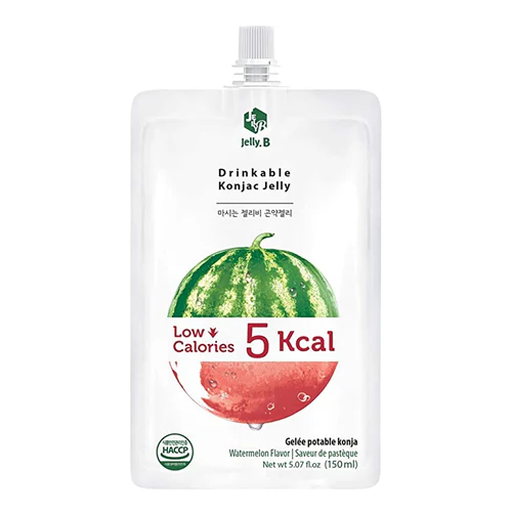
Why it suits this profile: A single pouch is a practical way to try a flavour without buying a multipack straight away. It contains 150 ml, and the watermelon flavour is ideal for anyone looking for a sweet, refreshing drinkable jelly.
The product information lists the contents, storage instructions and nutritional values separately. At 1.6 kcal and 0 grams of sugar per 100 ml, you can easily calculate the amount for your portion.
150 ml per pouch, no declared allergens and storage away from direct sunlight. The ingredients list includes konjac powder and watermelon concentrate.
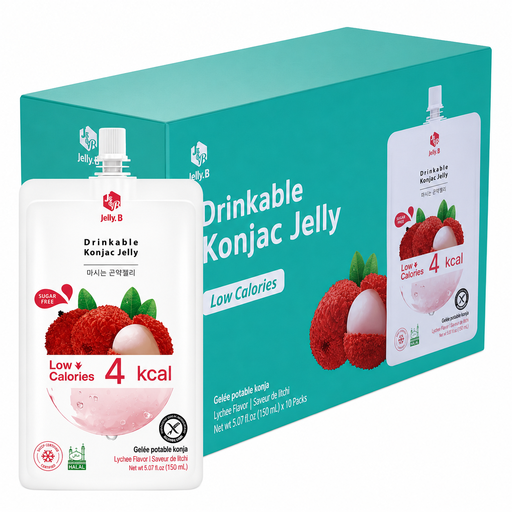
Why it suits this profile: If you want a reliable supply for home or the office, this multipack provides ten 150 ml portions with lychee flavour.
The nutritional information states 3 kcal, 0 grams of carbohydrates and 0 grams of sugar per 100 grams. The ingredients do include several sweeteners, so the term sugar-free remains clear in the correct context.
Ten individual pouches, 150 ml each, and a stated energy value of 3 kcal per 100 grams. The product comes from South Korea.
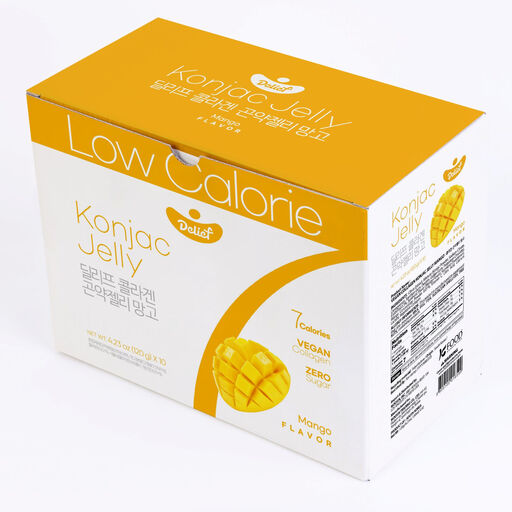
Why it suits this profile: This option is aimed at consumers looking for a vegan konjac jelly in portion-sized pouches for regular use and taking with them on the go.
The description states 5 kcal per 100 grams and 0 grams of sugar. However, check the allergen warning concerning the production site and refrigerate an opened pouch.
Ten 120 g pouches, mango flavour, vitamin C and a plant-based collagen-like peptide according to the product information.
We have put together a complete, up-to-date list of products that fully meet these strict selection criteria and the applicable European safety regulations.
It depends on the recipe. Products containing erythritol and sweeteners may contain around 1.6 to 5 kcal per 100 grams according to the label. Fruit jelly with sugar may contain approximately 60 to 75 kcal per 100 grams. So compare both the nutritional value and the portion size.
Follow the instructions on the packaging. Many unopened pouches can be stored in a cool, dry place away from direct sunlight. An opened pouch may need to be refrigerated and consumed quickly, depending on the product. It is best not to use damaged packaging.
Not every variety is vegan. DELIEF states that several flavours contain a plant-based collagen-like ingredient and have vegan characteristics. Other jelly products may contain dairy ingredients, such as a yoghurt base. Always check the label rather than relying solely on the flavour name or product image.
