
Vandaag of morgen in huis

Kwaliteit gegarandeerd

Welkomstaanbiedingen ontgrendelen: GRATIS bezorging | Tot 80% korting | Gratis 30 dagen JoyPlus-proefperiode
Download de app
Konjac jelly is popular among fans of Japanese and Korean snacks, people watching their calorie or sugar intake, and shoppers looking for a convenient on-the-go treat. However, not all pouches and puddings are the same. If you only look at the front of the packaging, you could end up buying a product that doesn’t suit your diet, the texture you’re after, or when you plan to eat it.
The main pitfalls are easy to avoid:
If you’re looking for a sugar-free jelly, low-calorie snack or keto snack, you need to check the nutritional information per 100g and per portion. A product may be low in calories per pouch but still contain carbohydrates or sugars.
For example, the Hethstia varieties state around 3 to 7 kcal per 100g in the product description, depending on the flavour and the nutritional table used. The ingredients include erythritol, konjac flour and fruit concentrate. Always check the packaging for the most up-to-date information.
The Japanese Shimonita Konjac Kobo Mango lists 100 kcal per 100g in the product information, with ingredients such as sugar, glucose syrup, mango and konjac. This is therefore a different choice from an explicitly sugar-free konjac snack.
Konjac is usually combined with thickeners such as carrageenan, gellan gum or other gelling agents. Sweeteners, acidity regulators, colourings, vitamin C or collagen peptides may also have been added.
A claim like vegan jelly should be verified by checking the label. The Hethstia Blueberry is described as vegan and contains water, blueberry concentrate, erythritol, vitamin C, konjac powder and carrageenan. Other varieties with collagen peptides don’t automatically fit a vegan diet.
Also watch out for allergens. Some nata de coco puddings contain milk powder. The lychee and fruit puddings below are therefore not the same as a gluten-free or vegan jelly without further label checks.
A squeeze jelly in an individual pouch is practical for the office, while travelling or in your bag. The Hethstia products are ready to eat straight from the pack. Once opened, they should be kept refrigerated and consumed within the stated time, according to the product description.
A Japanese jelly in a solid pack may have a different texture and portion size. Nata de coco pudding is often supplied in linked cups of, for example, 80g each. These are handy for serving at home or chilled as a dessert, but less suitable as a snack you want to eat on the go without a spoon.
Extra care is needed with children and people who have difficulty swallowing. Jelly products can pose a choking hazard due to their smooth, elastic texture. Always follow the instructions on the packaging and only let young children eat them under supervision.
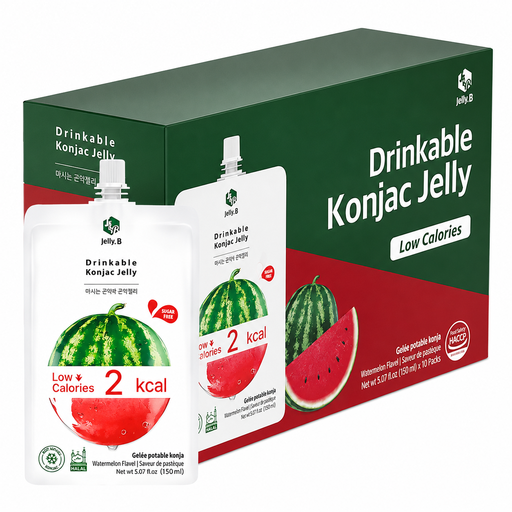
Why this fits the profile: The pack contains ten servings with watermelon flavour. That makes it easy to have multiple snacks on hand without mixing and matching individual products.
The nutritional information states 1.6 kcal and 0g sugar per 100g. Check the actual packaging before ordering.
Ten individual portions, 150ml per pack and a Korean origin according to the product data.
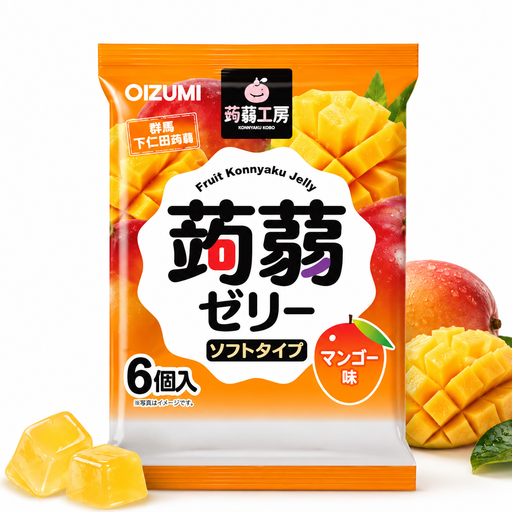
Why this fits the profile: This Japanese jelly is aimed at fans of a fruity mango flavour and a soft, slightly elastic texture.
The product information clearly states 100 kcal per 100g and 0g fat. The ingredients list does contain sugar and glucose syrup, so this is not a sugar-free choice.
Japanese origin according to the product description, 106g content and a recognisable mango flavour.
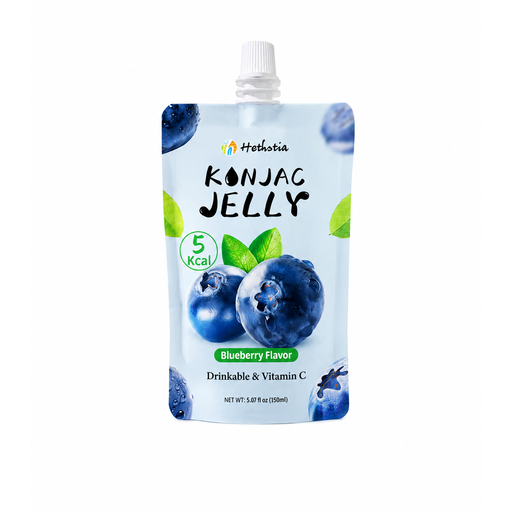
Why this fits the profile: The single-serve pouch is designed for use at the office, while travelling, at school or outdoors. The blueberry flavour offers variety alongside mango, lychee and peach.
The product page lists the nutritional values per pouch: 5 kcal, 1g sugar and 4g sugar alcohol. This makes it easier to judge the portion.
According to the product information, it is vegan, gluten-free and fat-free, with an individual pack size of 150ml.
We’ve put together a full, up-to-date list of products that fully meet these strict selection criteria and comply with current European safety regulations.
A nata de coco pudding has a different texture from konjac jelly. The coconut gel is usually cut into small cubes and combined with fruit flavour. The Assorted Nata de Coco Pudding of 480g typically consists of six 80g cups, according to the product information. The flavours may include mango, lychee, strawberry, orange and honeydew.
The Lychee Pudding Nata de Coco 480g contains 15g sugar per 100g and milk powder as an ingredient, according to the stated nutritional information. The Fruit Pudding Nata de Coco with Cubes 708g lists 85 kcal and 18g sugar per 100g. These products are therefore more suited to a sweet dessert than a sugar-free jelly or keto snack.
No. Some products use erythritol and state 0g sugar, while other varieties contain sugar, glucose syrup or fruit juice concentrate. Always read the ingredients list and nutritional information table.
Store unopened jelly according to the instructions on the packaging, usually in a cool, dry place away from direct sunlight. Once opened, a pouch often needs to be kept refrigerated and consumed within one to two days. The exact time varies by product.
That depends on the composition. Products that are low in carbohydrates and sugar-free may fit a keto diet, but sweeteners and nutritional values differ. Check the label and take your personal dietary plan into account.
