
Vandaag of morgen in huis

Kwaliteit gegarandeerd

Welkomstaanbiedingen ontgrendelen: GRATIS bezorging | Tot 80% korting | Gratis 30 dagen JoyPlus-proefperiode
Download de app
Konjac jelly is popular as a low-calorie snack, a Korean treat, or a handy jelly on the go. Its soft, elastic texture and fruit flavours like mango, peach, lychee and grape make it a snack unlike any ordinary sweet. However, not every pack is the same choice. If you only look for words like “sugar-free”, “vegan” or “low calorie”, you could end up buying a product that doesn’t quite fit your diet or when you plan to eat it.
A sugar-free jelly can contain sweeteners such as erythritol, sucralose or acesulfame-K. So always check the full nutritional information table. Don’t just look at “of which sugars”, but also at the total amount of carbohydrates and the serving size.
The differences within this category are clear. According to the product information, Jelly B Konjac Jelly Blueberry contains 10 kcal and 2 grams of sugar per 100 ml. Other varieties state 0 grams of sugar but use sweeteners. That could matter if you’re paying close attention to ingredients or have a particular taste preference.
A multipack may look appealing, but pay attention to the size per portion and the best-before date. A box of six 180g cups is mainly practical for home, the office, or sharing. A 120g to 155g pouch fits better in a bag or lunchbox.
Also check whether it’s one pouch, several individually wrapped portions, or a set of cups. Product images can sometimes show a box when the offer is for a single pouch. So read the product title and description before you buy konjac jelly.
These properties don’t automatically apply to all fruit jelly or drinkable jelly. Check the ingredients list, allergen information, and any certification. For Jelly B Konjac Jelly Mango, halal and gluten-free are stated in the product information. The blueberry variety mentions halal certification. For other products, only “no allergens” may be indicated, which isn’t the same as an official certification mark.
Also look out for words like “collagen”. Some products state they use plant-based collagen or collagen peptides. These are different descriptions. If you eat a vegan diet, it’s wise to check both the ingredients and the product claim together.
Compare products on the same basis. A 150ml pouch might contain 3, 7 or 10 kcal per 100 ml, while a fruit jelly with added sugar can provide significantly more carbohydrates. Look at:
The nutritional values on this page are based on the product information provided. Always check the label on arrival, as the composition and packaging can change.
A drinkable jelly in a squeeze pouch is ideal for on the go, school, work, or travel. You don’t need to bring a spoon, and a sealed pouch takes up little space. Cups with fruit pulp are better suited to home, a break at the office, or sharing with others.
A pouch must be intact. Don’t use a pack that is bloated, leaking, or damaged. After opening, follow the storage instructions; many products state that you should keep the jelly refrigerated and consume it within two days.
Konjac jelly has a soft, slightly elastic texture. Fruit jelly with pulp can feel fuller and more chewy. Popular flavours are mango konjac jelly, peach konjac jelly, lychee and grape. If you’re after a refreshing taste, look at blueberry, lychee or green grape. For a sweeter, tropical choice, mango is the obvious option.
Eat the jelly slowly and follow the usage instructions on the pack. Don’t let young children eat this type of snack unsupervised, because the elastic texture requires extra care when swallowing.
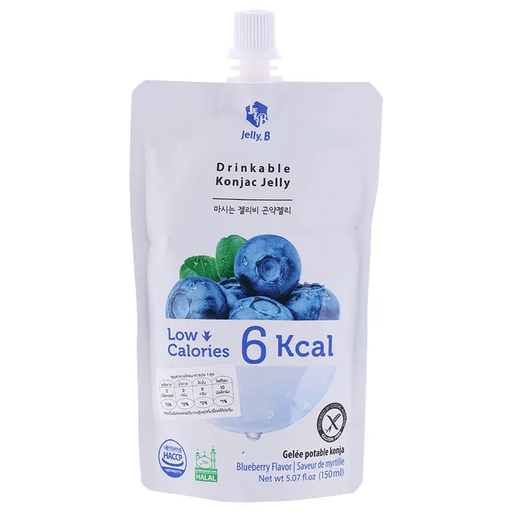
Why this fits the profile: A single 150ml pouch is an easy way to try konjac jelly without committing to a multipack straight away.
The portion and nutritional values are clearly stated. According to the product information, the pouch contains 10 kcal and is halal certified.
Blueberry flavour, 150 ml and a portable squeeze pack for work, school or on the go.
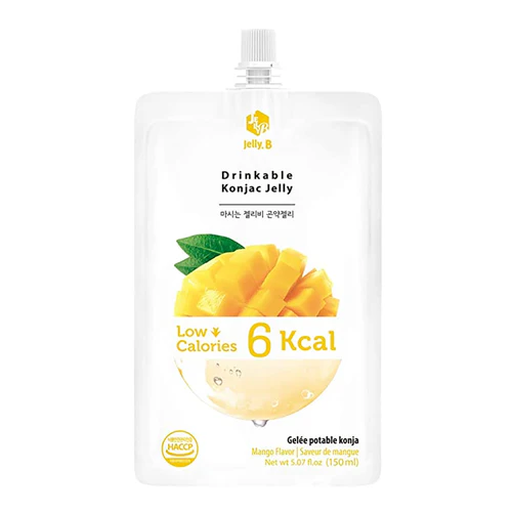
Why this fits the profile: This Korean konjac jelly combines a recognisable mango flavour with a compact portion and additional product information about halal and gluten-free.
The product information states 3 kcal per 100 ml, 0 grams of sugar, and a halal and gluten-free indication. Check the current label on delivery.
Mango flavour, 150 ml, produced in South Korea according to the product details.
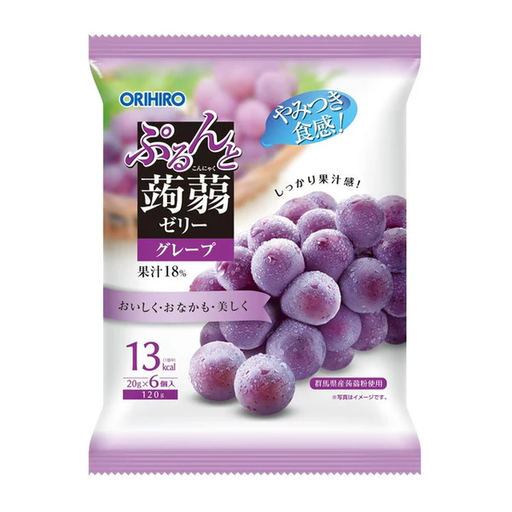
Why this fits the profile: Six individually wrapped portions are practical for lunchboxes, multiple workdays, or a stock at home.
The portions are individually wrapped, so you don’t have to store a large pack after opening. The product information states 7 kcal per 100 grams.
Six portions, grape flavour and a soft, chewy texture.
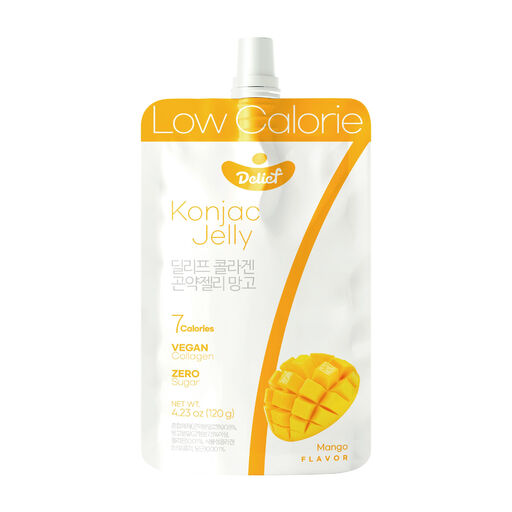
Why this fits the profile: The product name and ingredients list are aimed at a vegan konjac jelly with mango flavour and a small individual portion.
According to the product information, this variety contains 4 kcal and 0 grams of sugar per 100 grams. The ingredients list plant-based collagen from carrot.
Vegan indication, 120 grams and mango as a tropical fruit flavour.
We’ve put together a full, up-to-date list of products that fully meet these strict selection criteria and comply with current European safety regulations.
Many varieties are low in energy, but the exact amount varies by brand and flavour. The range includes products with, for example, 3, 4, 7 or 10 kcal per 100 ml or 100 grams. Fruit jelly with added sugar can be significantly higher. So always compare the nutritional information table.
Store unopened jelly according to the label, usually in a cool, dry place away from direct sunlight. After opening, some pouches need to be refrigerated and finished within two days. Throw the jelly away if the packaging is damaged or if the smell, colour or texture seems off.
Choose a product where the product information explicitly states this. For a vegan diet, check whether it contains animal ingredients such as milk, gelatine or collagen peptides. For a halal diet, look for halal certification or a clear halal claim. A product labelled “no allergens” is not automatically vegan or halal.
