
Vandaag of morgen in huis

Kwaliteit gegarandeerd

Welkomstaanbiedingen ontgrendelen: GRATIS bezorging | Tot 80% korting | Gratis 30 dagen JoyPlus-proefperiode
Download de app
If you want to buy konjac jelly, but you’re faced with lots of similar pouches, flavours and multipacks, it can be hard to quickly work out which one is right for you. A low calorie count, terms like “vegan” and a Korean-looking packet don’t automatically tell you everything about the ingredients, portion size or ease of use.
As Joybuy’s Product Recommendation Officer, I filter the most important information from product descriptions so you can compare marketing claims against verifiable specifications.
Some products list calories per 100 grams, others per pouch or serving. This makes comparisons confusing. A product with 5 kcal per 100 grams can have a different content to a drinkable jelly of 150 ml. So always check:
For example: Jelly B Konjac Jelly Peach 150ml states 10 kcal per serving, 2 grams of sugar and 5 grams of carbohydrates. The product description mentions natural pear flavours and pear juice concentrate, while “Peach” appears in the product name. If you’re specifically expecting peach, it’s a good idea to check the label and product page before you buy.
A mention on the packaging is not the same as a general guarantee for every dietary preference. Look at the ingredients list and allergen information for the specific product.
Not every konjac jelly with fruit is the same as a traditional gummy or fruit jelly. Konjac jelly usually has a soft, drinkable or smooth gel texture and is often sold in a squeeze pouch. Ordinary jelly sticks and gummies typically contain significantly more sugar.
For comparison: COZZO Fruit Jelly Sticks contain 104 kcal and 26 grams of sugar per 100 grams, according to the product information. That’s a different product type to a low-calorie drinkable jelly. Also pay attention to warnings on the packaging. Jelly products with a firm or elastic texture are not necessarily suitable for young children.
For occasional use, a single pouch of 120 grams or 150 ml is practical. You can try a flavour first without buying a large stock straight away. A konjac jelly multipack, such as 10 × 120 grams or 10 × 150 ml, is better suited to people who regularly take a snack to work, school or on the go.
So compare the price per pouch, not just per pack. A larger box is only good value if you actually like the flavour and the best-before date gives you enough time.
Many Korean konjac jelly products use erythritol, sucralose or acesulfame-K. Other varieties contain sugar or fruit juice concentrate. Don’t just look at the front of the packaging; also check:
For example, the Keumkang Jelly B Konjac Jelly Lychee states 3 kcal per 100 grams and 0 grams of carbohydrates in the nutritional information provided. The DELIEF Lychee variant states 4 kcal and 0.8 grams of carbohydrates per 100 grams. So the figures are not the same across every brand.
Konjac jelly often contains a combination of konjac powder and other gelling agents, such as carrageenan, gellan gum or xanthan gum. That’s normal for this product type, but it can affect the texture.
Also check the storage advice. Many varieties should be stored unopened in a cool, dry place away from direct sunlight. Once opened, you should follow the storage instructions on the packaging and consume the product quickly. Do not use a pouch with damaged packaging or a broken seal.
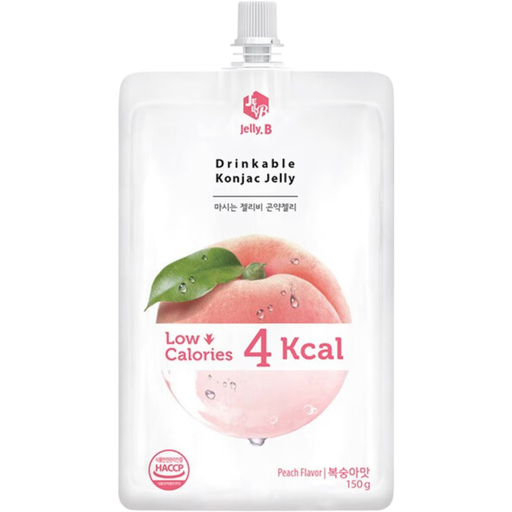
Why this fits the profile: The single 150 ml pouch is ideal if you want to try a drinkable jelly first without committing to a multipack.
The nutritional information states 10 kcal per serving, 2 grams of sugar and 5 grams of carbohydrates. Do check the flavour description on the label, as the name Peach and the description mentioning pear refer to different flavours.
150 ml per pouch, portable size and, according to the product information, free from the 14 major EU allergens.
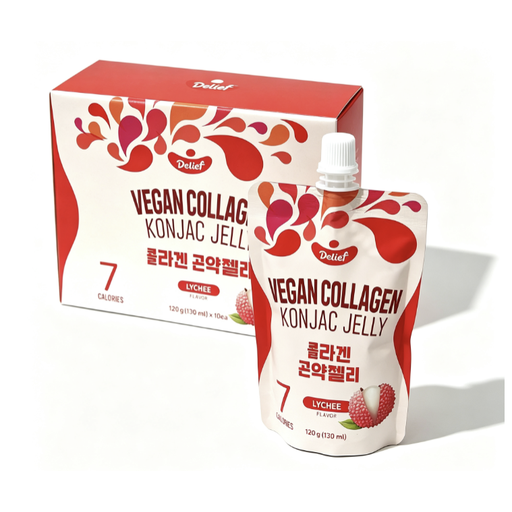
Why this fits the profile: This multipack suits shoppers who want a regular supply and are specifically looking for a vegan and halal-certified lychee option.
The product information explicitly states vegan and halal, plus an ingredients list with no declared allergens. Still check the current label upon delivery.
10 pouches of 120 grams, 4 kcal and 0 grams of sugar per 100 grams according to the product information; sourced from South Korea.
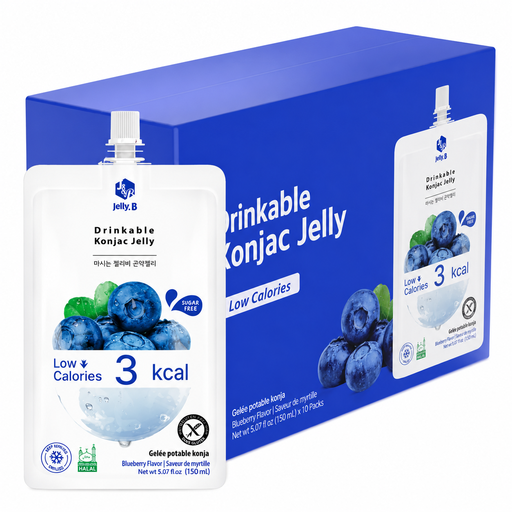
Why this fits the profile: The 10 individual 150 ml pouches are handy for work, travel or keeping a regular snack supply at home.
The packaging makes the portion clear, and the product information states halal and gluten-free. Check the ingredients at the time of purchase for the most up-to-date information.
Blueberry flavour, 10 × 150 ml and a drinkable pouch format. According to the product information, this variant contains erythritol and no declared allergens.
We’ve put together a full, up-to-date list of products that fully meet these strict selection criteria and comply with current European safety regulations.
That depends on the brand and flavour. In the product data for the variants mentioned, the values range from around 3 to 10 kcal per 100 grams or per stated serving. Always check the nutritional information table, because “low calorie” doesn’t tell you anything about the amount of sugar, sweeteners or the total content of the pouch.
Unopened konjac jelly should usually be stored in a cool, dry place away from direct sunlight. The exact best-before date is on the packaging. Once opened, you should follow the instructions on the label and generally consume the product quickly. For example, DELIEF Mango states that after opening it should be refrigerated and used shortly afterwards.
Lychee konjac jelly is often a logical choice for those who enjoy a light, floral fruit flavour. Mango konjac jelly suits anyone looking for a sweeter, tropical taste. Blueberry is recognisably fruity, and the peach variant can be milder in flavour. Because taste preference is subjective, you could start with a single pouch or go for a multipack if you already know which direction you like.
