
Vandaag of morgen in huis

Kwaliteit gegarandeerd

Welkomstaanbiedingen ontgrendelen: GRATIS bezorging | Tot 80% korting | Gratis 30 dagen JoyPlus-proefperiode
Download de app
A konjac jelly might look simple at first glance: a soft, fruit-flavoured jelly in a handy pouch. But products vary widely in sugar content, sweeteners, portion size, texture and packaging. If you only look for words like “light”, “fruit” or “keto”, you could end up choosing a product that doesn’t quite fit your diet.
When buying, watch out for three common pitfalls:
If you’re looking for a low-calorie jelly snack, sugar-free jelly or keto snack, it’s worth checking the nutrition table. Don’t just look at the front of the pack – compare:
A product can be low in calories and still contain sugar. For example, the ORIHIRO Grape Konjac Jelly lists 7 kcal per 100g but also 2g of sugars per 100g. The Jelly B Konjac Jelly Mango 150ml states 0g sugar and uses sucralose and acesulfame-K among other sweeteners.
Also consider your personal tolerance to sweeteners. Erythritol can have a laxative effect for some people in larger amounts. Always check the current ingredients list on the packaging.
A drinkable jelly, jelly in a squeeze pouch or individual cup is practical for work, school, train journeys and on the go. A squeeze pouch takes up little space and usually doesn’t need refrigeration before opening. After opening, follow the brand’s storage instructions.
A cup with fruit pulp can feel more like a dessert, but it’s less suitable for carrying in a bag. With a multipack, also check whether each item is individually wrapped. That determines how easy the snack is to take with you and store.
Extra care is needed for young children. Konjac jelly has an elastic, smooth texture. So follow any warnings on the packaging and only let children eat the jelly while sitting down and under supervision.
Konjac flour, together with gelling agents, forms the basis of the texture. The texture can range from soft and drinkable to firm and elastic. If you’re after a fruit jelly with pieces or pulp, check whether the ingredients list actually includes fruit pulp or fruit juice.
For a gluten-free snack, it’s important that gluten isn’t listed in the ingredients and that the product information supports this. If you eat a vegan diet, also check for ingredients like collagen, milk derivatives and animal-based processing aids. “Vegan collagen” in this product category refers to a plant-based ingredient or a product name; it doesn’t mean every similar product is vegan.
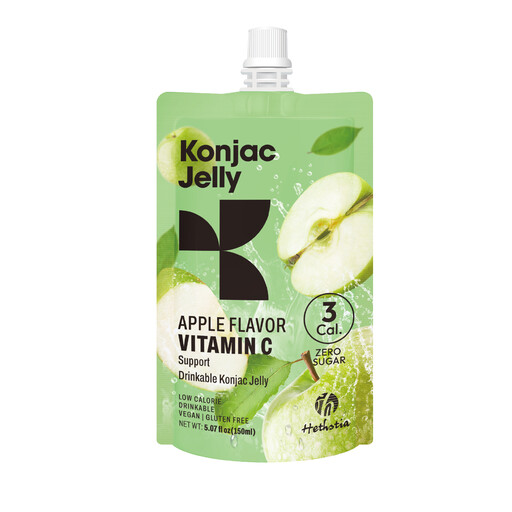
Why it fits this profile: An individual squeeze pouch with apple flavour is an easy introduction for anyone trying konjac jelly for the first time and looking for a snack on the go.
The product information states 3 kcal and 0g sugar per 100g/ml. Check the packaging for the exact portion value.
Individual packaging, apple flavour, no listed allergens and ready to use straight away.
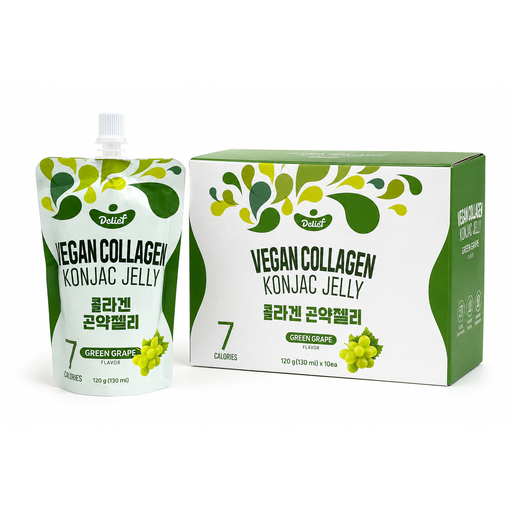
Why it fits this profile: The pack of ten is ideal for households and shoppers who want to regularly take a vegan konjac jelly with fruit flavour on the go.
The nutritional information states 5 kcal and 0g sugar per 100g. The ingredients list plant-based collagen from carrot.
Ten individual portions, green grape flavour, 0g fat and no listed allergens.
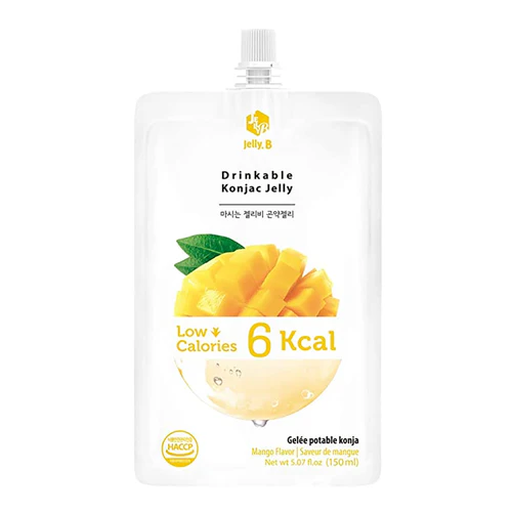
Why it fits this profile: The drinkable 150ml format is handy for busy workdays, travel and a quick snack break without needing cutlery.
The product information states 0g sugar, 3 kcal per 100ml and an ingredients list with no listed allergens.
Mango flavour, 150ml per pouch, halal-certified according to the product information and suitable for serving chilled.
We’ve put together a full, up-to-date list of products that fully meet these strict selection criteria and comply with current European safety regulations.
No. Many varieties are low in calories, but the values differ depending on the recipe. A product with sugar, fruit syrup or lots of carbohydrates can be significantly higher. So compare the nutritional value per 100g or 100ml as well as the content of one portion.
Yes, individual squeeze pouches are practical for that. Store an unopened product according to the instructions on the packaging. Some varieties taste better chilled but don’t always need refrigeration before opening. After opening, follow the stated storage time.
That depends on the ingredients and nutritional values. Only choose a variety that, according to the label, is low in carbohydrates and contains no sugar if that fits your keto plan. For a gluten-free snack, check the allergen information and the current packaging. Product information can change, so the label remains the deciding factor.
