
Vandaag of morgen in huis

Kwaliteit gegarandeerd

Welkomstaanbiedingen ontgrendelen: GRATIS bezorging | Tot 80% korting | Gratis 30 dagen JoyPlus-proefperiode
Download de app
A konjac jelly might look simple at first glance: open, eat or drink, and you're done. Yet these Asian snacks vary widely in their composition, portion size, sugar content, packaging and ease of use. If you only look out for words like "light", "fruity" or "guilt-free", you could end up buying a product that doesn't suit your dietary preferences or daily routine.
With this practical selection guide from the Joybuy Product Recommendation Officer, you can compare konjac jelly on verifiable points. That way, you'll find a drinkable jelly for on the go, a vegan jelly or a Korean jelly that matches your needs.
A product can be low in fat yet still contain a relatively high amount of sugar. According to the product information, the WANT WANT Konjac Jelly Orange Flavor contains 89.4 kcal and 20.5 grams of sugar per 100 grams. The 200-gram pack is therefore not the same as a small portion.
Other varieties use sweeteners such as erythritol, sucralose or acesulfame-K. Always check the nutritional information per 100 grams or 100 millilitres, as well as the total contents of the pouch.
"Lychee", "mango", "blueberry" or "orange" often refers to the flavour, not a large amount of actual fruit. Some products only contain a small amount of juice concentrate. Check the ingredients list if you're specifically looking for a fruit jelly with fruit juice or fruit pieces.
A jelly drink may also contain extra ingredients such as nata de coco, thickeners, colourings and preservatives. That's not necessarily a problem, but it does affect the texture and composition.
Konjac jelly has a smooth, elastic texture. Some products need to be drunk from a pouch; others are eaten with a spoon or straight from the pack. Chew carefully and don't swallow the jelly in one go. Various product warnings highlight the risk of choking and state that certain varieties are not suitable for young children. Always follow the instructions on the actual packaging.
If you're looking for a low-calorie snack, start with the energy per 100 grams or millilitres. The Jelly B varieties with lychee, mango and blueberry, for example, list approximately 3 kcal per 100 ml. The watermelon variety lists 1.6 kcal per 100 ml. These values come from the supplied product information; check the packaging at the time of purchase.
A sugar-free jelly can still taste sweet thanks to sweeteners. So alongside "sugars", also look at the full ingredients list. If you want to limit both sugar and sweeteners, compare several varieties rather than just looking at the front of the pack.
For a vegan jelly, a clear ingredients list is essential. According to the product information, the Delief Vegan Collagen Konjac Jelly uses vegetarian collagen derived from carrot and is labelled as vegan and halal. "Collagen" on the front doesn't automatically mean it's animal or plant-based; always check the source.
The Jelly B Konjac Jelly Blueberry states that the product contains none of the 14 major EU allergens and is halal certified. Other products mention "no allergens", while coconut, for example, may be listed as an allergen. If you're looking for a halal konjac jelly or an allergen-friendly snack, check the current packaging and certification information.
A 150 ml pouch is practical for work, school or on the go. A 200-gram bag may be more suitable for sharing at home, but makes portion control less straightforward. Also pay attention to the preparation method:

Why this fits the profile: A 150 ml portion is easy to manage and the pouch is simple to take to work, college or on a day out.
The nutritional information states 3 kcal and 0 grams of sugar per 100 grams; just check whether the sweeteners suit your preference.
150 ml per pouch, lychee flavour and a stated nutritional value of 3 kcal per 100 grams.
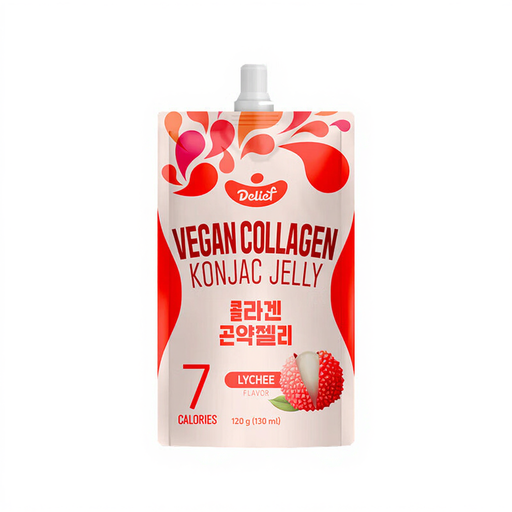
Why this fits the profile: Aimed at consumers who want to combine vegan and halal suitability with a compact portion.
The product listing specifies vegetarian collagen, vegan and halal, rather than just using a general fruit claim.
120 grams, lychee flavour, 4 kcal per 100 grams and 0 grams of sugar according to the provided nutritional information.
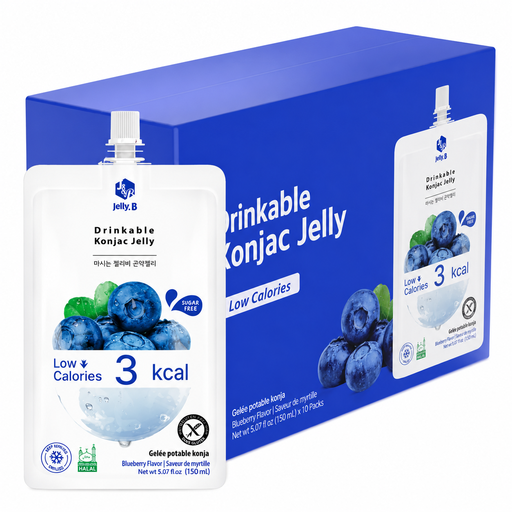
Why this fits the profile: A multi-pack is ideal for anyone who regularly takes a jelly drink with them or wants several portions on hand at home.
The packaging states 10 portions of 150 ml, so you can estimate the total quantity in advance.
Blueberry flavour, 150 ml per pouch and halal and gluten-free product information provided.
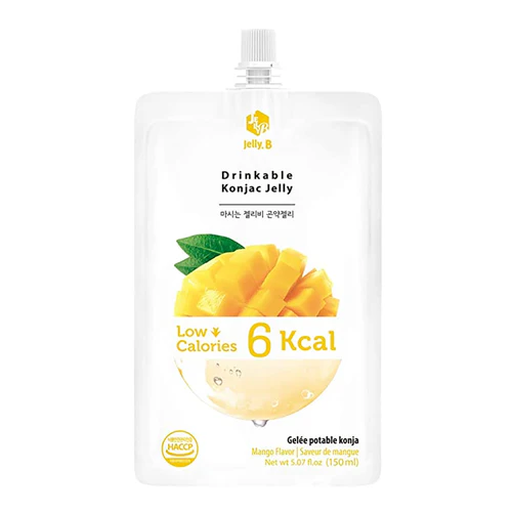
Why this fits the profile: This pouch from South Korea is ideal for anyone who wants to combine mango and Korean snacks in a drinkable form.
The ingredients and nutritional values are listed per 100 ml; you can check the mango and sweetener composition in advance.
150 ml, mango flavour, 3 kcal per 100 ml and, according to the product information, halal and gluten-free.
We've put together a full, up-to-date list of products that fully meet these strict selection criteria and comply with current European safety regulations.
That depends on the variety. Some Korean jelly drinks list approximately 1.6 to 5 kcal per 100 ml, while WANT WANT Orange lists 89.4 kcal per 100 grams. Always check the nutritional information table, the contents per pack and the sugar content.
Store unopened pouches according to the label in a cool, dry place, out of direct sunlight and away from heat and moisture. After opening, follow the instructions on the packaging. According to product descriptions, serving chilled can improve the flavour and texture.
That varies from product to product. The Delief variety is labelled as vegan and halal. The Jelly B Blueberry and Jelly B Mango also state halal suitability in their product information. For every flavour, check the current packaging, ingredients and any certification before you buy konjac jelly.
