
Vandaag of morgen in huis

Kwaliteit gegarandeerd

Welkomstaanbiedingen ontgrendelen: GRATIS bezorging | Tot 80% korting | Gratis 30 dagen JoyPlus-proefperiode
Download de app
Do you want to buy konjac jelly, but find yourself lost among terms like “keto”, “sugar-free”, “with collagen” and “vitamin C”, not sure which pouch is right for you? You’re not alone. The differences often aren’t just about flavour – they also lie in portion size, sweeteners, allergens and how the nutritional information is presented.
As a Joybuy Product Recommendation Officer, I filter the most important details from product listings so you can compare marketing claims against verifiable data. Below, you’ll discover what to look out for before ordering a fruit jelly snack, low-calorie jelly snack or konjac jelly mix.
A sugar-free konjac jelly can contain sweeteners such as erythritol, sucralose or acesulfame-K. So don’t just look at the front of the packet – check the nutritional information table too. Some products list carbohydrates, polyols or sugars in different ways.
For example, Jelly B Konjac Jelly Mango states 0 grams of sugar per 100 ml and 6.8 grams of erythritol according to the product information. That might make it interesting for anyone limiting sugar, but it’s not the same as a product without sweeteners.
Always check the unit. For Hethstia products, the description mentions 7 kcal per pouch, while the nutritional values are also given per 100 grams. With a 155-gram pouch, those figures can work out differently. So use the actual packaging as your guide when exact calories matter.
ORIHIRO Purun and Standing Orange states 47 kcal per 130-gram serving. That’s clearer than a value given only per 100 grams, but the product does contain sugar and sweeteners according to the ingredients list.
According to Hethstia’s product information, several flavours contain collagen peptides and vitamin C. That’s a product composition, not a medical promise. Based on the brand’s own information, vitamin C contributes to the normal function of the immune system; don’t use this as a substitute for a varied diet.
Also pay attention to allergens. “Gluten-free” says nothing about milk, soya, peanuts or other ingredients in an alternative snack.
For a low-calorie jelly snack, these details are relevant:
Sugar alcohols can have a laxative effect in some people. That’s mentioned, for example, in the product information for various protein and cereal bars. With konjac jelly too, it’s wise to stick to the recommended portion.
If you’re looking for a keto snack or gluten-free snack, it’s a good idea to read the full ingredients list. Hethstia Konjac Jelly Lychee, Apple, Peach, Mango and Orange are described as sugar-free and gluten-free. The ingredients vary by flavour, but include fruit concentrate, erythritol, konjac flour and gelling agents.
Not every jelly snack is automatically suitable for every diet. ORIHIRO Grape Konjac Jelly contains sugar and erythritol according to the product information. Be&Cheery Crispy Konjac Snack contains soya, sesame and gluten-containing grains, so it doesn’t fit a gluten-free diet.
A squeeze pouch is handy as a jelly snack for on the go, at the office or after exercise. Do check the usage instructions though. For ORIHIRO, it states that you should squeeze the jelly out of the packet while chewing. Take small portions and eat slowly, especially with a firm or elastic texture.
Once opened, several Hethstia pouches need to be kept refrigerated and consumed within two days. So an individually wrapped pouch is more practical for taking out than an opened large pack.
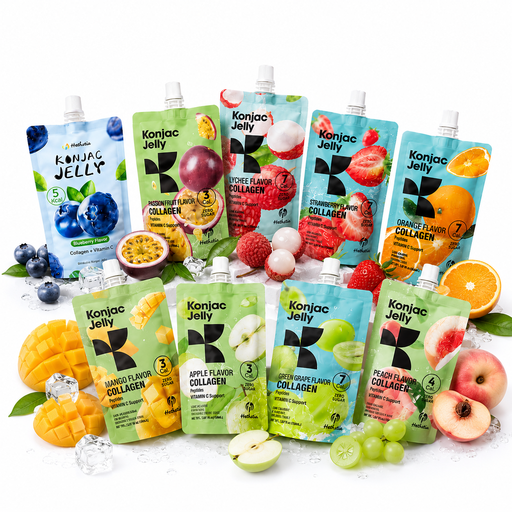
Why this fits the profile: A set with eight packets is handy if you want to try several fruit flavours before buying a larger stock.
You don’t have to buy several individual flavours in stock straight away. Do check beforehand which flavours are actually included in the set.
Eight 155-gram packets and multiple flavours in one order; the product name mentions collagen peptides.
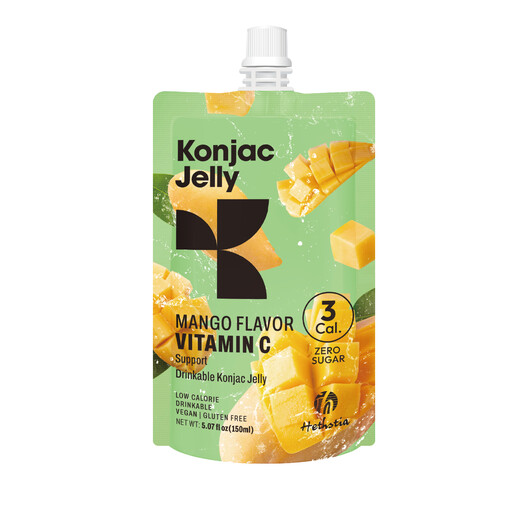
Why this fits the profile: The mango option combines a soft, fruity texture with compact packaging for a mindful sweet snack.
The product information lists the ingredients, portion size and nutritional values. Do compare the values with the label on the delivered packet.
155 grams per pouch; according to the product description, it’s sugar-free, gluten-free and contains collagen peptides and vitamin C.
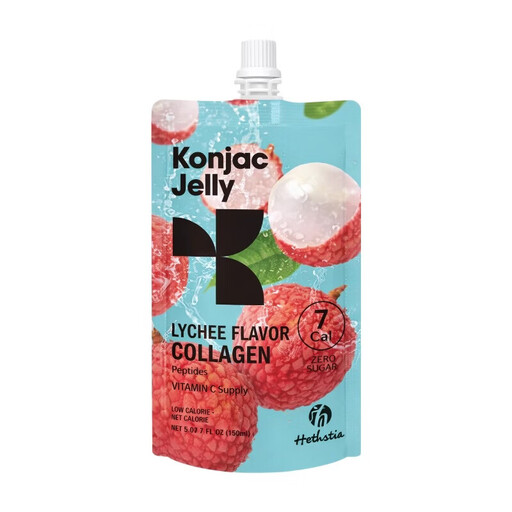
Why this fits the profile: The individual lychee pouch is ideal for work, travel, hiking or a post-workout snack.
The pouch is ready to use straight away and prevents you from having to take an opened pack with you. Once opened, it should be kept refrigerated according to the information.
Individual 155-gram packet; according to the product description, it’s sugar-free, gluten-free and low in calories.
We’ve put together a full, up-to-date list of products that fully meet these strict selection criteria and comply with current European safety regulations.
That depends on the ingredients and nutritional values. Varieties with erythritol and no sugar can fit into a low-carb diet, but always check the total carbohydrates and the portion size. A product with sugar, like some traditional fruit jelly snacks, may be less suitable.
An unopened pouch should be stored according to the date and instructions on the packaging. For several Hethstia flavours, the product information states: store in a cool, dry place and, once opened, keep refrigerated, after which consumption within two days is recommended. Always check the label on your specific variety.
Konjac jelly can be a practical, low-calorie snack, especially if you’re looking to limit sugar or calories. It doesn’t replace a full meal. Also compare the ingredients, sweeteners, nutritional values and allergens. If you’re after more protein, you might prefer a protein bar such as the Grenade Carb Killa or Optimum Nutrition Whipped Protein Bar, but these products contain milk and other allergens.
