
Vandaag of morgen in huis

Kwaliteit gegarandeerd

Welkomstaanbiedingen ontgrendelen: GRATIS bezorging | Tot 80% korting | Gratis 30 dagen JoyPlus-proefperiode
Download de app
Do you want to buy konjac jelly but find yourself lost among all the flavours, packaging and nutritional values? Online shops often list Japanese konjac jelly, Asian jelly, fruit jelly and squeeze pouches side by side. Yet they are not all the same.
The biggest mistakes usually come down to three simple oversights:
An attractive image or a claim like “vegan” is no substitute for checking the label. Below are the key points to look out for.
Don’t just compare products per 100 grams. An individual pouch or piece can be much smaller.
For example:
So a low-calorie jelly is not automatically sugar-free. Also check whether the sweetness comes from sugar, fructose-glucose syrup, erythritol or sweeteners such as sucralose and acesulfame K.
Konjac powder provides the characteristic firm or springy texture. The rest of the recipe can vary widely. Some products contain fruit juice, others mainly flavouring, sweeteners and gelling agents.
Pay particular attention to:
A “fruit jelly” can therefore be closer in recipe to a sweet dessert jelly than to a snack with a high fruit juice content.
For on-the-go snacking, small individually wrapped portions are practical. Shimonita Matcha, Shimonita Salt Pine and Orihiro products are examples of packs containing multiple small portions.
Some konjac sweets and jelly products come with specific usage instructions. Orihiro Peach, for example, advises squeezing the jelly out of the opening, not sucking or swallowing it in one go, and chewing it several times. Young children should only use this type of product according to the warnings on the packaging. Also check the age recommendation and any choking hazard warning; Jele Double Jelly states that the product is not suitable for children under three years old.
The following selection is based on verifiable data from the product information, such as serving size, ingredients, nutritional value and packaging.
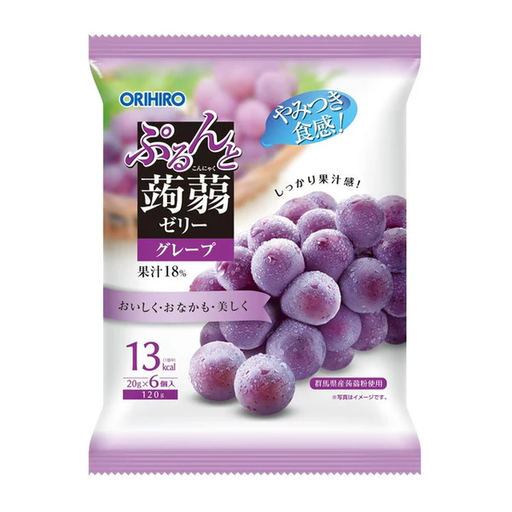
Why this fits the profile: The pack contains six individually wrapped 20-gram portions. This makes this grape jelly straightforward for someone trying Japanese konjac jelly for the first time.
The nutritional value is stated per 100 grams and the portions are individually wrapped. This makes the amount per eating occasion clearer than with a large resealable pouch.
Grape flavour, six portions, konjac powder as an ingredient and no listed allergens according to the product information.
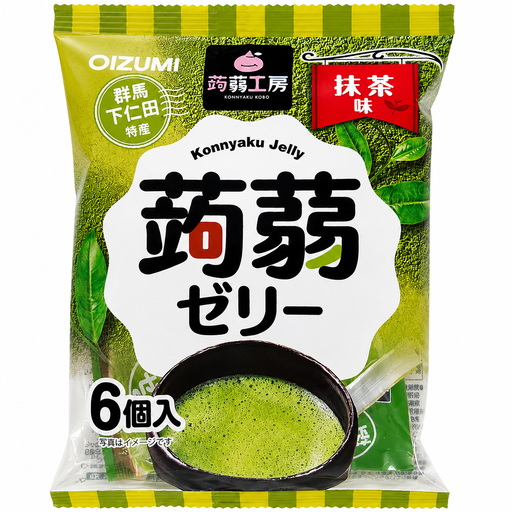
Why this fits the profile: This Japanese jelly is aimed at matcha lovers rather than just sweet fruit flavours. The small portions are ideal for savouring slowly or serving after a meal.
The flavour description mentions a slightly bitter matcha aftertaste. This gives a more realistic expectation than a generic claim about a fruity jelly.
Japanese konjac powder, matcha paste, individual wrapping and 16.2 kcal per jelly according to the product information.
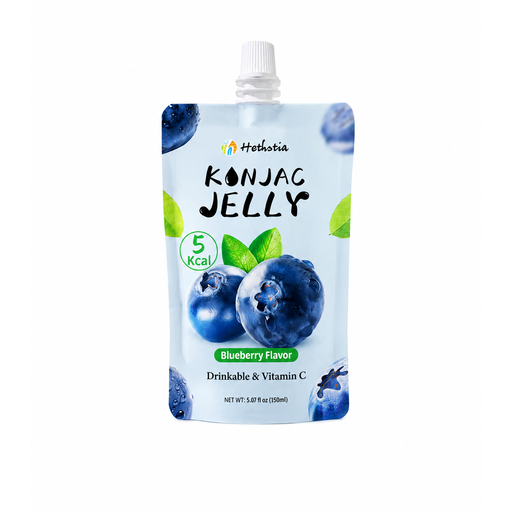
Why this fits the profile: The squeeze pouch is designed for use at work, school, while travelling or during outdoor activities. After opening, it should be refrigerated and used within one day, according to the product information.
The usage and storage conditions are specific: serve chilled, store in a dry place before opening and refrigerate after opening. This prevents a large pouch from staying open for too long.
Blueberry flavour, 5 kcal per pouch according to the product information and a resealable usage context thanks to the squeeze format.
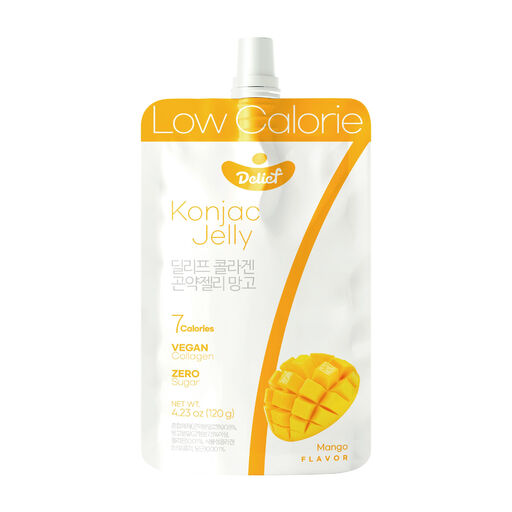
Why this fits the profile: The product information states a vegan recipe and mango as the flavour. This product is suitable for comparing with other low-calorie jelly options.
The ingredients list names the sweeteners, thickeners and mango concentrate used. You therefore don’t need to take the flavour name as proof of a high fruit content.
Labelled vegan, 4 kcal per 100 grams according to the product information and a net weight of 120 grams.
We have compiled a full, up-to-date list of products that fully meet these strict selection criteria and comply with current European safety regulations.
No. The nutritional value varies by recipe and serving. Orihiro Grape states 7 kcal per 100 grams, while Yuki & Love Litchi states 96 kcal per 100 grams. So always check the table per 100 grams and per pack.
The shelf life is stated on the packaging. Store unopened jelly according to the specified conditions, usually in a cool, dry place. An opened product may have additional instructions. Hethstia, for example, states that the pouch must be refrigerated after opening and used within one day.
Some products are labelled as vegan, such as Delief Mango and Konjac Jelly Green Grape. This does not automatically apply to every Japanese jelly, fruit jelly or Asian jelly. Always check the ingredients list and allergen information on the current packaging.
Grape, mango, peach and lychee flavours are accessible options. If you prefer something less sweet and more distinctive, you could try matcha. Also compare the fruit content, sweeteners and serving size before you order.
