
Vandaag of morgen in huis

Kwaliteit gegarandeerd

Welkomstaanbiedingen ontgrendelen: GRATIS bezorging | Tot 80% korting | Gratis 30 dagen JoyPlus-proefperiode
Download de app
Looking for a delicious and guilt-free treat? You've probably heard of konjac jelly. This popular Asian jelly is known as a low-calorie snack, often found in a convenient squeeze pouch. But not every fruit jelly marketed as 'healthy' actually is. Before you decide to buy konjac jelly, it's wise to know what to look for. Many products hide pitfalls that can make your purchase less satisfying than you hoped.
The packaging often makes big promises, but the reality can be disappointing. These are the most common issues consumers face:
Fortunately, making a good choice isn't difficult when you know what to look for.
To avoid a disappointing purchase, focus on three key points. These specifications determine the quality, taste, and whether the snack truly fits into a health-conscious lifestyle.
The term sugar-free sweets is popular, but what does it really mean? Check the nutrition label under 'carbohydrates, of which sugars'.
The texture is determined by the amount of konjac powder. Although this percentage is rarely listed, the product's consistency provides a good indication.
An authentic fruit flavour comes from real ingredients. Check if the product contains fruit purée or a reasonable percentage of fruit juice. Popular varieties like Korean jelly are often known for their high-quality, natural flavours. Products that only list 'flavouring' may have an artificial and less satisfying taste.
To help you with your choice, we've highlighted a few products that suit different needs and preferences.
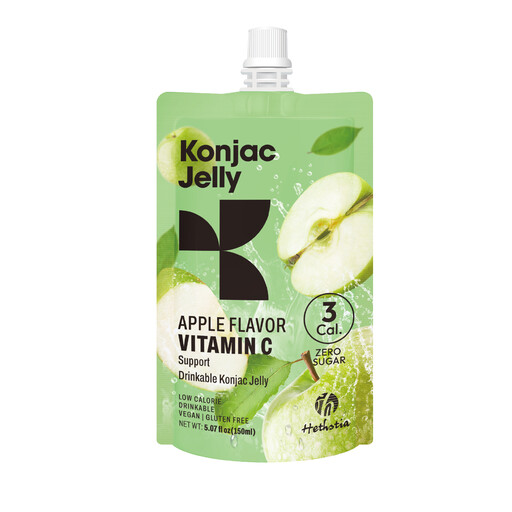
Why This Fits Their Persona: Ideal for those who eat consciously and count calories. This jelly fits perfectly into a lifestyle where every calorie counts, without sacrificing a fruity, refreshing taste.
This product completely bypasses the sugar trap. It's sweetened with erythritol and contains no added sugars, making it extremely low in calories.
Extremely low-calorie: Only 3 kcal per 100g. Completely sugar-free and gluten-free.
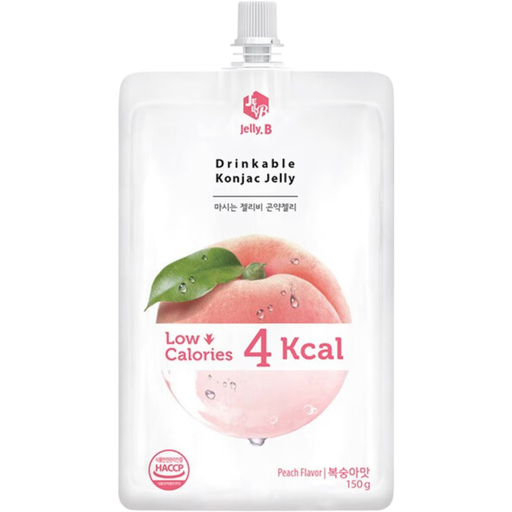
Why This Fits Their Persona: Perfect for a busy lifestyle. The squeeze pouch is easy to carry in your bag to work, school, or the gym for a quick, refreshing snack without the mess.
The texture is specially developed for the squeeze pouch, ensuring a consistent and pleasant experience without a watery feel.
Convenient squeeze pouch: Ideal for on-the-go consumption. Low-calorie: Only 10 kcal per serving.
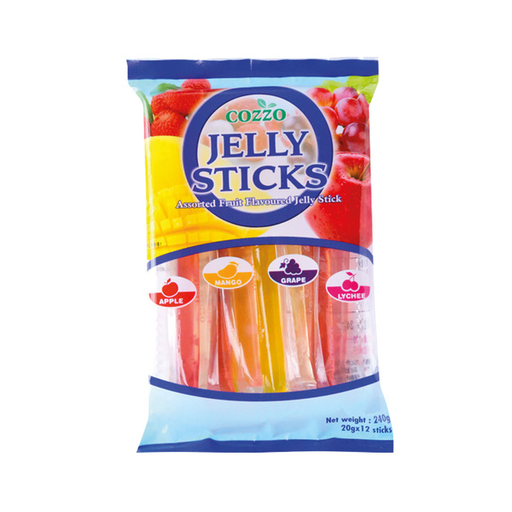
Why This Fits Their Persona: A fun and easy treat for the whole family or for parties. The individually wrapped jelly sticks in various flavours are ideal for sharing in a lunch box or at a birthday.
This product clearly positions itself as a fun treat, not a diet snack. The ingredients list is transparent about the presence of sugar.
Ideal for sharing: Individually wrapped in various fruit flavours. Fun format: The stick shape is popular with children.
We have compiled a complete, up-to-date list of products that meet these selection criteria and current regulations.
Konjac jelly is a snack made from the root of the konjac plant, which grows natively in Asia. The root is ground into a flour rich in a soluble fibre called glucomannan. When this flour is mixed with water, it forms a gel. This gives konjac jelly its characteristic firm, elastic texture. It is naturally almost completely free of calories, sugar, and fat.
Unopened konjac jelly is best stored in a cool, dry place, away from direct sunlight. After opening the package, it is recommended to store the jelly in the refrigerator and consume it within a few days. Many people also find the jelly tastier when chilled, as it becomes extra refreshing.
Konjac jelly can be a fun treat, but caution is advised. Due to its firm and smooth texture, there is a choking risk, especially for small children. Manufacturers often include a warning on the packaging. It is important that children (and the elderly) eat the jelly in small pieces and chew thoroughly. Never let young children eat it unsupervised. For some coloured varieties, also check the ingredients list; the product description for the COZZO Fruit Jelly Sticks, for example, states that certain colourants (E102 and E129) may have an adverse effect on activity and attention in children.
