
Vandaag of morgen in huis

Kwaliteit gegarandeerd

Welkomstaanbiedingen ontgrendelen: GRATIS bezorging | Tot 80% korting | Gratis 30 dagen JoyPlus-proefperiode
Download de app
Choosing a new kitchen knife might seem straightforward at first glance. However, there are significant differences in size, steel type, handle and intended use. If you only focus on an attractive image or the term "extra sharp", you could end up with an awkward, blunt or difficult-to-maintain knife after just a few months.
This buying guide will help you buy kitchen knives with confidence. You'll discover which specifications really matter, which marketing claims to take with a pinch of salt, and which type of knife best suits your cooking style.
A sharp kitchen knife cuts beautifully, but sharpness alone tells you little about its longevity. The hardness of the steel, the grind angle and how you maintain it all play a part in how long the edge stays usable. So, treat a brand's claim about sharpness as information from the product description, not as a guaranteed result in every kitchen.
Look for verifiable details such as:
A 20 cm chef's knife offers a large cutting surface, but it won't feel comfortable for everyone. For smaller hands or limited workspace, a 16 cm chef's knife can be more practical. A santoku knife is often well-suited to vegetables, herbs, fish and meat, but the shape and balance vary from model to model.
Choose the length based on your chopping board, hand size and daily prep tasks, not just on the product photo.
Although some knives are described as dishwasher-safe, hand washing can help extend the life of both the blade and handle. Heat, moisture and contact with other items can damage the edge. Dry a knife immediately after washing and never leave it soaking in water.
Stainless steel is popular for its combination of easy maintenance and resistance to rust. High-carbon stainless steel, such as X50CrMoV15 used in certain Wüsthof models, can offer a durable edge, according to the product information. The actual performance depends on use, chopping board and maintenance.
A full-tang construction runs all the way through the handle. This can contribute to balance and sturdiness. A forged knife is shaped from a single piece of steel; a stamped knife is cut from sheet steel. Neither construction is automatically right for every user. Weight, balance and grip remain important.
Use this breakdown as a practical starting point:
A non-slip surface and a shape that sits comfortably in your hand help with controlled cutting. A finger guard or a protected transition between blade and handle can provide extra security. Store knives in a knife block, protective sheath or suitable drawer insert. Never leave them loose among other cutlery.
For hobbyist or professional cutting outside the kitchen, the same principle applies: choose a craft knife or cutter with a locking mechanism, replaceable blades and safe storage. Always use a suitable cutting surface and keep spare blades out of reach of children.
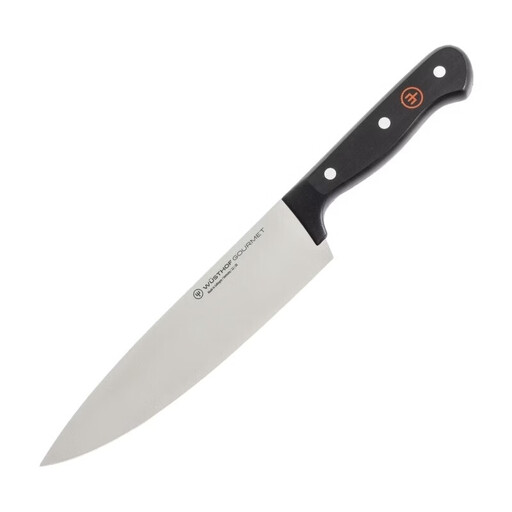
Why this fits the profile: A versatile chef's knife for anyone looking for one knife for slicing, dicing and chopping.
The product information states a 20 cm blade, a synthetic handle and a full-tang construction. Do check whether this size suits your workspace.
20 cm blade; suitable for multiple kitchen tasks; hand washing recommended for a longer lifespan.

Why this fits the profile: A 17 cm santoku knife for home cooks who prepare lots of vegetables, herbs, fish and meat.
The size is clearly stated and the product description mentions X50CrMoV15 high-carbon stainless steel. Claims about sharpness come from the brand description.
17 cm blade; synthetic handle; suitable for hand washing and regular sharpening.
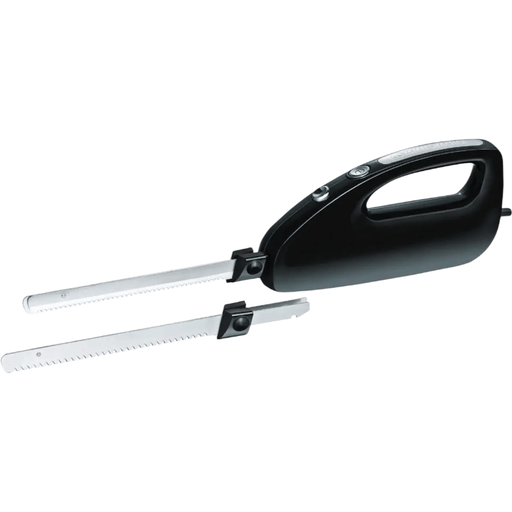
Why this fits the profile: An electric knife for anyone who regularly slices bread, meat, poultry, cakes or lightly thawed frozen items.
The specifications mention 120 W, two sets of 15 cm stainless steel blades and a finger guard. This knife is not a replacement for a chef's knife.
Detachable blades; dishwasher-safe blades according to the product information; on-button operation and safety lock.
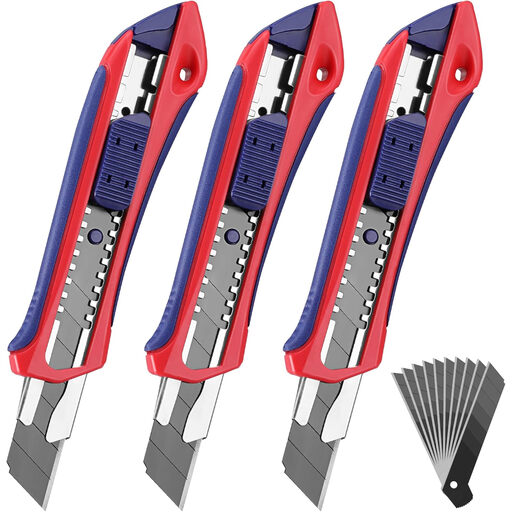
Why this fits the profile: For cardboard, paper, film, carpet and craft materials, a cutter is more practical than a kitchen knife.
The set features a blade lock, snap-off blades and a rubber handle. Always retract the blade fully when not in use.
Three cutters; 10 SK5 spare blades; 18 mm blade width; suitable for various materials.
We've put together a full, up-to-date list of products that fully meet these strict selection criteria and comply with current European safety regulations.
A Victorinox knife, Wüsthof kitchen knife or other branded model won't stay sharp on its own. The right technique and regular maintenance have a big impact on how long it remains usable.
A chef's knife of around 16 to 20 cm is usually a practical starting point. Choose 16 cm for more manoeuvrability or a smaller worktop, and 20 cm for larger quantities. A vegetable knife or paring knife can be added later for precision work.
That depends on the steel, how often you use it, your chopping board and how you maintain it. A knife used daily will need attention sooner than one used occasionally. Don't cut on hard surfaces and never force a blunt knife.
An electric knife uses electricity and has moving parts, but it can save time if you regularly slice bread, roasts or poultry. For vegetables and general everyday cutting, a manual kitchen knife is usually simpler. When buying, consider the use case, cleaning and availability of replacement parts.
