
Vandaag of morgen in huis

Kwaliteit gegarandeerd

Welkomstaanbiedingen ontgrendelen: GRATIS bezorging | Tot 80% korting | Gratis 30 dagen JoyPlus-proefperiode
Download de app
If you want to buy instant noodles, you will quickly come across dozens of options: from Asian instant noodles and noodle soup to Korean ramen and spicy stir-fry noodles. The differences are not limited to flavour. Portion size, preparation, allergens and shelf life also determine whether a pack is right for you.
A bag containing five portions may seem good value, but a box of 20 or 40 packs can work out cheaper per portion. At the same time, buying in bulk is not always wise if you have not tried the flavour before. Therefore, check:
A multipack can be practical for students or households. Offices, caterers and hospitality businesses may benefit more from bulk instant noodles or an order from an instant noodle wholesaler.
Terms such as “hot”, “spicy” and “Buldak” do not always indicate exactly how much chilli you can expect. Some products have the spicy seasoning in a separate sachet, allowing you to adjust the amount. In other varieties, the sauce is fully incorporated into the recipe.
A mild chicken variety, tom yum noodle soup and Korean ramen each have a different flavour profile. So look at the ingredients and preparation method rather than relying solely on the image on the packaging.
Instant noodles often contain wheat and gluten, but soya, milk, crustaceans, fish, celery, mustard or sesame may also be present. Always check the label on the packaging you receive. Online product information may differ from the current packaging.
For example:
If you have a food allergy or intolerance, do not rely solely on the product title or product image.
There are broadly two types:
Also check the preparation time. Many varieties are ready in around three to five minutes, but the instructions vary. For example, Acecook Tom Yum Shrimp recommends four minutes with boiling water in the cup. According to the product description, Nongshim Shin Ramyun is cooked in a pan for around four to five minutes. Whenever possible, follow the instructions on the packaging.
A 60 to 75-gram portion is often suitable for a light meal or snack. Korean ramen weighing 120 to 140 grams is generally more heavily seasoned and contains more dried noodles per pack.
Pay attention to the difference between:
A box containing individual sachets is easier to distribute than a large pack that needs to be stored in a dry place once opened.
Compare the nutritional values per 100 grams and per portion. Instant noodles are often relatively high in carbohydrates, fat and salt. Exact values vary considerably by brand and flavour. In the product information provided, for example, the salt content ranges from around 1.8 grams for an Indomie Mi Goreng listing to 5.6 grams per 100 grams for Nongshim Shin Ramyun.
This does not automatically mean that one variety is suitable for everyone. Use the nutritional table to make an informed choice and, if desired, add fresh vegetables, egg or other ingredients. Always check the current packaging for the correct values.
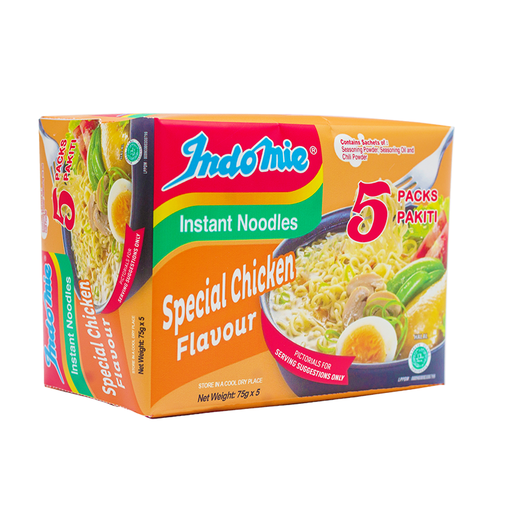
Why it suits this profile: A five-portion pack is a manageable choice if you are trying Indomie noodles for the first time or occasionally want a quick meal.
You do not have to buy a box of 30 or 40 packs straight away. The product information lists five 75-gram sachets and a chicken variety with straightforward preparation.
Five individual portions, EU packaging and savoury chicken seasoning. According to the product information, contains wheat and gluten.

Why it suits this profile: This box is ideal for Korean ramen enthusiasts who want a supply of individual portions and a spicy broth.
The product specifications clearly state 20 portions of 120 grams and a preparation time of around four to five minutes. This makes the size clear in advance.
Korean origin according to the product description, 120-gram portions and a soup base with chilli, garlic and dried vegetables. Contains wheat and soya.

Why it suits this profile: Designed for fans of spicy instant noodles who are looking for a thicker, dry preparation with a carbonara flavour.
The product description makes it clear that this is a spicy, creamy carbonara variety rather than an ordinary noodle soup. The pack contains ten 130-gram portions.
Thick wheat noodles, carbonara powder and a separate spicy sauce according to the ingredients list. Contains gluten, soya, milk and celery.
We have put together a complete, up-to-date list of products that fully meet these strict selection criteria and the applicable European safety regulations.
You can order Asian noodles online in individual multipacks, boxes and bulk packs. Before buying, compare the flavour, weight per portion, preparation method and allergen information. A category page for instant noodle cartons is useful when you want to compare several brands and pack sizes side by side.
The shelf life is stated on the packaging and varies by product and batch. Store the noodles in a cool, dry place away from direct sunlight. If you are buying in bulk, it is wise to check the date before purchasing several boxes at once.
Korean ramen, such as Nongshim ramen and Samyang Buldak noodles, often has thicker noodles, a more intense seasoning mix and a portion weighing around 120 to 130 grams. Other instant noodles are sometimes lighter or are eaten without broth, such as Indomie Mi Goreng. The right choice depends on your preferred flavour, portion size and preparation method.
