
Vandaag of morgen in huis

Kwaliteit gegarandeerd

Welkomstaanbiedingen ontgrendelen: GRATIS bezorging | Tot 80% korting | Gratis 30 dagen JoyPlus-proefperiode
Download de app
Are you looking to buy instant noodles for a quick lunch, your store cupboard, or a business order? It might seem straightforward to compare, but packaging can be misleading. A large box isn't always better value, a picture of prawns doesn't guarantee plenty of prawns inside, and "extra spicy" tells you little about the actual heat level.
With these practical checks, you can compare Asian instant noodles, ramen, and noodle soup based on verifiable information.
A bag with five portions and a box with twenty or forty pieces can be tricky to compare side by side. So don't just look at the total price – work out the price per sachet or pot. Also check the weight: a 60 g portion isn't directly comparable to a 120 g or 130 g one.
An instant ramen multipack is especially handy if you eat the same flavour regularly. For a family, office, or catering setting, a full box can work out more economical, but always check the best-before date and storage space first.
Names like prawn, chicken, beef, or tom yum often describe the flavour profile. That doesn't automatically mean the product contains a large amount of meat or seafood. For example, the product information for Indomie Instant Noodle Shrimp 5 x 70 g lists 0.3% artificial prawn flavour. MAMA Shrimp Tom Yum lists 0.03% shellfish powder among its ingredients.
If you need to avoid allergens, always check the ingredients list. Look out for mentions of wheat, soya, milk, fish, crustaceans, celery, mustard, and sesame. The packaging you receive is the definitive source, as ingredients or labels can change.
Korean ramen like Samyang Buldak Carbonara and Nongshim Shin Ramyun have a distinctly spicy profile, but the preparation differs. Some varieties are meant to be eaten as noodle soup; others are drained after cooking and mixed with sauce.
So check:
For personal use, packs of five or six are easy to manage. Think of Uni-President 100 with 5 sachets of 100 g, Nongshim Korean-Style with 6 x 112 g, or Samyang Buldak Carbonara with 5 x 130 g.
For a shared store, boxes are more interesting. MAMA Shrimp Tom Yum is available as 20 x 90 g, Indomie Special Chicken as 40 x 75 g, and Nongshim Shin Ramyun as 20 x 120 g. If you're looking for instant noodles wholesale, these quantities are ideal for offices, student houses, shops, or catering. Always compare the total net weight and the price per portion.
Instant noodles are intended as a quick meal or snack. Nutritional values vary by flavour and brand. Pay particular attention to energy, fat, saturated fat, protein, and salt per 100 g and per portion.
For instance, the product information for Nongshim Shin Ramyun 20 x 120 g shows 445 kcal and 5.6 g of salt per 100 g. Nongshim Kimchi 20 x 120 g lists 4.8 g of salt per 100 g. These are product-specific figures, not general statements about all Korean ramen.
You can add egg, tofu, mushrooms, or vegetables to a portion. This changes the overall nutritional value and makes the meal more filling, but always follow the preparation instructions on the pack.
Under European regulations, relevant allergens must be clearly listed in the ingredients. Check the label before use, especially if you are sensitive to gluten, soya, milk, or shellfish. For example, Nongshim Neoguri lists fish, prawns, molluscs, soya, and wheat among its ingredients.
Also look at:
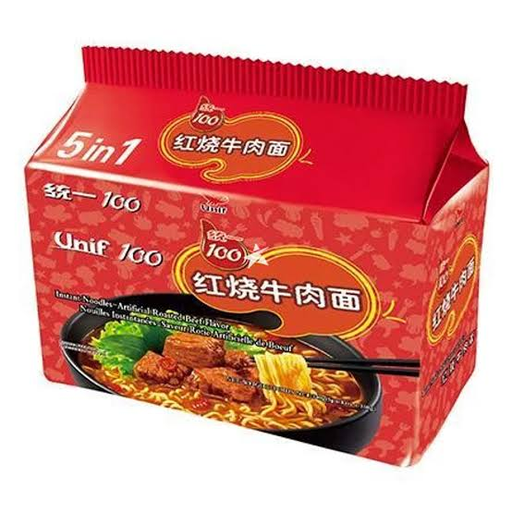
Why this fits the profile: A neat five-pack with 100 g portions for anyone wanting to try Chinese instant noodles without committing to a full box.
The weight and number of portions are clearly stated. The product information lists wheat and soya as allergens and gives a cooking time of around 5 minutes.
Beef flavour, dried vegetables, and five individual sachets. Ideal for stocking a student room or small kitchen.
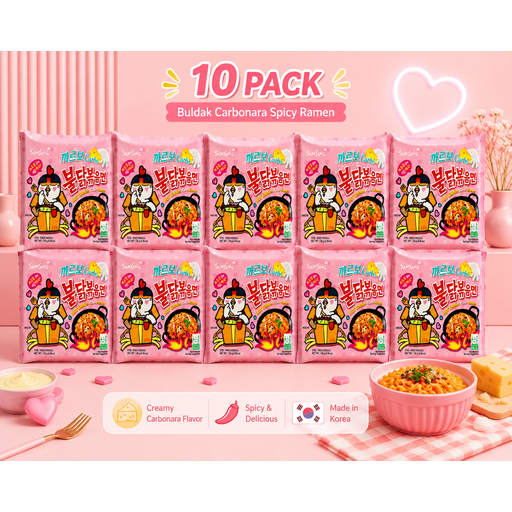
Why this fits the profile: For fans of hearty Korean ramen with a sauce-like carbonara flavour and a distinctly spicy kick.
The product information clearly states these are spicy stir-fried noodles with sauce and powder, not a standard noodle soup.
130 g per portion, carbonara powder and sauce component. Contains gluten, soya, and milk; check the label before purchase.
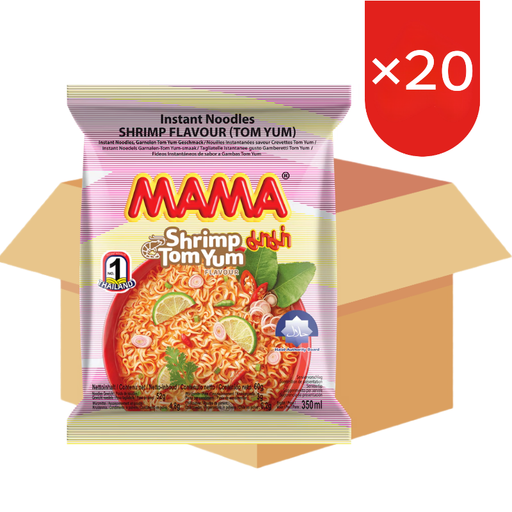
Why this fits the profile: A full box for households, offices, and customers who want to serve Thai instant noodles regularly.
The box format is explicitly 20 x 90 g and the preparation instructions state 400 ml of water and 3 minutes of cooking.
Thai tom yum with prawn flavour, 20 individual portions, and a short cooking time. Contains gluten, soya, milk, and shellfish.
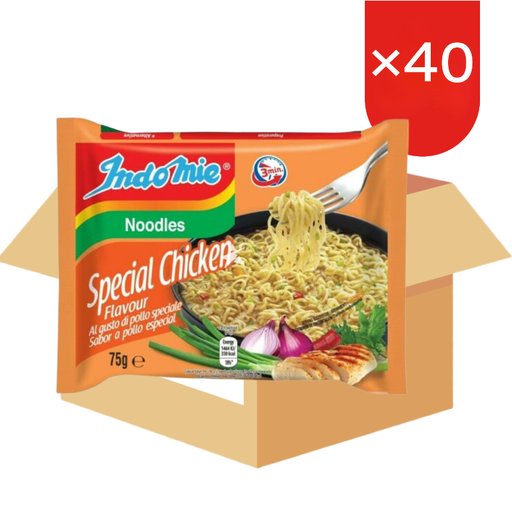
Why this fits the profile: A large pack of chicken noodles for multiple users, for example in a student house, office canteen, or store cupboard.
The box contains 40 portions of 75 g, so you can estimate the quantity per user in advance.
Chicken flavour, 40 individual sachets, and according to the product information around 350 kcal per 75 g portion. Contains wheat; possible traces of soya, milk, and egg.
We've put together a full, up-to-date list of products that fully meet these strict selection criteria and comply with current European safety regulations.
The best-before date is on the packaging and varies by product. Store the noodles in a cool, dry place away from direct sunlight. Do not use a pack if it is damaged. With a full box, it's wise to check the date before buying multiple boxes at once.
"Ramen" is often used for Japanese or Korean noodle dishes, while instant noodles are a broad product category. Korean ramen is frequently spicy with firm noodles; Thai varieties tend to focus on tom yum, lime, and chilli. Chinese instant noodles, on the other hand, can feature flavours like braised beef or chicken broth.
That depends on the portion size and what you add. Most products mainly contain noodles and seasoning. Adding vegetables, egg, tofu, or another source of protein makes for a more substantial meal. Always check the allergens and nutritional values on the current label.
