
Vandaag of morgen in huis

Kwaliteit gegarandeerd

Welkomstaanbiedingen ontgrendelen: GRATIS bezorging | Tot 80% korting | Gratis 30 dagen JoyPlus-proefperiode
Download de app
Stand-up paddling, or SUP, is a fantastic way to explore the waterways. The popularity of the inflatable SUP board is therefore no surprise: you unroll it, pump it up, and you're ready to go. But the market is flooded with options, and not every deal is as good as it seems. Before you buy a SUP board, it's important to know what to look for.
Many beginner paddlers fall into the same traps. Here are the most common ones:
SUP for beginners, or a family outing, stability is far more important than speed.To avoid a bad buy, it's wise to check three core specifications. These determine the performance and enjoyment you'll get from your inflatable paddleboard.
The dimensions of a board directly determine how it behaves on the water. Pay attention to the following three measurements:
family SUP board offers more space and carrying capacity.complete SUP board set: What's Really in the Bag?A complete set is convenient, but check the quality of the components. A good paddle is light and efficient. Carbon fibre paddles are lighter than aluminium versions, which you'll notice on longer trips.
The pump is another crucial component. Manually pumping to the recommended 15 PSI is a serious workout. Consider an electric SUP pump that you can connect to your car's 12V socket. This saves you time and energy that you'd rather spend on the water.
Most inflatable boards are made of PVC. Boards with multiple layers of PVC are stiffer and more durable, but also heavier. For recreational use, a well-made single-layer or double-layer board with drop-stitch technology (thousands of internal threads that maintain the shape) is an excellent choice.
Also, pay attention to the fin system. Most all-around boards have a large, removable centre fin, sometimes supplemented by two smaller, fixed side fins. The large fin provides directional stability, which is essential for paddling in a straight line.
Based on these practical criteria, we have selected a number of products that suit different users.
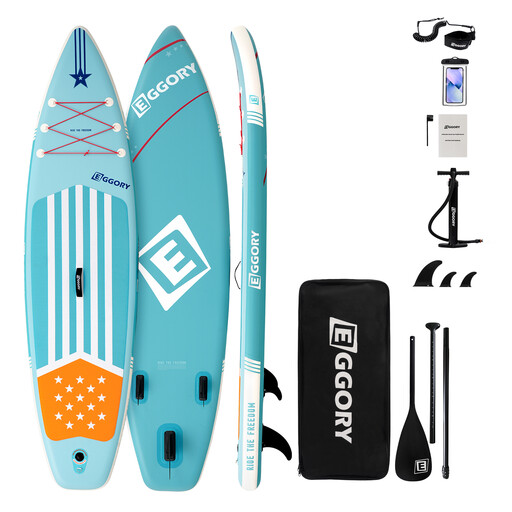
Why This Fits Their Persona: Perfect all-around dimensions for stability and ease of use. Ideal for your first trips on calm canals and lakes, without paying a premium price.
This board has a thickness of 15 cm, which counteracts the 'banana effect' and provides a solid platform, unlike thinner, unstable budget models.
A complete set with everything you need to get on the water right away. The dimensions (320x81x15 cm) offer a great balance between stability and manoeuvrability.

Why This Fits Their Persona: With its extra length and high weight capacity, there's plenty of room for a child, a dog, or extra gear. Perfect for a family day out on the lake.
While many boards compromise on weight capacity, the manufacturer of this model states a capacity of 490 lbs (approx. 222 kg), making it suitable for multiple people without significant bending.
According to the manufacturer, it's made from military-grade PVC composite material. The 19 D-rings offer great flexibility for carrying gear.
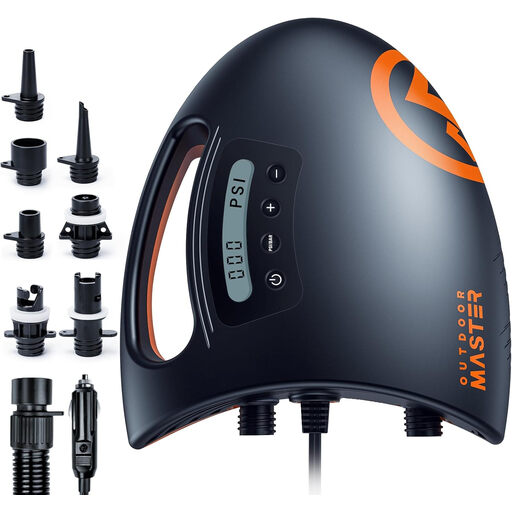
Why This Fits Their Persona: For those who'd rather warm up on the water than in the car park. This pump saves time and energy, so you can enjoy your time on the water sooner.
It replaces the often strenuous hand pump found in standard packages. No more struggling to manually pump to the correct pressure; the auto-shutoff feature handles it for you.
Works with your car's 12V DC connector. It inflates a board to the set pressure (max. 20 PSI) in minutes and can also help with deflation.
We've compiled a complete, up-to-date list of products that meet these selection criteria and current safety standards.
With the included hand pump, it takes an average of 10 to 15 minutes to inflate a board to the recommended pressure of 12-15 PSI. With a good electric SUP pump, this can be reduced to about 5 to 10 minutes, depending on your board's volume and the pump's specifications.
Proper maintenance is simple. Rinse your board with fresh water after each use, especially if you've been on salt water. Make sure the board is completely dry before rolling it up for storage. Store it in a cool, dry place and avoid prolonged exposure to direct sunlight when not in use.
For recreational use and for beginners, a quality inflatable board (15 cm thick and correctly inflated) is surprisingly stable and rigid. While a hardboard is still preferred by performance-oriented paddlers (such as in racing or wave surfing) for its superior stiffness, an inflatable board offers excellent stability for touring, fitness, and family fun. Its main advantage remains the ease of transport and storage.
