
Vandaag of morgen in huis

Kwaliteit gegarandeerd

Welkomstaanbiedingen ontgrendelen: GRATIS bezorging | Tot 80% korting | Gratis 30 dagen JoyPlus-proefperiode
Download de app
If you're looking to buy incontinence pads, the choice might seem straightforward at first glance. In reality, incontinence pads vary greatly in fit, absorbency, size and how long they can be worn. A thin pad may feel comfortable, but it won't be suitable for heavier urine loss. A larger option might offer more coverage, but feel less discreet.
This guide helps women, men, carers and healthcare professionals assess product information in a practical way.
Marketing often emphasises an ultra-thin design. However, that doesn't automatically tell you how much fluid the pad can hold. Instead, look at the intended use: for light, moderate or heavy incontinence. If you experience regular or heavier urine loss, a longer or thicker model may be a better fit.
Regular sanitary towels are designed for menstrual fluid and don't always have the right shape for urine loss. An incontinence pad typically contains an absorbent core and is designed for fluid that is absorbed more quickly. Where possible, choose a product that is clearly described as an incontinence product.
Also pay attention to body shape. A men's incontinence pad often has a cup or shield shape at the front. A women's incontinence pad is usually longer in shape and fits well with women's underwear.
A large multipack may seem good value, but it's less practical if the fit isn't right. First check the size, absorbency level and how the pad is secured. An adhesive strip usually works best in close-fitting underwear. Individual wrapping is handy for a bag, a day at work or when travelling.
Start with the amount of urine loss:
Brands use their own levels and names. So don't just compare words like "extra" or "plus" – also look at the product variant, dimensions and description. Claims about odour control, dryness or absorption speed come from the brand's product information; the actual experience may vary from person to person.
A pad must fit well without being too tight. Check whether the shape is designed for women or men and whether the adhesive strip works with your underwear. A poorly fitting pad can shift, especially when cycling, walking or playing sport.
According to the product description, the TENA Men Active Fit Protective Shield is designed for men with light urine loss. The shield is approximately 0.3 cm thick, has a slightly triangular shape and is secured with an adhesive strip in close-fitting underwear. For moderate urine loss, there is also a Level 2 version approximately 0.4 cm thick.
Pay attention to the top layer, the absorbent core and the backing. Many products use cellulose, polyacrylate or superabsorbent polymer. A breathable backing can be comfortable, but it doesn't mean the product is completely leak-proof at the edges.
If you have sensitive skin, latex-free or fragrance-free options can be a practical choice. Stop using the product if irritation occurs and always follow the instructions on the packaging. Pads are for external and single use only; do not flush them down the toilet.
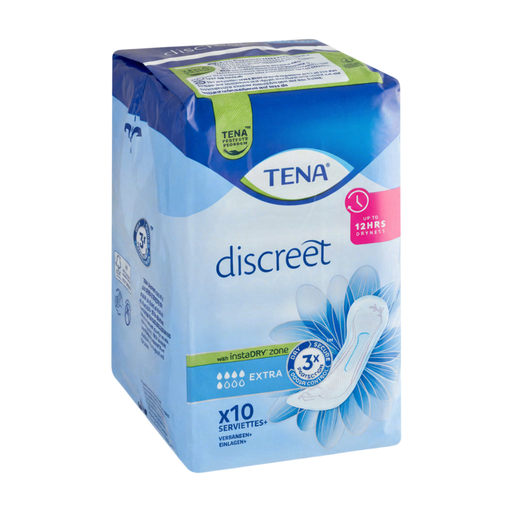
Why this fits the profile: A straightforward pack of 10 for those who want to manage light incontinence and daily bladder weakness without committing to a large multipack straight away.
The product variant is explicitly described for light urine loss and has an anatomical fit with an Instadry zone, rather than just a general sanitary towel description.
10 pieces; anatomical shape; Instadry zone and, according to the product description, odour control.
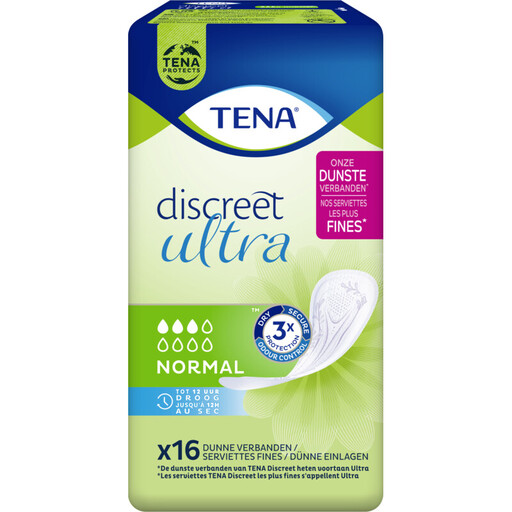
Why this fits the profile: Suitable for daily use with light to moderate urine loss, when a thin pad and soft materials are important.
The description mentions not only an ultra-thin design, but also the intended range: light to moderate bladder weakness. This makes comparison easier.
16 individually wrapped pads; bamboo and cotton fibres according to the product description; latex-free.
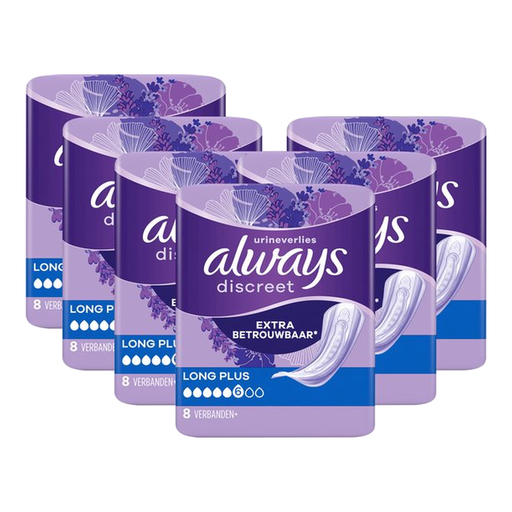
Why this fits the profile: A longer option for women who need extra coverage for heavier urine loss or during longer periods away from home.
The variant mentions extra length and absorbency for heavy urine loss. Still check your personal needs and change the pad regularly.
6 packs of 8 pads; Long Plus size; product information mentions an ultra-thin absorbent core.
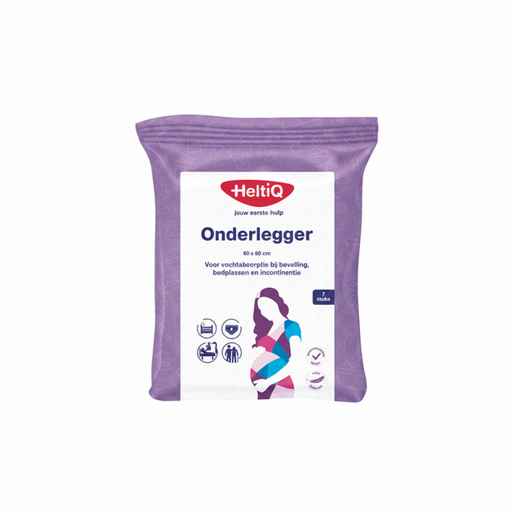
Why this fits the profile: For protecting a mattress, chair or bed against bedwetting and incontinence care. This is an underlay, not a pad to be worn on the body.
The product description makes the purpose clear: physical protection of surfaces. This means it won't be confused with an absorbent pad for daily wear.
Size 60 x 60 cm; waterproof backing; 7 pieces; intended for single use.
We've put together a full, up-to-date list of products that fully meet these strict selection criteria and comply with current European safety regulations.
If you experience persistent, sudden or increasing urine loss, it may be wise to discuss this with a GP or other healthcare professional. Products offer protection, but they don't explain the cause of urine loss.
That depends on the product and the amount of urine loss. Some product descriptions mention a wear time of several hours, but this is not a fixed rule for everyone. Change the pad as soon as it feels damp, is saturated or no longer fits properly. Follow the instructions on the packaging.
A women's model is generally designed for the female body shape and may be longer. A men's model, such as TENA Men, often has a protective shield or cup shape at the front. Don't choose based on absorbency alone – also consider the fit and the type of underwear you use.
The HeltiQ and SUNKISS products mentioned are disposable underlays. They are intended for single use and should be thrown away after soiling. Always check the product information before washing or reusing an underlay.
