
Vandaag of morgen in huis

Kwaliteit gegarandeerd

Welkomstaanbiedingen ontgrendelen: GRATIS bezorging | Tot 80% korting | Gratis 30 dagen JoyPlus-proefperiode
Download de app
Household paper might seem like a simple product, but the differences between rolls, sheets and packs are significant. A low price per pack doesn't mean much if a roll contains few sheets, tears easily or isn't suited to your needs. For families, offices and business buyers, making the right choice is about more than just the number of rolls.
As a Joybuy Product Recommendation Officer, I've filtered the most important product specifications and translated them into practical buying advice. That way, you can quickly see which household paper suits your home, workplace or store cupboard.
A pack of eight rolls might look like good value, but the number of sheets per roll can vary enormously. Always compare:
With bulk-buy kitchen roll, the price per roll isn't always the clearest measure. The price per 100 sheets or per 100 metres gives a fairer picture, if that information is available.
Soft facial tissues are designed for your face and light everyday tasks. Kitchen roll needs to absorb moisture, oil and spilled liquids. Toilet paper has different properties, such as being water-soluble and the right size for the bathroom.
A thick paper isn't automatically practical for every job. Don't use paper tissues as a substitute for kitchen roll when you're doing heavy cleaning. Conversely, tough kitchen roll can use unnecessary amounts of material for a simple task.
Terms like bamboo paper, unbleached, compostable and biodegradable sound clear enough, but always check exactly what's being stated. Look at:
According to the product listing, various BABO products are made from unbleached bamboo pulp and described as compostable or biodegradable. That's product information from the supplier or brand, not a general guarantee that every paper product can be processed in every UK composting stream. Always follow your local waste disposal instructions.
The number of plies is often given as 2-ply, 3-ply or 4-ply. More plies can give a thicker feel, but on their own they don't tell you everything about absorbency or tear resistance. Also pay attention to the number of sheets per roll and the size of each sheet.
For everyday kitchen tasks, 2-ply kitchen rolls are often practical when you're regularly using a fresh sheet. For heavier cleaning jobs, a thicker structure can be more useful. With toilet paper, softness, sheet count and the number of rolls in the box play a bigger role.
Kitchen roll is often chosen based on absorbency. According to the product listing, the BOTARE rolls are designed for absorbing water and grease and contain 80 sheets per roll. The set consists of eight rolls.
With the BABO bamboo kitchen rolls, the product listing emphasises oil absorption. One variant has 120 sheets per roll, while another variant states a sheet size of 28 × 18 cm. Check before you buy which version you need, because similar product names can refer to different packs.
For tissues, the number of plies, the material and the dimensions are key. According to the product information, the C&S boxes contain 4-ply tissues made from new wood pulp, with 90 tissues per box. The BABO facial tissues are listed as 3-ply, unbleached and made from bamboo fibre or bamboo pulp, depending on the version.
Claims such as "lint-free", "strong when wet" or "gentle on skin" should be read as product information from the brand. They are not medical claims and are not a guarantee for every user. If irritation occurs, it's sensible to stop using the product.
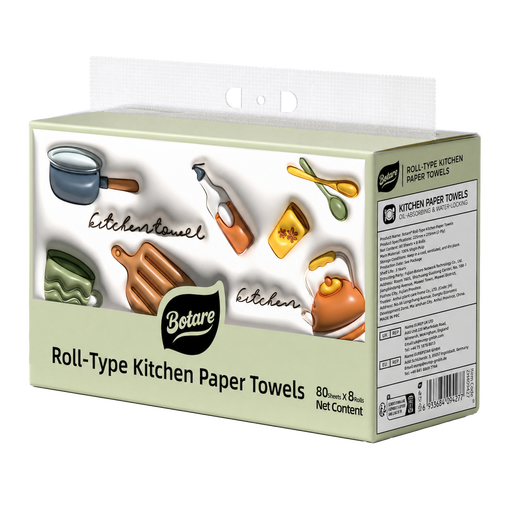
Why this suits the profile: This set is neatly put together for households looking for a standard supply of kitchen roll without buying a very large box straight away.
The product listing clearly states eight rolls and 80 sheets per roll. This means you can estimate the total volume in advance rather than just relying on the pack size.
Eight rolls per pack and a stated focus on water absorption for everyday kitchen tasks.
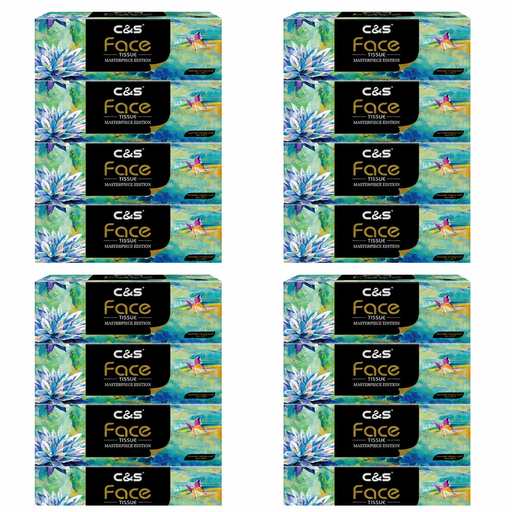
Why this suits the profile: Handy for households, reception areas and offices where you need a fixed tissue box in several places.
The number of boxes and tissues is specified: 16 boxes with 90 tissues each, making 1,440 tissues in total. That makes stock planning straightforward.
4-ply according to the product listing, with 90 tissues per box and a pack designed for multiple locations.
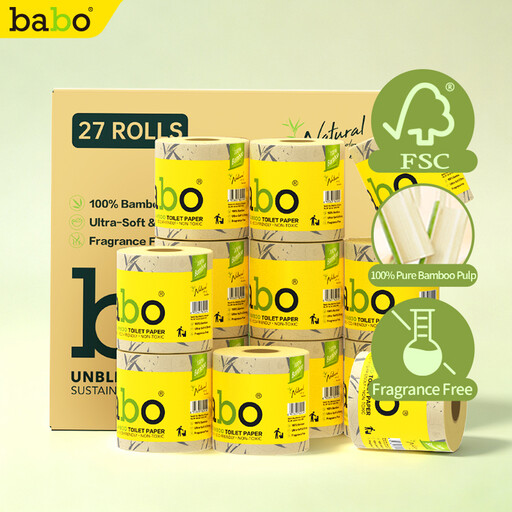
Why this suits the profile: A practical bulk-buy choice for larger families, shared houses, offices or commercial washrooms.
The pack states 27 rolls and 150 grams per roll. It also mentions unbleached fibres and a 4-ply structure, so you can assess the purchase based on concrete features.
Large supply of 27 rolls, 4-ply according to the product listing and made from unbleached bamboo pulp.
We've put together a full, up-to-date list of products that fully meet these strict selection criteria and comply with current European safety regulations.
Store household paper in a dry place away from moisture. In a bathroom without good ventilation, rolls can become damp more quickly. Avoid placing bulk packs directly on a cold floor or against a damp wall.
For offices and businesses, it's helpful to note your average weekly usage. This prevents both running out and holding too much stock. With boxes of tissues, pay attention to the dimensions: large boxes don't always fit existing holders or cupboard spaces.
If you want to buy compostable kitchen roll or unbleached paper, check the full packaging and the waste disposal instructions. Tissues and kitchen rolls should also clearly state that they must not be flushed down the toilet, unless the packaging explicitly says otherwise.
That depends on the task. Choose kitchen roll for spills, grease and cleaning work. Use toilet paper for the bathroom, and paper tissues or soft facial tissues for your face and small everyday tasks. One product for all uses might seem simple, but it's often less practical.
It can be, but compare the number of sheets, plies and the size per sheet. A bulk pack makes most sense for families, offices and businesses with regular usage. Also check that you have enough dry storage space.
Unopened paper generally remains usable as long as it's stored dry, clean and undamaged. Manufacturers may state a shelf life or storage recommendation. Check the packaging on receipt and don't use rolls that are damp, soiled or torn.
