
Same-day & Next-day Delivery

Quality Guaranteed

Unlock Your Welcome Offers: FREE Delivery | Up to 80% OFF | Free 30-day JoyPlus trial
Download the APP
Looking to buy gyoza dumplings for a quick dinner, snack or side dish? You’ll soon find plenty of similar-looking packs. But frozen gyoza can vary in their fillings, portion sizes, allergens and cooking instructions. Attractive packaging or a claim that they’re “authentic” doesn’t tell you much about what you’ll get in the pan.
Use this practical guide to compare Japanese dumplings and other Asian dumplings based on what really matters at home.
“Chicken”, “beef”, “prawns” or “kimchi” doesn’t tell you how much of that ingredient is actually in the filling. So check the ingredients list. For example, BML Shrimp Gyoza contains 34,90% prawns. Ajinomoto Beef Dumplings contains 24% beef. That gives you a clearer idea than a striking product name.
Not all gyoza come with the same instructions. Some can be pan-fried, steamed and deep-fried, while others mainly recommend one method. Cooking times also vary. According to the product information, KHY Chicken Gyoza should be pan-fried for about 2 minutes, then covered with water and heated again. BML Shrimp Gyoza takes around 6 minutes to cook from frozen.
If you defrost the dumplings first when you don’t need to, the wrappers may turn soft or the filling may leak out. Always follow the instructions on the packaging.
A 500 or 600 gram bag is handy when you’re feeding several people, but it’s not always practical for a small household. A multipack can be good value if you eat gyoza regularly, while a 300 or 400 gram pack may be better for a one-off meal. You’ll also need enough space in your freezer to store frozen products as soon as they arrive.
Most gyoza contain wheat or gluten in the dough. Soya and sesame are also common in the sauce, oil or filling. If you’re buying a prawn product, look out for crustaceans. KHY Chicken Gyoza lists wheat and soya as allergens, while BML Shrimp Gyoza lists crustaceans, wheat and gluten.
If you have an allergy, always check the latest label. Online product information can change, and cross-contamination warnings aren’t always shown in the same way.
To pan-fry gyoza, you’ll usually need a frying pan, a little oil and some water. A common method is:
Steaming gyoza can give them a softer wrapper. According to the cooking instructions, deep-frying usually gives them a golden-brown crust, but it requires more oil and care. Don’t defrost the products unless the label specifically says to.
Don’t just compare the price per pack: check the weight or number of pieces too. Ajinomoto Pork and Beef Dumplings are sold in packs of 30. KHY Chicken Gyoza is available in a 500 gram pack and a multipack of 3 x 500 grams. Ajinomoto Chicken & Veggie Gyoza is available in 600 grams and as 2 x 600 grams.
Nutritional values vary from product to product. For example, KHY Chicken Gyoza contains 147 kcal per 100 grams, while BML Shrimp Gyoza contains 189,1 kcal per 100 grams. Use these figures to compare products, not as a medical assessment.
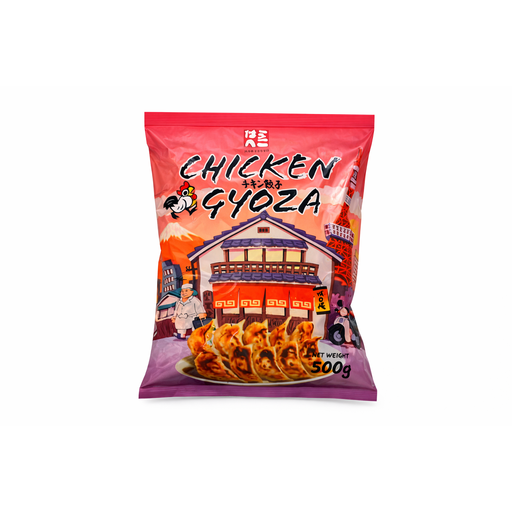
Why it suits this profile: A manageable pack for anyone trying chicken gyoza for the first time without committing to a multipack.
The cooking instructions clearly explain how to pan-fry, deep-fry or steam the gyoza from frozen. Allergens such as wheat and soya are listed.
500 grams, chicken and vegetable filling, 147 kcal per 100 grams according to the product information, and three cooking options.
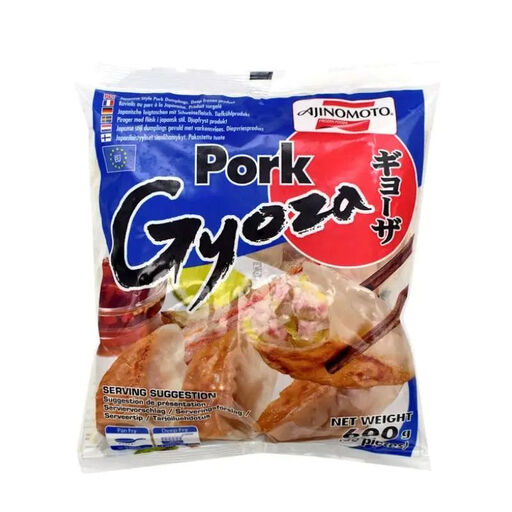
Why it suits this profile: A good choice if you want a set portion size and a classic pork gyoza filling.
The pack specifies the quantity: 30 dumplings. The ingredients and allergens, including gluten, wheat and soya, are listed.
30 pieces, pork and vegetables, with a dough wrapper described as suitable for a gyoza meal.
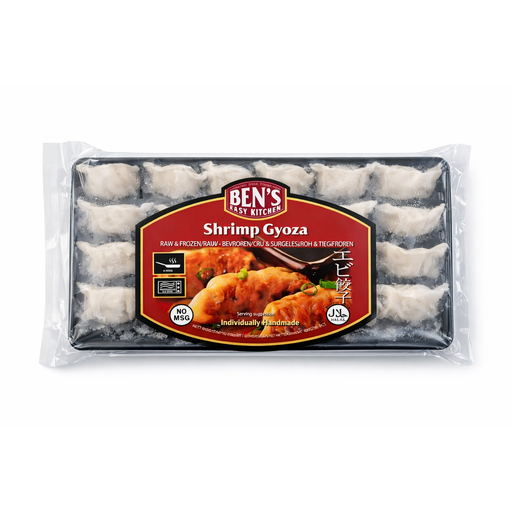
Why it suits this profile: For anyone specifically looking for prawn gyoza in a compact pack for a quick meal.
The prawn content is specified as 34,90%. The instructions say to cook for around 6 minutes from frozen.
400 grams, with prawns and vegetables in the filling, and 9,5 grams of protein per 100 grams according to the nutritional information provided.
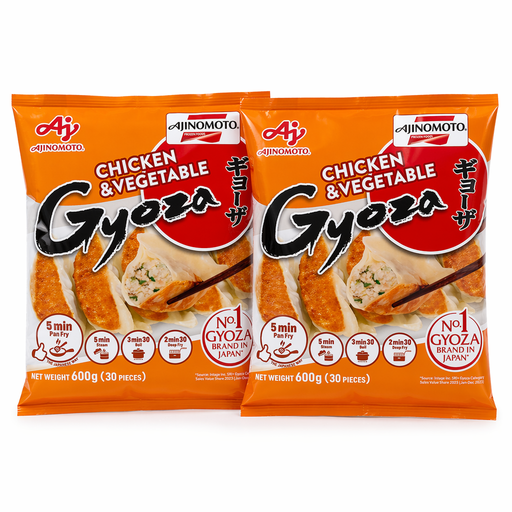
Why it suits this profile: The twin pack is ideal for households that regularly serve up a quick Asian meal.
The pack size, portions and cooking options are clearly described. Be sure to check your freezer space and the use-by date on the label.
2 x 600 grams, chicken with vegetables, and suitable for pan-frying, steaming or boiling according to the product description.
We’ve put together a complete, up-to-date list of products that meet these strict selection criteria and the applicable European safety regulations.
For a quick meal, the pan method works well: briefly fry the frozen dumplings in oil, add water and cover the pan. Then remove the lid and continue cooking until the water has evaporated. Use a pan that’s large enough to keep the gyoza from touching.
Serve them with soya sauce, rice vinegar, spring onions or a cucumber salad. If you’re using a ready-made sauce, check the allergens again, especially soya, wheat and sesame.
For many products, yes. The product information for KHY Chicken Gyoza, KHY Shrimp Gyoza and BML Shrimp Gyoza gives cooking instructions for preparing them from frozen. Always check the instructions on the pack you buy.
Keep gyoza frozen until you’re ready to use them, and follow the date and temperature instructions on the packaging. Once defrosted, they should be kept chilled and eaten within the stated period, according to the product information. Don’t refreeze defrosted gyoza.
That depends on the portion and what you serve alongside them. Gyoza can be served as a snack, a side dish or part of a quick Asian meal. Add vegetables, noodles or rice for a more substantial meal.
