
Vandaag of morgen in huis

Kwaliteit gegarandeerd

Welkomstaanbiedingen ontgrendelen: GRATIS bezorging | Tot 80% korting | Gratis 30 dagen JoyPlus-proefperiode
Download de app
Looking to buy gummy sweets for home, a birthday or a goodie bag? The choice might seem simple, but packaging can give you the wrong impression. A large bag isn’t always better value, an eye-catching shape tells you little about the ingredients, and “fruity” doesn’t automatically mean it contains a lot of fruit.
Use this practical guide to focus on what really matters: packaging, ingredients, allergens, texture, quantity and occasion. You’ll find soft sweets to suit children, families, parties or simply stocking up the cupboard.
A 1-kilo bag or tub usually costs less per 100 grams than a smaller bag. However, you may end up paying for more sweets than you need. Smaller portions are often more convenient for children’s party bags, while a large pack is better suited to a party or sharing.
Always compare the net weight and, if available, the price per 100 grams. A 60- or 65-gram pack is a good size for trying different flavours. A 1-kilo tub is more practical if you’re looking for a sweet mix for several people.
Fruit gummies may contain concentrated fruit juice, flavourings or a combination of the two. Check the ingredients list on the label and see how much fruit juice has actually been added. Some products, for example, list a percentage of apple, grape, pineapple or mango juice.
Set realistic expectations to avoid disappointment: gummy sweets are still sweets and are generally high in sugar. Nutritional values vary from product to product. In the product information provided, for example, sugar levels range from around 30 to 70 grams per 100 grams.
Playful shapes, multiple layers and a peelable outer layer make sweets appealing, but they don’t determine whether a product is right for you. Also check:
Bags of 60 to 125 grams are easy to divide up for party bags or treats. For a film night, birthday party or sweet jar, 180 grams to 1 kilo is more practical. Just check the best-before date and make sure you have somewhere to store the pack with the seal closed properly.
Not all gummies have the same bite. Soft sweets such as foam sweets are lighter, while gelatine-based fruit gummies are often firmer and chewier. Peelable sweets add an element of fun. Sweets with a chocolate coating pair a soft centre with a different outer layer, so pay extra attention to the milk and soya information.
Always check the current packaging before ordering. Pay particular attention to:
Brand names such as Haribo sweets and Amos gummies can help you find a particular style, but the specifications for each product variant are what matter.
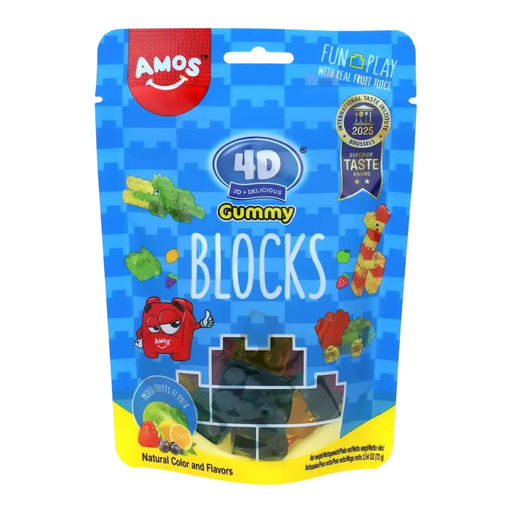
Why it suits this buyer: The 72-gram bag is a manageable size and combines apple, orange and strawberry flavours with a playful block shape.
The quantity is clearly stated, and the product information lists gelatine, possible traces of milk and soya, and 52 grams of sugar per 100 grams.
Three listed fruit flavours, an edible building-block shape and a compact 72-gram pack.
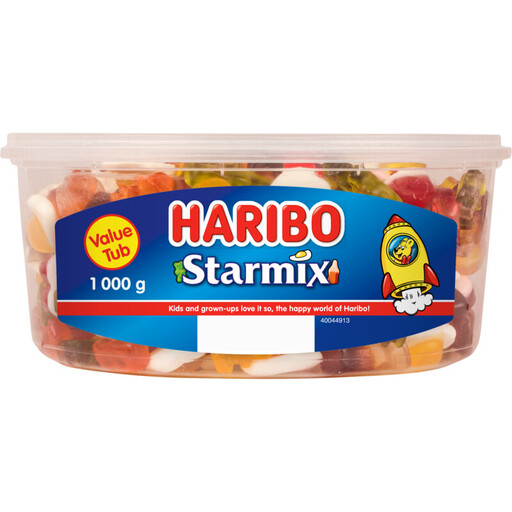
Why it suits this buyer: This mix includes hearts, fruit-flavoured gummy rings, cola bottles and Goldbears, making it a good choice for households that want to offer a range of shapes.
The quantity and portion information are clear: 1 kilo, which the product information says provides 40 portions of 25 grams.
A large supply, a variety of sweet shapes and, according to the nutritional information provided, 342 kcal and 47 grams of sugar per 100 grams.
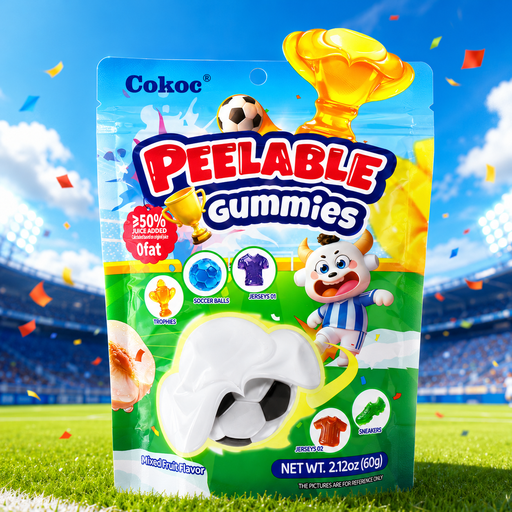
Why it suits this buyer: The football shape and peelable texture make these sweets a good fit for party bags, celebrations and occasions when the eating experience is part of the fun.
The product information lists the mixed fruit flavour, the 60-gram portion and the colourings used, including the required warning.
Peelable texture, football shape and 48 grams of sugar per 100 grams according to the product listing.
For children’s party bags, small bags that are easy to hand out individually are often a practical choice. Pick a shape that suits the theme, but check the age guidance, gelatine and allergens first. For a gift goodie bag, eye-catching options such as Amos Peelerz, Pac-Man jellies or fruit-shaped gummies could be just the thing.
If you’re looking for a sweet mix, try combining different textures: fruit gummies, wine gums, foam sweets and perhaps jelly sweets. This gives you more variety than choosing just one flavour or shape. Store opened bags in an airtight container and keep sweets out of reach of young children.
We’ve put together a complete, up-to-date list of products that meet these strict selection criteria and the current European safety regulations.
It depends on the product and packaging. Check the date on the bag and the storage advice. Once opened, sweets generally keep their texture better if you reseal the pack properly and store it in a cool, dry place away from direct sunlight.
Fruit gummies usually refers to soft sweets shaped like fruit or with fruit flavours. Wine gums are often firmer and chewier, and come in a variety of shapes and fruit flavours. Jelly sweets can be softer or more gel-like. The names aren’t used consistently, so check the ingredients and product description.
Check the age guidance, gelatine, allergens and any colourings warnings. Also consider the size and firmness of the sweets. Always follow the information on the current packaging, especially if you’re handing out sweets at a birthday party, school event or other occasion.
