
Vandaag of morgen in huis

Kwaliteit gegarandeerd

Welkomstaanbiedingen ontgrendelen: GRATIS bezorging | Tot 80% korting | Gratis 30 dagen JoyPlus-proefperiode
Download de app
Buying glasses online might seem straightforward: pick a frame, check the price and place your order. Yet many purchases go wrong because important details only become apparent after delivery. A pair of reading glasses might feel comfortable at first, but not match the strength you need. Sunglasses can be lightweight and stylish, yet provide insufficient information about UV protection. And a pair of smart glasses demands attention not just to design, but also to compatibility, battery life and privacy.
With this buying guide, you can compare glasses on verifiable features. That way, you can find a pair of reading glasses, cycling glasses, sunglasses or AI glasses that suit your needs in the UK.
Reading glasses are designed for close-up use. The strength is often given as +1.00, +2.00, +3.00 or as 200D, 300D and 400D. A +2.00 reading glass might be suitable for your reading distance, but that doesn't automatically mean the same strength is comfortable for everyone.
Bear in mind:
Ordinary sunglasses or sports glasses are not automatically suitable as safety glasses. Always check the stated use and standard. For sports glasses, ANSI Z87.1 may be listed as a performance standard. This indicates tested impact resistance, but does not make the glasses suitable for tasks such as grinding, welding or machining.
When it comes to sunglasses, also look out for:
A lightweight pair of glasses is comfortable for prolonged wear, but weight alone tells you nothing about fit. Also check the frame width, bridge width, temple length and adjustability of the nose pads.
A rimless pair of reading glasses can be less conspicuous, while a half-rim reading glass offers a practical compromise between support and an open look. For sunglasses, foldability and hinges are especially important if you often carry them in a bag or jacket pocket.
For reading glasses, values such as 200D, 250D and 350D appear in the product name. Always check how the seller explains this designation. A full-rim model generally offers more support around the lens; a half-rim or rimless model can look lighter.
If possible, measure an existing pair of glasses. The numbers on the temple, for example 50-22, usually refer to the lens width and bridge width in millimetres. This is especially important for smart glasses. The Ray-Ban Meta Wayfarer models in this selection list size 50-22, with a temple length of 150 mm.
A polarised pair of sunglasses is ideal for cycling, sailing and driving in bright light, because reflections from road surfaces and water can be distracting. The OutdoorMaster Hawk HD features polarised lenses, UV400 protection and a VLT of 18%. According to the product information, a clear interchangeable lens is also included for overcast conditions.
A photochromic pair of cycling glasses changes tint based on UV exposure. The OutdoorMaster models in this selection list a range from category 0 to category 3. Be aware of the limitation: according to the product information, photochromic lenses may not darken as much inside a car because the windscreen blocks UV radiation. So a photochromic pair of cycling glasses is not automatically the most suitable pair of sunglasses for driving.
TR90 is mentioned for several sports and sunglasses as a flexible frame material. The Revoray Y1 weighs approximately 33 grams according to the product specifications and has adjustable silicone nose pads. The Revoray X3 weighs around 30 grams and uses an integrated PC lens.
Clean lenses with water and a soft cloth. Do not use alcohol or harsh cleaners if the product information advises against it. Store the glasses in a case and replace lenses when they become deeply scratched.
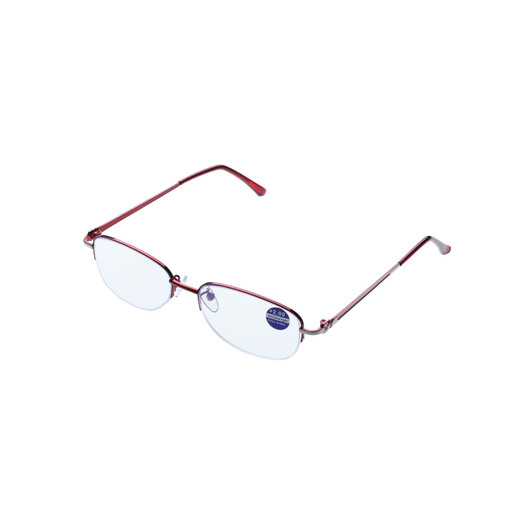
Why this fits the profile: A straightforward model for reading at the office or at home, when you want a half-rim design and a low entry price.
The strength is clearly stated in the product name. Just check beforehand whether 200D suits your reading distance.
Half-rim design, unisex style and intended for office and home use.
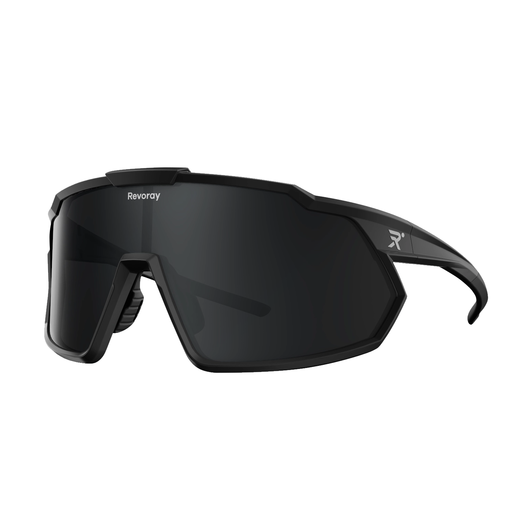
Why this fits the profile: For cyclists who care about polarisation, low weight and a stable fit on longer rides.
The stated 33 grams, adjustable nose pads and anti-slip details make the fit verifiable rather than based on appearance alone.
TAC polarised lenses, UV400 according to the product information and ANSI Z87.1 listing.
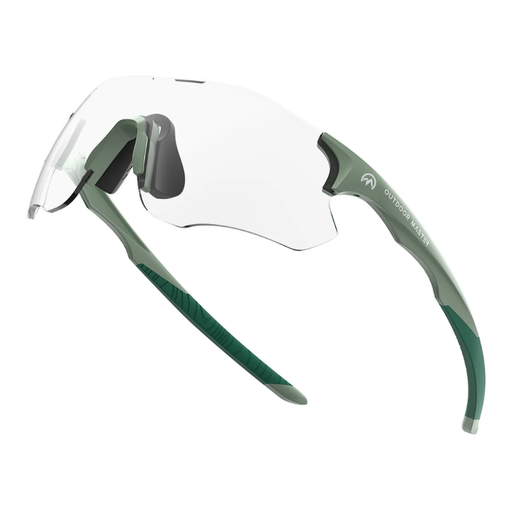
Why this fits the profile: For cyclists and outdoor sports enthusiasts who encounter changing light conditions and want a photochromic model.
The product information explicitly states category 0 to 3 and warns that the effect may be limited inside a car.
TR90 frame, anti-slip details, UV400 listing and included EVA case.
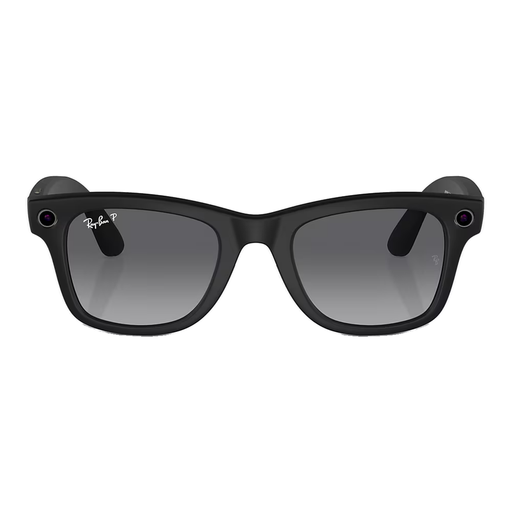
Why this fits the profile: For users looking for AI glasses with a camera, open-ear audio and voice control in a classic frame.
The required Meta AI app, iOS and Android versions, Bluetooth 5.2 and size 50-22 are all listed in the product information.
According to the product information: 12 MP camera, five microphones and up to four hours of battery life, with charging case.
We have compiled a full, up-to-date list of products that fully meet these strict selection criteria and comply with current European safety regulations.
It can be for temporary close-up reading, as long as you choose the correct strength and follow the safety warnings. Reading glasses are not safety glasses and are not a substitute for a personal eye test. Do not use them while driving.
That depends on the material, hinges, usage and care. Store the glasses in a case, clean the lenses with a soft cloth and avoid heat, pressure and sharp objects. Replace glasses when the lenses are deeply scratched or the frame is no longer stable.
Check the lens type and light transmission. Polarised sunglasses can reduce reflections, but a dark lens is not suitable in every situation. According to the product information, photochromic lenses may not change colour as much inside a car. Always check the product warnings and choose a model that is suitable for the conditions in which you are driving.
