
Vandaag of morgen in huis

Kwaliteit gegarandeerd

Welkomstaanbiedingen ontgrendelen: GRATIS bezorging | Tot 80% korting | Gratis 30 dagen JoyPlus-proefperiode
Download de app
If you’re looking to buy fruit sweets, you’ll quickly spot dozens of colourful bags, Japanese specialities and soft gummies online. Yet an eye-catching packet tells you very little about the flavour, texture or whether it’s right for your needs. Whether you want to share sweets, give them as a gift or keep them for a film night, it pays to look beyond the fruit picture on the packaging.
As Joybuy’s Product Recommendation Officer, I filter product information based on practical points. Below, you’ll find out what to look for when choosing fruit gummies, gummy sweets, mochi sweets and other tropical snacks.
A packet might show mango, peach or lychee in large print, yet the product may only contain a small amount of juice or purée. For example, Amos Peelerz Mango states 6.2% mango purée. That makes it a mango gummy, but not the same as dried fruit or a snack with a high fruit content.
Always check the ingredients list. Look out for terms like fruit purée, concentrated fruit juice and flavouring. According to the brand’s own product information, Amos Peelerz Peach contains 11% concentrated fruit and apple juice; check the current packaging if this percentage matters to you.
Fruit gummies are usually elastic and chewy. Jelly bonbons feel smoother and more gel-like. Mochi sweets are made with glutinous rice or tapioca starch and have a soft, doughy outer layer. A product photo can’t show these differences clearly.
If you order a mix of sweets without comparing, you could end up with a bag that doesn’t match the eating experience you want. Look for words like gummy, jelly, chewy, glutinous rice and freeze dried. These give a better indication of the texture.
A 45g or 65g bag is handy for on the go, but a larger pack can be more practical for a party. So compare the price per 100g, not just the price of the bag. Also check whether individual portions or a resealable pack are included. This is especially useful when you’re ordering sweets online and plan to store or share them.
Check before you checkout:
The ingredients list on the packaging is the definitive source. Product information online can change or vary by market.
Fruity doesn’t automatically mean light or low in sugar. Amos Peelerz Mango states 52g of sugars per 100g. Nerds Gummy Clusters Fruit-Flavour Candy states 70g of sugars per 100g. These figures help you judge portions realistically, especially with a mix of sweets.
Use the nutritional information as a comparison point, not a health claim. Sweets are still a treat. Also pay attention to the net weight: a 120g pack can run out faster than you expect when sharing.
According to the product information, most fruit gummies and jelly sweets should be stored in a cool, dry place away from direct sunlight. Mochi often needs extra care: once opened, some varieties must be kept refrigerated and eaten within the stated period.
Check before use:
This prevents dried-out gummies, sticky sweets or a texture that no longer matches the product description.

Why this fits the profile: A compact 65g bag to try a peelable gummy and tropical mango flavour without buying a large supply straight away.
The product information clearly mentions a two-layer structure, 6.2% mango purée and the presence of beef gelatine. This lets you check flavour, texture and dietary preference in advance.
Peelable outer layer, mango filling and resealable bag. Per 100g, the product information states 305 kcal and 52g of sugars.
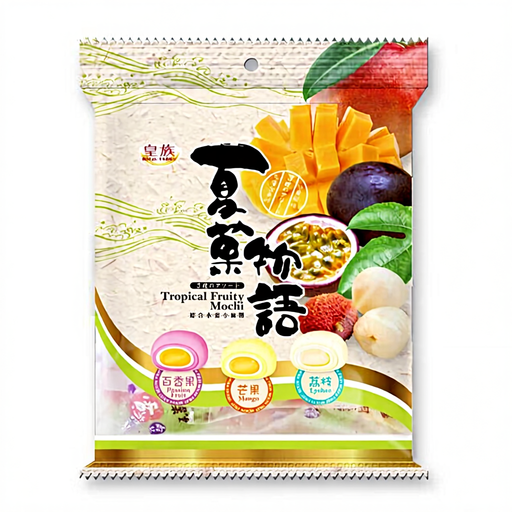
Why this fits the profile: For anyone looking for a Japanese snack with a different texture to ordinary gummies and who wants to combine several tropical fruit flavours.
The ingredients list glutinous rice, mango, passion fruit and lychee juice. Milk and mango are also listed as allergens, so you’re not relying solely on the tropical packaging.
120g, soft mochi texture and three fruit profiles. The product information states 334 kcal and 41.4g of sugars per 100g.

Why this fits the profile: A larger pack for multiple snacking occasions, a family or a table of shareable gummies.
The product information mentions a soft, chewy texture, a resealable pack and roughly five sweets per 25g. This makes portions and storage clearer.
145g, natural flavourings according to the product description and no added artificial colours according to the brand statement. The product may contain traces of milk, nuts and peanuts.
We’ve put together a full, up-to-date list of products that fully meet these strict selection criteria and comply with current European safety regulations.
Fruit gummies are usually elastic and gelatine-based. Mochi sweets often have a soft, sticky outer layer made from glutinous rice or tapioca starch. Check the ingredients if you’re looking for a specific texture.
Generally, store gummies sealed, in a cool, dry place away from sunlight and heat. Always follow the instructions on the packaging. For mochi, refrigeration and faster consumption may be recommended after opening.
That depends on the price per 100g, delivery costs and pack size. Online, it’s easier to compare flavours, ingredients and net weights. For a fair comparison, include all additional costs and check the best-before information.
