
Vandaag of morgen in huis

Kwaliteit gegarandeerd

Welkomstaanbiedingen ontgrendelen: GRATIS bezorging | Tot 80% korting | Gratis 30 dagen JoyPlus-proefperiode
Download de app
When you want to buy energy drinks online, you’ll quickly come across dozens of flavours, sizes and multipacks. But the eye-catching packaging doesn’t always tell you what you need to know. A large can, for example, can contain much more caffeine than a small one, while “zero” or “sugarfree” says nothing about the caffeine content.
As Joybuy Product Recommendation Officer, I filter offers based on verifiable information: volume, caffeine, sugar, calories, flavour and packaging. This way, you can compare a Red Bull energy drink, buying Monster Energy and fruit drinks on the points that really make a difference for everyday use.
A 500 ml can contains twice as much liquid as a 250 ml can. With a caffeine content of around 30 to 32 mg per 100 ml, that also means roughly twice as much caffeine per can. So a large can isn’t automatically better value or more suitable for on the go.
A sugar-free energy drink can contain virtually no sugar or calories, but still have a high caffeine content. For example, Monster Ultra Peachy Keen lists 30 mg of caffeine per 100 ml. Ghost Energy contains 200 mg of caffeine per 473 ml can according to the product information. Always check the nutritional information table and the warning on the product page.
An energy drink with fruit flavour doesn’t automatically contain a lot of fruit. Monster Mango Loco states 9% fruit juice from concentrate, while some exotic soft drinks have a smaller or different proportion of fruit juice. Look at the ingredients list: “flavouring” and “fruit juice from concentrate” are not the same thing.
European labelling usually shows the value per 100 ml. For your purchase, the amount per can is more practical.
In the EU, drinks with more than 150 mg of caffeine per litre must carry a warning about the high caffeine content. The warning also states that such drinks are not recommended for children and pregnant or breastfeeding women. Also read the current packaging, especially for imported products.
A regular energy drink often contains sugar. Red Bull The Sea Blue Edition, for example, lists 11 g of sugar and 45 kcal per 100 ml. In a 250 ml can, that works out at around 27.5 g of sugar and 112.5 kcal.
Sugar-free variants usually use sweeteners such as sucralose or acesulfame-K. Red Bull Pink Edition and Red Bull Green Edition Sugarfree list 0 g of sugar and around 2 to 3 kcal per 100 ml. That makes them a low-calorie energy drink, but not automatically low in caffeine.
Choose the size based on how you’ll use it:
With multipacks, also consider storage space, any deposit where applicable, and the best-before date on the packaging.
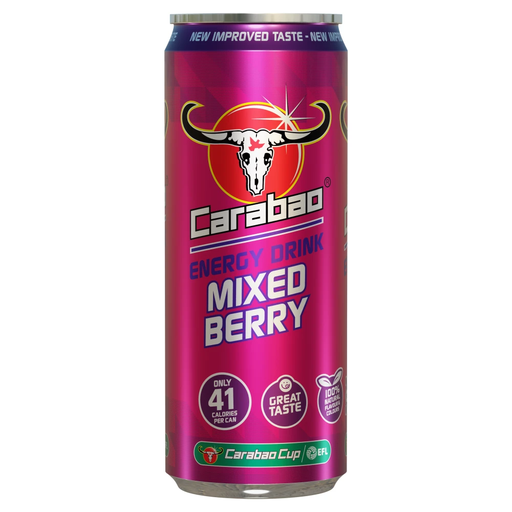
Why this fits the profile: A single 330 ml can is an accessible way to try a berry flavour without ordering a large energy drink multipack straight away.
The volume and nutritional values are clearly stated: 330 ml, 106 mg of caffeine and 39 kcal per 100 ml. This way, you’re not just comparing based on the packaging.
Berry flavour, compact size, taurine and B vitamins according to the product description.
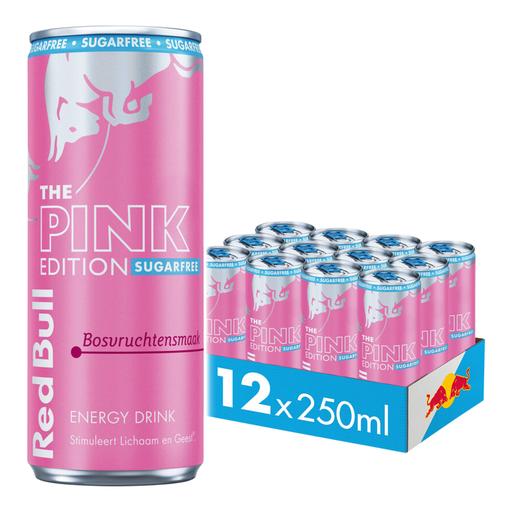
Why this fits the profile: For those who want a well-known brand, a recognisable compact size and a sugar-free fruit flavour all in one.
“Sugarfree” is not presented here as caffeine-free: the product information lists 32 mg of caffeine per 100 ml.
0 g of sugar, around 2 kcal per 100 ml and a multipack of 12 x 250 ml cans.
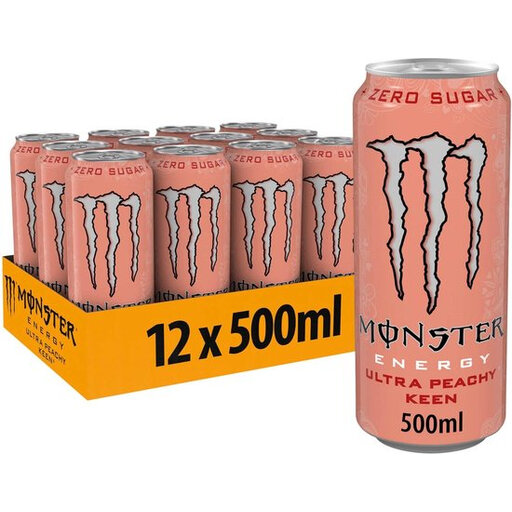
Why this fits the profile: The large cans suit stocking up for work, gaming or gatherings, as long as you factor the caffeine per can into your choice.
The product information explicitly states 0 g of sugar and 0 kcal, but also a high caffeine content of 30 mg per 100 ml.
Sugar-free, 500 ml per can and a peach variant with sweeteners.
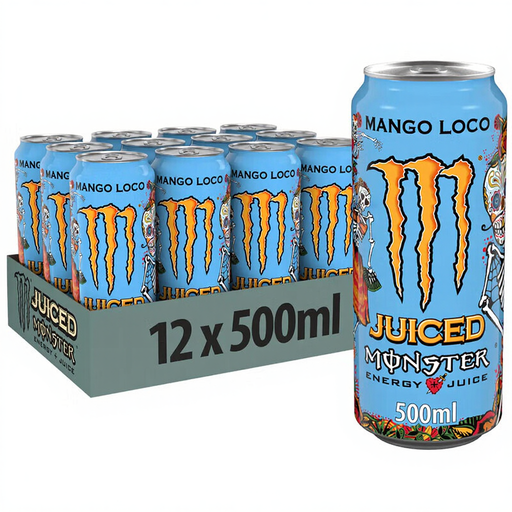
Why this fits the profile: A practical choice for anyone looking for a tropical fruit drink with mango and multiple fruit flavours in a bulk pack.
The product description distinguishes between fruit flavour and composition: it states 9% fruit juice from concentrate.
12 x 500 ml cans, 48 kcal per 100 ml and a blend including mango, guava, passion fruit and pineapple.
We’ve put together a full, up-to-date list of products that fully meet these strict selection criteria and comply with current European safety regulations.
Not every product in this aisle is a caffeinated drink. Rubicon Passion Fruit, for example, contains 4% passion fruit juice from concentrate and 20 kcal per 100 ml, but is not described as an energy drink. DubbelFrisss Boost Pineapple Mango contains 15% fruit juice and 23 kcal per 100 ml. These drinks are better suited to anyone looking for a sweet, fruity soft drink without the emphasis on caffeine.
Extra caution is needed for sport and fitness. An energy drink is not automatically a sports drink or a replacement for water. Look at the ingredients, caffeine and any supplement claims separately. For products sold as food supplements, such as Ghost Energy, you must follow the usage instructions and age warning.
Choose 12 x 250 ml if you want smaller portions and a lower caffeine volume per can. An energy drink 12 x 500 ml contains more drink per pack and therefore requires extra attention to the total amount of caffeine and sugar.
Usually yes, but always check the nutritional information table. Red Bull Pink Edition lists around 2 kcal per 100 ml and Monster Ultra Peachy Keen 0 kcal according to the product information. “Sugar-free” mainly tells you about sugar, not about caffeine or other ingredients.
Store unopened cans or bottles in a cool, dry place, out of direct sunlight and away from heat. Once opened, the product should be refrigerated and used within the time stated on the packaging. Also check the best-before date before buying, especially with a large multipack.
