
Vandaag of morgen in huis

Kwaliteit gegarandeerd

Welkomstaanbiedingen ontgrendelen: GRATIS bezorging | Tot 80% korting | Gratis 30 dagen JoyPlus-proefperiode
Download de app
Are you looking to buy energy drinks online for work, study, sport, a long drive or a social occasion? The choice might seem straightforward, but packaging and marketing claims can hide important differences. A larger can doesn't automatically mean more caffeine, and "zero" doesn't necessarily mean a drink contains no stimulants.
With this practical buying guide, you can compare energy drinks based on verifiable information: caffeine content, sugar, calories, volume per can and the number of cans per pack.
An energy drink of 500 ml usually contains roughly twice as much liquid as a 250 ml can. So don't just look at the milligrams of caffeine per can – also check the value per 100 ml. A can with 30 to 32 mg of caffeine per 100 ml will, at 500 ml, contain significantly more caffeine overall than a 250 ml can with the same concentration.
A sugar-free energy drink often still contains caffeine, taurine, guarana or other ingredients listed on the label. "Zero sugar" therefore tells you about sugar and calories, not about the amount of caffeine. Always check the ingredients list and nutritional information table.
An energy drink multipack might seem like good value, but the contents can vary considerably. Compare the price per can and per litre. A pack of 24 x 250 ml cans contains 6 litres in total; a pack of 12 x 500 ml cans also contains 6 litres. This way, you can compare different formats more fairly.
Many labels show a caffeine content of around 30 to 32 mg per 100 ml. For a 250 ml can, that works out at roughly 75 to 80 mg per can; for a 500 ml can, it rises to around 150 to 160 mg. The exact value can vary between products, so always check the label of your chosen variant.
Energy drinks containing caffeine are not suitable for everyone. Product labels typically warn that these drinks are not recommended for children, pregnant women or women who are breastfeeding. People who are sensitive to caffeine should also check the information on the packaging. Joybuy sells energy drinks to consumers aged 16 and over; please use the product responsibly.
A regular energy drink often contains around 11 grams of sugar per 100 ml. A 250 ml can therefore contains roughly 27.5 grams of sugar. Sugar-free versions use sweeteners instead, such as sucralose, acesulfame-K or aspartame. If you want to limit calories or sugar, you can compare these variants using the nutritional information table.
Also look out for differences between flavours within the same brand. A fruity variant with juice or sugar may have a different nutritional profile than an Ultra or Zero variant.
For sport and work, you can also browse our selection of sports energy drinks.
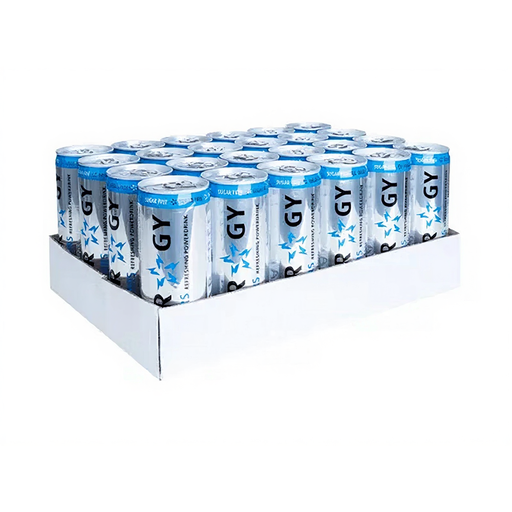
Why this fits the profile: A multipack of 24 compact 250 ml cans for anyone who wants to stock up regularly on a sugar-free energy drink.
The portion size is clear: 250 ml per can. The product information states 0 grams of sugar per 100 ml; check the current packaging for the full ingredients list.
24 x 250 ml, sugar-free formula and a stated caffeine concentration of 0.032%.
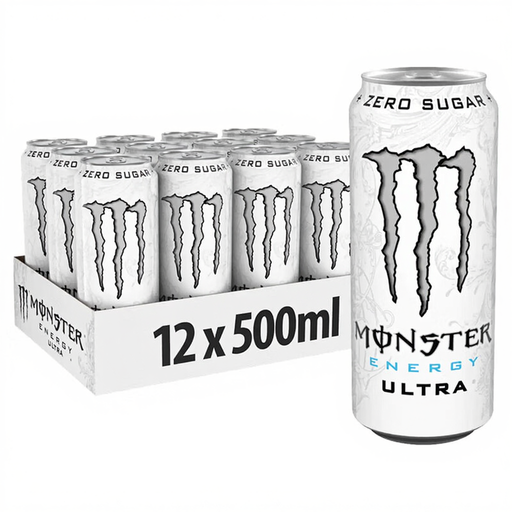
Why this fits the profile: For fans of a well-known brand, a citrus flavour and a large can for work, travel or sharing.
The packaging states 0 grams of sugar and 12 individual cans. This makes it easy to check the sugar content, volume and stock.
12 x 500 ml, citrus profile, 12 kcal per 500 ml according to the product information and 0 grams of sugar.
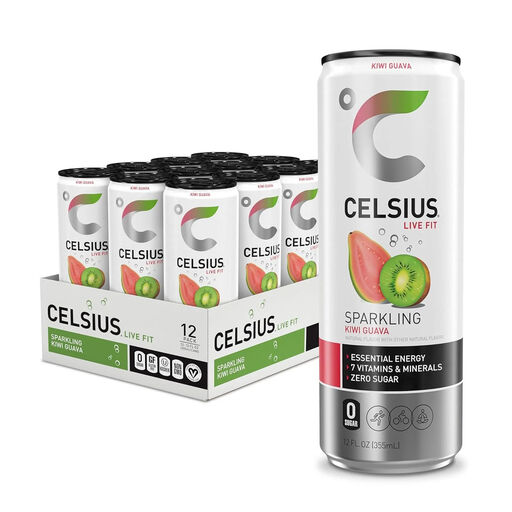
Why this fits the profile: A small pack for active days, commuting, studying or a training session where 250 ml is enough.
The product information states 0 grams of sugar and 3 kcal per 100 ml. The pack is also a multipack of 12 x 250 ml rather than a single large can.
Kiwi guava flavour, 250 ml per can, caffeine listed in the ingredients and sugar-free according to the nutritional information.
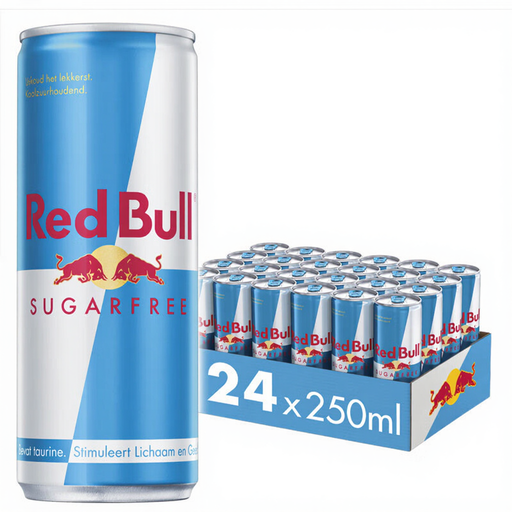
Why this fits the profile: Handy for anyone who wants to buy Red Bull in a compact multipack with a fixed portion size.
The product information states 32 mg of caffeine per 100 ml and 0 grams of sugar per 100 ml. This allows you to assess the portion and composition in advance.
24 x 250 ml, sugar-free formula and B vitamins according to the product information.
We've put together a full, up-to-date list of products that fully meet these strict selection criteria and comply with current European safety regulations.
It depends on the brand and size. Many products contain around 30 to 32 mg of caffeine per 100 ml. A 250 ml can then contains roughly 75 to 80 mg, while a 500 ml can can contain around 150 to 160 mg. Always check the current label.
Usually, yes, but check the nutritional information table. Sugar-free versions use sweeteners and may contain a small number of calories. For example, the Monster Ultra White states 12 kcal per 500 ml, while other variants may have a different value.
A multipack can lower the price per can, but that depends on the offer, the size and any deposit. Calculate the price per can and per litre. Also check the best-before date and store unopened cans in a cool, dry place away from direct sunlight.
