
Vandaag of morgen in huis

Kwaliteit gegarandeerd

Welkomstaanbiedingen ontgrendelen: GRATIS bezorging | Tot 80% korting | Gratis 30 dagen JoyPlus-proefperiode
Download de app
When you’re looking to buy an energy drink online, you’ll quickly come across dozens of cans, flavours and multipacks. Yet these drinks aren’t all interchangeable. A caffeinated drink for on the go serves a different purpose to an isotonic sports drink during a long workout. And a sugar-free energy drink isn’t automatically a suitable hydrating sports drink.
The biggest mistakes usually come down to three pitfalls:
Always compare caffeine on two levels. A 500 ml can with 32 mg of caffeine per 100 ml contains significantly more caffeine overall than a 250 ml can with the same concentration. The label will usually also include warnings such as “high caffeine content”.
For example: Monster Energy Ultra Rosa states 32 mg of caffeine per 100 ml. The product information also lists 0 grams of sugar and 2 kcal per 100 ml. Red Bull Ice Edition similarly states 32 mg per 100 ml, but comes in 250 ml cans. The total amount per container therefore differs due to the size.
Also look out for ingredients such as taurine, guarana, green tea extract or amino acids. These don’t automatically make a drink suitable for every occasion. Follow the warnings on the packaging. Many products are not recommended for children, pregnant women, breastfeeding women, or people who are sensitive to caffeine.
A standard energy drink can contain relatively high amounts of sugar. Slammers Energy Refreshing Power Drink, for example, lists 11.4 grams of sugar per 100 ml. In a 250 ml can, that works out at around 28.5 grams of sugar, based on the same nutritional values per volume.
If you want to drink less sugar, you can look for a sugar-free energy drink or a sugar-free sports drink. Monster Energy Ultra Rosa and Red Bull Ice Edition list 0 grams of sugar. They do contain sweeteners, such as sucralose and acesulfame-K. So don’t just check the front of the can – also check the ingredients list and the nutritional information table.
For a long workout or intense exercise, sodium, potassium, magnesium and carbohydrates can be more relevant than caffeine. An isotonic sports drink typically contains a combination of water, carbohydrates and electrolytes. Body & Fit Isotonic Electrolytes Drink provides, according to the product information, around 32 grams of carbohydrates and 129 kcal per 35 g serving. The 1.05 kg powder pack is intended to make approximately 15 litres of prepared drink, depending on the dosage.
A sugar-free electrolyte drink has a different profile. Applied Nutrition NA11 Hydration contains, per 330 ml can according to the label, 500 mg sodium, 190 mg potassium and 56 mg magnesium, with 0 grams of sugar and 7 kcal. That could suit someone who wants to use electrolytes around exercise without extra sugar. Do keep an eye on the sodium content and your overall diet.
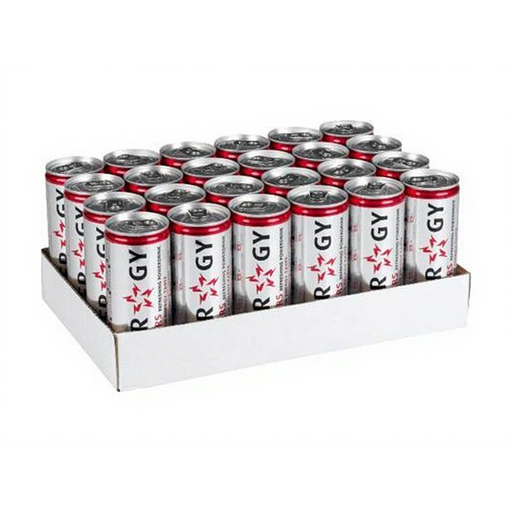
Why this fits the profile: The 250 ml size is manageable and the box contains 24 cans for anyone who regularly uses a caffeinated drink during work, on the go, or on a long drive.
The nutritional information lists sugar, caffeine and salt, so you don’t have to judge the formulation based on flavour or packaging alone.
24 cans of 250 ml; according to the product information with 11.4 g sugar per 100 ml and 0.032% caffeine in the ingredients list.
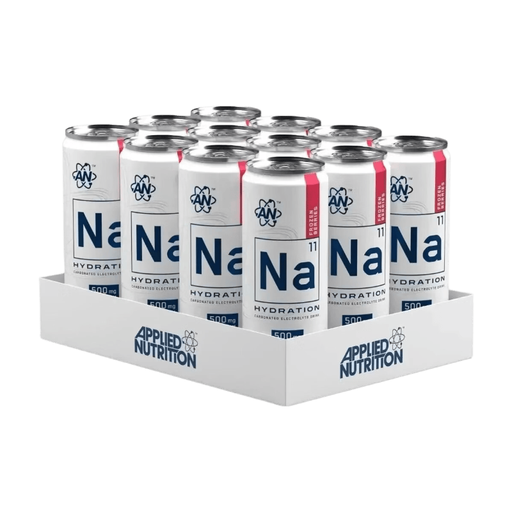
Why this fits the profile: This is a compact, lightly sparkling drink for adults who want to combine electrolytes with a sugar-free profile during or around training.
The product table makes it clear that this drink contains no caffeine and 0 grams of sugar per can. This prevents an electrolyte drink from being confused with an energy drink.
500 mg sodium, 190 mg potassium and 56 mg magnesium per 330 ml; 7 kcal per can and a multipack of 12.
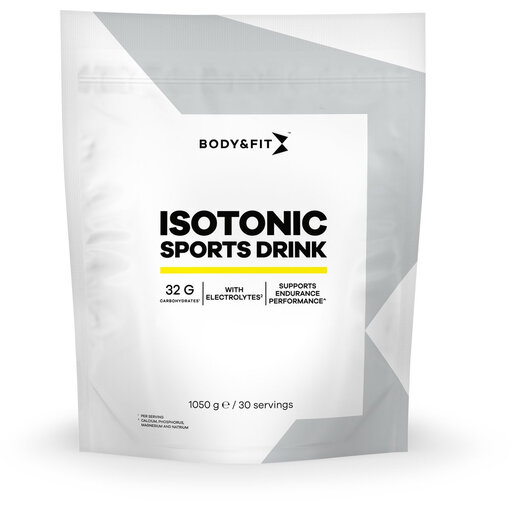
Why this fits the profile: The powder format is practical for cyclists, endurance athletes and people who plan multiple training sessions per week and want to mix their own amounts.
The dosage is clearly stated: mix 35 grams with approximately 500 ml of water. This allows you to better estimate portions and total cost.
Approximately 30 servings; per serving according to the label 32 g carbohydrates, electrolytes and 129 kcal.
For a smaller, sugar-free caffeinated drink, you could also look at Optimum Nutrition Amino NRG + Electrolytes. The product information states per 250 ml can: 100 mg caffeine, 3.125 mg amino acids and 70 mg magnesium, with 10 kcal. This is an amino acid drink, not a classic isotonic sports drink. So check whether you’re mainly after caffeine, amino acids or carbohydrates.
We’ve put together a full, up-to-date list of products that fully meet these strict selection criteria and comply with current European safety regulations.
That depends on your goal. An energy drink usually provides caffeine and sometimes sugar, but not automatically the electrolytes and carbohydrates you need for prolonged exertion. For endurance sport, an isotonic sports drink or carbohydrate sports drink may be more appropriate. For short workouts, water can be enough.
A sugar-free energy drink often contains caffeine and sweeteners, but little or no carbohydrates. An electrolyte drink focuses on minerals such as sodium, potassium and magnesium, and can be caffeine-free. Always check the nutritional information table; names like “hydration” or “energy” don’t tell you the full formulation.
A multipack often lowers the price per can, but compare the price per 100 ml or per serving. Also consider any deposit, storage space, shelf life and your actual usage. If you’re still unsure about flavour or caffeine content, it’s better to choose a smaller pack first.
