
Vandaag of morgen in huis

Kwaliteit gegarandeerd

Welkomstaanbiedingen ontgrendelen: GRATIS bezorging | Tot 80% korting | Gratis 30 dagen JoyPlus-proefperiode
Download de app
When you buy dark chocolate online, you often look first at the cocoa percentage and the packaging. Yet a big number on the front doesn't tell you everything. A bar with 90% cocoa can, for example, taste much more intense than expected, while a dark chocolate bar with nuts or orange may actually contain more sugar and additional allergens.
With this practical guide, you can focus on the information that really matters. That way, you'll avoid a bad purchase and choose a bar that suits your taste, the occasion and your budget.
The percentage tells you how much cocoa content the chocolate contains. It doesn't precisely indicate how bitter, fruity, spicy or smooth the flavour will be. 90% dark chocolate typically contains less sugar than a 70% variant, but can therefore also come across as stronger and drier.
If you usually eat milk chocolate, it's better to start with 70% dark chocolate or a bar around 78% cocoa. Connoisseurs looking for a pronounced cocoa flavour can look towards 90%.
Additions such as orange, almond, hazelnut or pistachio change the flavour and texture. Always check the ingredients list and nutritional information. A flavoured variant can contain more sugar than a simple dark chocolate bar.
Also pay attention to allergens. Products may contain milk, soya, almonds, hazelnuts or other nuts, or may contain traces of them. If you have an allergy, always rely on the label on the packaging.
Terms like "premium chocolate", "intense" or "supreme" are not fixed quality standards. Instead, look at the cocoa percentage, ingredients, net weight, nutritional information and allergen information. According to a brand's own research, claims about taste or product experience can be presented positively; that doesn't automatically make them objectively comparable.
Don't just compare the cocoa percentage, but also the amount of sugar per 100 grams. As a practical guideline:
A higher percentage doesn't automatically mean a product contains fewer calories. Chocolate remains an energy-dense food. Check the nutritional information per 100 grams and take the actual portion size into account.
Ingredients are listed in descending order by weight. If sugar appears near the top, it makes up a large part of the recipe. With a simple dark chocolate, you'll often see ingredients like cocoa mass, cocoa butter, sugar and possibly vanilla or soya lecithin.
With chocolate with nuts or chocolate with orange, check how much of the flavouring ingredient is actually present. For example, the Lindt Excellence Dark Orange lists 7% almonds and an orange preparation. That's different information from just the name "orange" on the front.
A 100g bar is handy for leisurely tasting or pairing alongside other flavours. A 180g bar, like Tony's Chocolonely Pure 70% Dark Chocolate, is more practical for sharing or using in recipes. Individually wrapped snacks are suitable for on the go, at the office or as part of a chocolate gift.
Store dark chocolate in a cool, dry place, out of direct sunlight and away from heat and moisture. The exact best-before date is on the packaging. Check the packaging upon receipt and do not use the product if it is damaged.
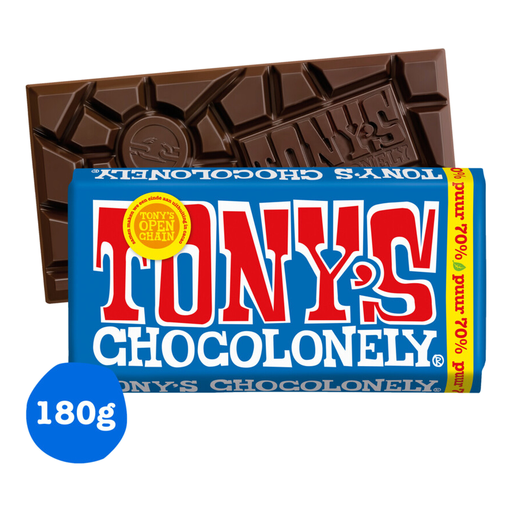
Why this fits the profile: The cocoa content of at least 70% is an accessible starting point for anyone wanting to try dark chocolate. The 180g pack is ideal for sharing or baking.
The cocoa percentage and ingredients are clearly stated. This means you don't have to rely solely on marketing terms.
At least 70% cocoa content, 180 g net weight and suitable for vegetarians according to the product information.
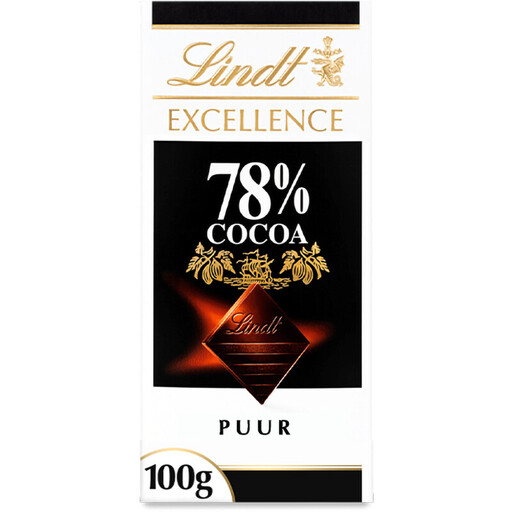
Why this fits the profile: This 100g bar offers a distinct cocoa flavour without going straight to the highest percentage. Ideal for enjoying on its own with coffee.
The cocoa content of at least 78% is clearly stated in the product information, so you can gauge the intensity in advance.
78% cocoa, 100 g net weight and an ingredients list with cocoa mass, cocoa butter, sugar and milk fat.

Why this fits the profile: The powerful flavour and high cocoa percentage suit enthusiasts who enjoy small pieces of dark chocolate with coffee or a dessert.
The product states 90% cocoa and only 7 g of sugars per 100 g. This makes the intensity easier to judge than based on the name alone.
90% cocoa, 100 g net weight and a short ingredients list with cocoa mass, cocoa butter, cocoa powder, sugar and vanilla.
We've put together a full, up-to-date list of products that fully meet these strict selection criteria and comply with current European safety regulations.
Often, yes. 70% dark chocolate usually has a more distinct cocoa flavour than milk chocolate, but is generally less intense than 85% or 90%. The precise taste also depends on the recipe, the origin of the cocoa beans and the amount of sugar.
In practice, "plain chocolate" and "dark chocolate" are often used interchangeably. Check the label for the actual cocoa percentage. A product containing milk solids can still be sold as dark chocolate, while its flavour profile may be milder.
Store the bar sealed in a cool, dry place, out of direct sunlight and away from heat sources. The fridge is usually not necessary and can affect the texture due to moisture and odour transfer. Always follow the storage advice and best-before date on the packaging.
