
Vandaag of morgen in huis

Kwaliteit gegarandeerd

Welkomstaanbiedingen ontgrendelen: GRATIS bezorging | Tot 80% korting | Gratis 30 dagen JoyPlus-proefperiode
Download de app
Are you looking to buy curry paste, but struggling to decide which jar suits your kitchen best among the Thai, Indian and vegan options? The differences aren't just about colour or brand. Heat level, allergens, portion size and salt content can also vary significantly.
Three common pitfalls to watch out for:
Start by looking at the composition. For a Thai curry paste, you'll often see ingredients like lemongrass, garlic, shallot, galangal, kaffir lime, coriander and chilli. Indian curry paste more commonly contains cumin, turmeric, coriander, ginger and tomato, for example.
Also watch out for hidden animal-derived ingredients. Some red and green curry pastes contain shrimp paste or shrimp powder. This is the case for several varieties from Mae Ploy, Nittaya and Sum & Sam, for instance. This means they are not suitable for vegans or anyone with a shellfish allergy.
Always check the label for:
A product described as having “plant-based ingredients” is not automatically vegan-certified. Always check the full ingredients list and allergen information.
The most well-known types each have their own character:
Heat is a personal thing. Start with less paste than the recipe suggests and add more later. A preparation guide such as 50g of paste with 400g of coconut milk is a practical starting point, but always check the instructions on the pack.
A small pack of 50 to 95g is ideal for trying out a flavour. Packs of 225 to 400g are better suited for multiple meals. A 1kg pack is best for families, meal preppers or anyone who regularly makes curry, soup, marinade and stir-fry dishes.
Pay attention to storage instructions. Many pastes need to be kept in the fridge after opening and must remain tightly sealed. Use a clean spoon to avoid contamination. The best-before date and storage information after opening are on the pack.
Also check the salt content. Curry pastes can be relatively high in salt, meaning you may need little or no extra salt during cooking.
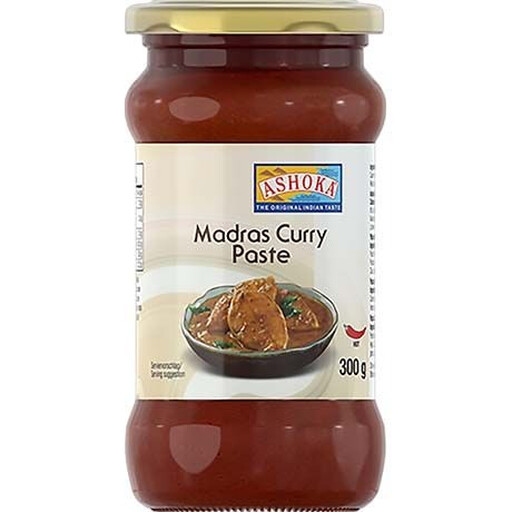
Why it fits this profile: The 300g pack offers multiple cooking sessions, and the product description mentions use for curry, marinades and grilling dishes. According to the information provided, this paste is suitable for vegetarians.
The ingredients list includes tomato, onion, garlic, ginger, chilli, coriander, cumin and turmeric, among others. It also states that the product contains none of the 14 major EU allergens.
300g pack; suitable for vegetarian dishes; can be used as a base for curry, marinade and grilling recipes.
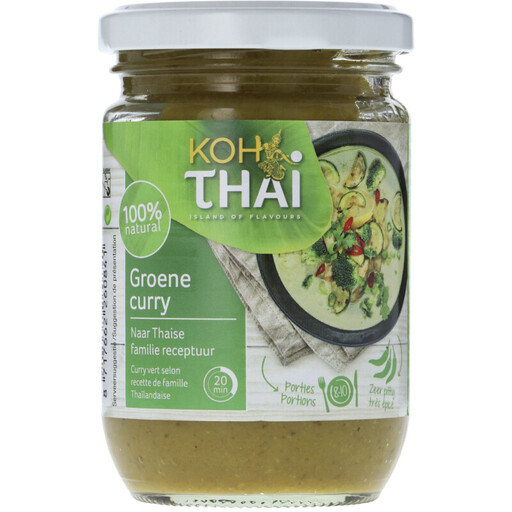
Why it fits this profile: If you're after a distinct Thai flavour, this paste is made with green chilli, garlic, shallot, lemongrass and kaffir lime. The product description states 8 to 10 servings.
The listed ingredients and nutritional values make comparison easier than relying on the green colour alone. The product information also mentions none of the 14 major EU allergens.
225g; 8 to 10 servings according to the product information; gluten-free as per the listed description.
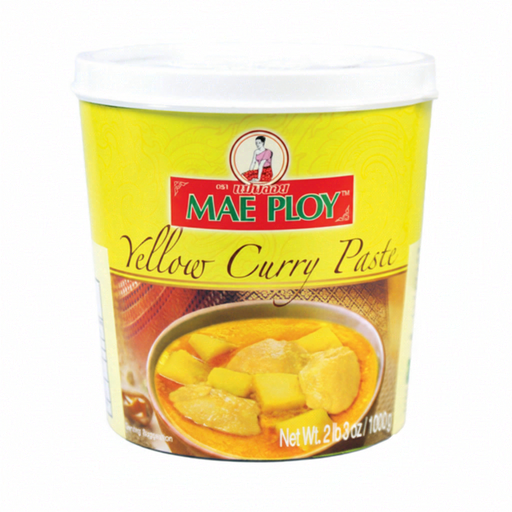
Why it fits this profile: The 1kg pack is designed for frequent use, large households or meal prep. According to the preparation instructions, you combine the paste with coconut milk and meat, tofu or vegetables.
The product information gives a specific ratio: 50g of paste with 400g of coconut milk. This makes it easier to estimate portions. According to the description, the paste must be refrigerated after opening.
1kg pack; yellow curry variety with lemongrass, garlic, galangal and turmeric, among others; suitable for various protein and vegetable options.
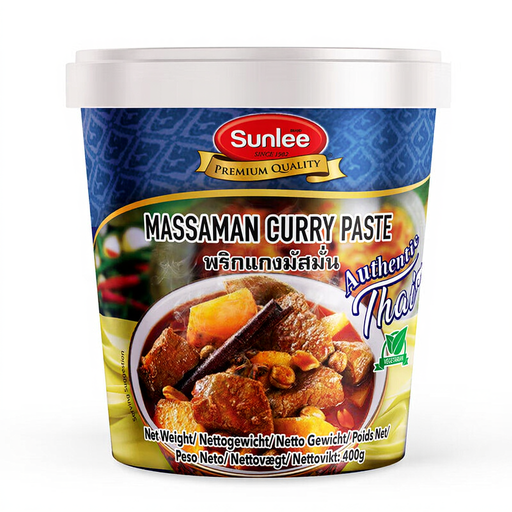
Why it fits this profile: The product description states that this massaman curry paste is vegan and suitable for curry, stews, marinades and soups. The flavour base includes chilli, lemongrass, garlic, galangal, cumin and cinnamon, among others.
The listed ingredients contain no shrimp paste. However, soya is listed as an allergen, so check the label if you have multiple allergies.
Vegan according to the product description; 400g; suitable for curry, stews, soup and marinade.
We've put together a full, up-to-date list of products that fully meet these strict selection criteria and comply with current European safety regulations.
A yellow curry paste is often an accessible starting point because, according to product descriptions, it is usually milder and slightly sweet. Start with a small amount and add more paste if you want extra flavour or heat.
Fry the paste briefly in oil to release the spices. Then add coconut milk, stock or tomato and let the mixture simmer gently. Add vegetables, tofu, fish or meat according to the recipe. Check the preparation instructions on the pack for the recommended ratio.
This varies by product. Many varieties need to be refrigerated and kept tightly sealed after opening. Check the label for the storage period and usage instructions. Don't rely solely on the best-before date once the product has been opened.
