
Vandaag of morgen in huis

Kwaliteit gegarandeerd

Welkomstaanbiedingen ontgrendelen: GRATIS bezorging | Tot 80% korting | Gratis 30 dagen JoyPlus-proefperiode
Download de app
Are you looking to buy crispbread for breakfast, lunch, a snack or drinks with friends? The choice might seem straightforward, but packaging can be confusing. Terms like "high in fibre", "wholegrain" and "extra crunchy" only really mean something when you also check the ingredients list, nutritional information and portion size.
A thin crispbread for cheese, for example, needs different qualities to a savoury bread snack for entertaining. These practical pointers will help you avoid paying for clever packaging language.
A product may contain wholegrain flour but still provide less fibre than another variety. Always check the nutritional information table. As a guide, compare the fibre content per 100g. In the range, this varies from 2.5g of fibre in g'woon Natural Breadsticks to 14g in g'woon Wholemeal Crispbread.
Also note the difference between wholegrain crispbread, rye crispbread and rusk. Rusk often has a lighter texture and may contain sugar or glucose-fructose syrup, giving it a different nutritional profile.
Cheese, garlic and herb varieties work well as savoury bread snacks, but they often contain more fat or salt than plain crispbread. For example, Wasa Cheese Sandwich Tomato & Basil lists 22g of fat and 1.25g of salt per 100g. That doesn't make them unsuitable, but it is relevant if you plan to eat them every day.
Many crunchy bread products contain wheat and gluten. Sesame, milk, soya, egg and rye are also common. Always read the current label, especially if you have an allergy or intolerance. Information on a product page can change; the packaging is the definitive source.
Store crispbread, crackers and breadsticks in a dry, cool place, tightly sealed. Moisture quickly makes them lose their crunch. When buying online, check the best-before information as soon as the product arrives.
If you're looking for crispbread rich in fibre, start by comparing the fibre content per 100g. Wasa Wholegrain Crispbread lists 100% wholegrain rye as its base and, according to the product information, uses three ingredients: wholegrain rye flour, yeast and salt. g'woon Wholemeal Crispbread lists 14g of fibre per 100g, with 48% wholegrain rye flour and 16% wholegrain wheat flour.
Bear in mind: "source of fibre" and "high in fibre" are regulated nutrition claims. The exact claim must meet European requirements. So always look beyond the claim and check the actual figure in the table.
Ingredients are listed in descending order by weight. If you want a clear rye variety, check that wholegrain rye flour appears first. For Wasa Wholegrain Crispbread, the product description confirms it is the main ingredient.
A product made with wheat flour, oil, seeds or flavourings can still be crunchy, but it will have a different profile. For a simple base for breakfast or lunch, products with a short ingredients list are often a better fit. For entertaining, grissini, breadsticks or bake rolls may be more appealing.
Don't just compare calories. Also look at fat, saturated fat, sugars, salt and fibre. A small pack may contain several portions, so you'll need to judge the amount per serving yourself.
Bolletje Light Crispbread Golden Crisp contains 7.7g of fibre per 100g according to the product information, with 417 kcal and 0.91g of salt. Bolletje Wholegrain Rusk contains 11g of fibre per 100g, but it is a rusk and therefore has a different texture and use compared to crispbread.
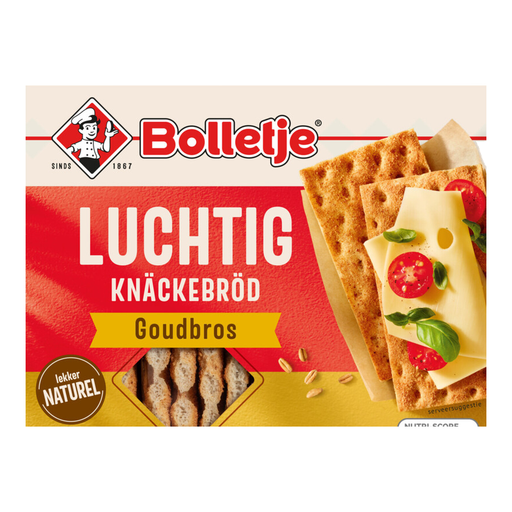
Why this suits the profile: An accessible plain variety for breakfast and lunch, without any strong herb or cheese flavours.
The product information states the fibre content of 7.7g per 100g, so you can check the claim against the nutritional table.
240g, an extra light texture according to the product description, and suitable for breakfast and lunch.

Why this suits the profile: For those looking for a distinct rye variety with a short ingredients list.
The product description states 100% wholegrain rye and three ingredients, so the grain base is easy to verify.
260g, a mild rye flavour according to the product information, and suitable for a variety of toppings.

Why this suits the profile: A large pack for households that regularly use wholegrain crispbread.
The label lists the percentages of wholegrain rye and wheat flour, and 14g of fibre per 100g.
375g, a blend of wholegrain rye and wheat, and suitable for cheese, spreads or vegetables.
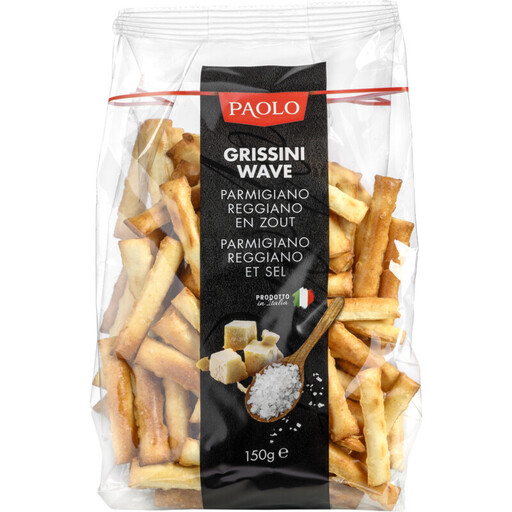
Why this suits the profile: For those who don't want a neutral crispbread, but an Italian bread snack for dips or a sharing board.
The product description mentions Parmigiano Reggiano and salt; the nutritional information lists 2.4g of salt per 100g.
150g, crunchy grissini with 7.5% Parmigiano Reggiano according to the ingredients list.
We've put together a full, up-to-date list of products that fully meet these strict selection criteria and comply with current European safety regulations.
If you want to buy rusk, it's better not to rely solely on the word "high in fibre". Also compare the grain type, sugars, salt and the number of pieces per pack.
Choose a plain variety or wholegrain crispbread with a clearly stated fibre content. Also check that the flavour works with your toppings. A mild rye variety goes well with both sweet and savoury toppings; a cheese or herb variety is better suited as a snack.
Seal the pack tightly after use and store it in a cool, dry place away from direct sunlight. Don't keep crispbread near the hob or in a damp cupboard. If it does go soft, check the best-before date and the condition of the packaging.
Not always. Compare the price per 100g, not just the price per pack. A larger pack can be better value if you use it regularly, but only if you can finish it before the best-before date. Also consider the number of portions and how much topping you use with it.
