
Vandaag of morgen in huis

Kwaliteit gegarandeerd

Welkomstaanbiedingen ontgrendelen: GRATIS bezorging | Tot 80% korting | Gratis 30 dagen JoyPlus-proefperiode
Download de app
When you buy crackers online, you’ll quickly spot dozens of varieties: classic salted crackers, mini crackers, rice crackers, seaweed crackers and Asian snacks with prawns, bacon or paprika. The difference isn’t just about flavour. Size, packaging, allergens and nutritional information also determine whether a product is right for a party, on the go or a night on the sofa.
A nice packet doesn’t tell you much about what’s inside. So pay attention to the verifiable details on the label instead.
A 300 g bag might look appealing, but it’s less practical if you only eat crackers occasionally. Once opened, they can lose their crunch. Individual portions or several resealable packs are more convenient for on the go, lunchboxes and when you have guests.
So don’t just compare the total price – also look at the price per 100 g, the number of servings and how the product is packaged.
A cracker with vegetables, seeds or seaweed flavour isn’t automatically a healthy cracker. Check the full nutrition table. Key points to look at are energy, fat, saturated fat, sugar, fibre and salt per 100 g.
Terms like “baked” or “not fried” don’t reveal how much fat or energy a product contains. The nutritional values give you a much clearer picture.
Savoury crackers with bacon, cheese, prawn or seafood flavour may contain milk, soya, egg, fish, shellfish or gluten. If in doubt, always check the ingredients list and the bold allergens on the packaging.
With imported Asian snacks, the composition or packaging may differ from the information on a product page. So use the packaging as your final check before eating.
For a cracker party platter, small bites are often more practical. Mini crackers and individually wrapped rice crackers are easy to share and less likely to crumble in a bag. For breakfast or lunch, larger wholegrain crackers are usually better as a base for toppings.
Look at the net weight and the number of individual packets. One 100 g pack might be a single large bag, while another divides the same amount into several portions.
Classic TUC crackers typically have a salty, airy texture. Wasa varieties often focus more on fibre, seeds or olive oil. Asian snacks are usually based on rice, maize or wheat and may contain extra flavour enhancers, soya sauce, seaweed or seafood.
With bacon crackers and paprika crackers, it’s worth checking whether the flavour comes from real ingredients, flavourings or a combination. A product description might say “bacon flavour”, for example, while the recipe contains only a small amount of ham or no meat at all.
Use per 100 g as your standard comparison. In the product specifications provided, values range from around 435 kcal per 100 g for Lu Vitalu Multiseed Crackers to over 500 kcal per 100 g for some savoury snacks.
For fibre, the product data shows 5.4 g per 100 g for Wasa Delicate Crackers, 11 g for Bolletje Vegetable Crackers and 2.4 g for TUC Original. That makes a comparison much more concrete than a general claim on the front of the pack.
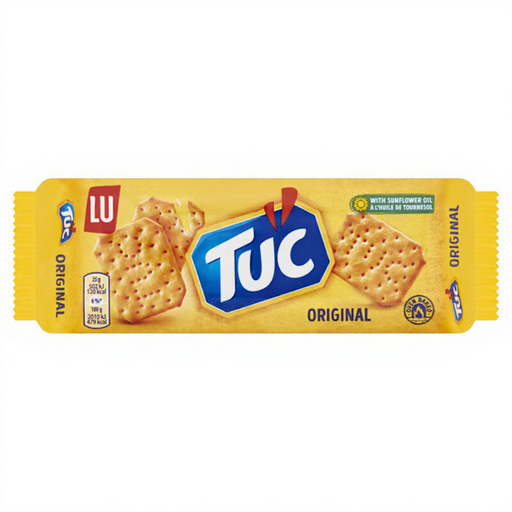
Why this suits the profile: A familiar choice for anyone looking for plain salted crackers for parties, TV nights or a small store cupboard.
The pack states a format of 3 x 30 g, so you can easily divide portions without having to open a large bag all at once.
Oven-baked, airy texture, 482 kcal and 1.7 g salt per 100 g according to the product information.
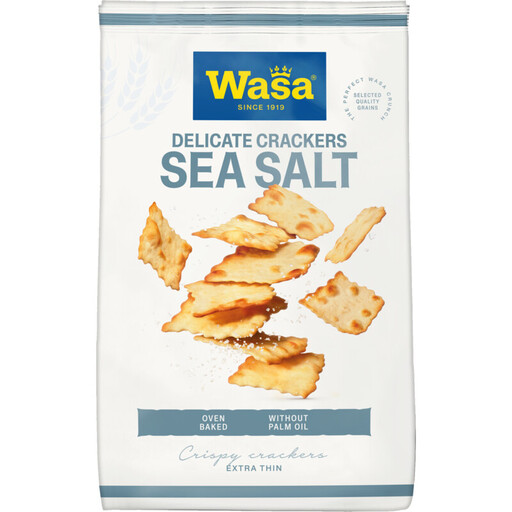
Why this suits the profile: Ideal for anyone looking for a refined bite with sea salt and olive oil, whether with a dip or on its own.
The product information specifically mentions 6.7% olive oil, 1.8% sea salt and 5.4 g dietary fibre per 100 g.
Bite-size format, oven-baked texture and 180 g content; contains wheat and milk.
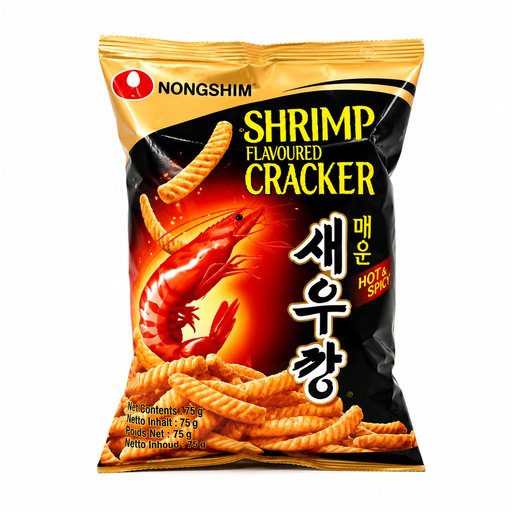
Why this suits the profile: For fans of Asian snacks, a spicy flavour and a clear seafood note.
The product information states 8.5% prawns, a spicy flavour and the allergens present, including wheat, prawns and soya.
75 g, ready to eat, 470 kcal and 1.5 g salt per 100 g according to the stated nutritional information.
We’ve put together a full, up-to-date list of products that fully meet these strict selection criteria and comply with current European safety regulations.
For a mixed party platter, you can combine classic varieties with paprika crackers, bacon crackers or mini crackers. If you’re after a different texture, try rice crackers, seaweed crackers or prawn crackers. With seafood products, always pay extra attention to shellfish and fish in the ingredients list.
If you want to compare higher fibre options, look at wholegrain crackers such as Lu Vitalu Multiseed Crackers. According to the product specification, these contain 69.2% wholegrain flour and 5.4 g fibre per 100 g. Bolletje Vegetable Crackers list 50% vegetables, 11 g fibre and 28 g protein per 100 g. These are product specifications, not a guarantee of any particular health benefit.
Small, easy-to-share varieties usually work best. Think TUC Original, Wasa Delicate Crackers or individually wrapped rice crackers. Check beforehand how many servings a pack contains and whether the flavour goes well with dips, cheese or cold meats.
Store opened crackers in a cool, dry place away from sunlight, heat and moisture. Seal the pack tightly or use an airtight container. Individual packets help keep the rest of the pack unopened for longer.
Compare the price per 100 g, but also look at the portion size, ingredients, allergens and salt content. A cheap pack might not be such good value if it contains lots of small bags, has a short remaining shelf life or a flavour that doesn’t suit how you’ll use it.
