
Vandaag of morgen in huis

Kwaliteit gegarandeerd

Welkomstaanbiedingen ontgrendelen: GRATIS bezorging | Tot 80% korting | Gratis 30 dagen JoyPlus-proefperiode
Download de app
Buying crackers might seem straightforward, but the range stretches from salty crackers and mini crackers to wholemeal crackers, wheat crackers and seasoned snack crackers. The difference isn't just about flavour. Size, packaging, allergens, salt content and nutritional values all determine whether a product is suitable for everyday snacking, a drinks party or serving with cheese and dip.
Mini crackers are handy for sharing and easy to serve, but a small size doesn't automatically mean you'll eat less. Always check the net weight and compare the nutritional values per 100 grams. A 100g bag, for example, serves a different purpose than a 250g or 300g pack.
Terms like "light", "pure" or "no artificial colours" don't tell the full story. Always read the ingredients list and allergen information. Pay particular attention to wheat, gluten, milk, egg, soya, sesame and sulphites. Product information can also vary by pack or market, so check the label upon delivery.
A heavily seasoned cracker works well for eating on its own, but can overpower the flavour of cheese, hummus or soup. For crackers with dip or as an accompaniment to a meal, neutral saltines or plain crackers are often more practical. For drinks parties, small, crispy varieties are easier to share.
Choose the size based on the occasion:
Also pay attention to the product description. "Baked", "thin", "lightly crispy" and "duo-crackers" refer to different textures and uses.
The first ingredients listed are present in the largest quantity. Many wheat crackers use wheat flour as a base, sometimes supplemented with rye, barley, potato starch, oil or milk components. If you have an allergy, check not only the ingredients but also the "may contain" statement.
Examples from the range:
Be sure to compare energy, fat, saturated fat, sugar, fibre and salt. "Wholemeal" or "with olive oil" is no reason to skip the table. Wasa Lightweight Crackers, for example, list 338 kcal, 2g fat, 20% fibre and 1.2g salt per 100g. Lu Minicracker Salt lists 428 kcal and 2.8g salt per 100g.
Use the serving size on the label as a practical guide. The TUC Minibites product information states 30g as a serving, roughly a third of the pack. That makes comparison easier than just looking at the number of crackers in a bag.
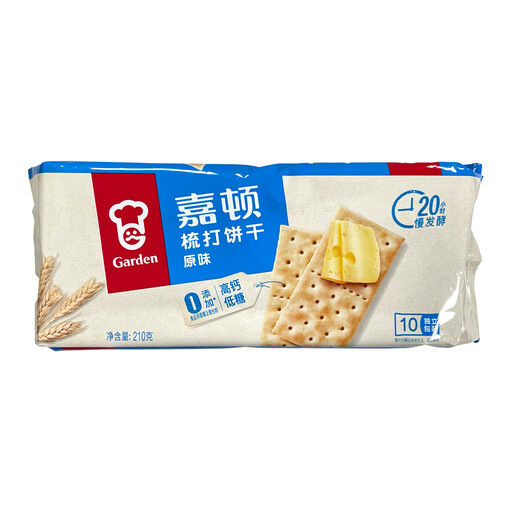
Why this fits the profile: The neutral, lightly salted flavour works well both on its own and with cheese, dips, soup and salads. At 210g, this is a practical quantity for sharing.
The product information clearly states the weight, ingredients and nutritional values per 100g. This makes it easier to compare price and composition.
210g; 440 kcal and 1.7g salt per 100g; suitable for dips, cheese and soup according to the product description.
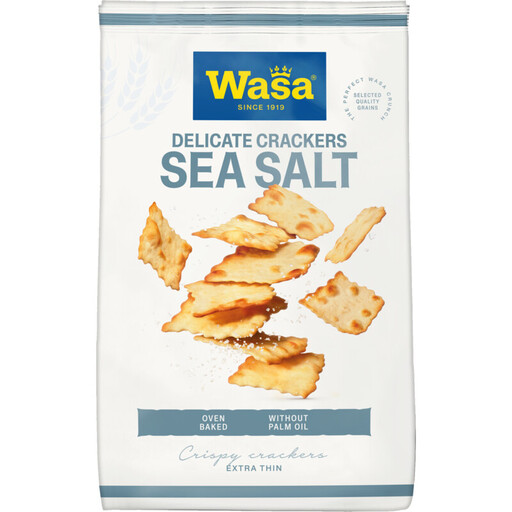
Why this fits the profile: The bite-size shape and sea salt flavour are designed for snacking with or without dip. The product information lists 5.4g fibre per 100g and 6.7% olive oil.
The description doesn't link the flavour to general health claims. You get verifiable information about size, ingredients and nutritional values.
Bite-size format; 436 kcal, 13g fat and 1.8g salt per 100g; suitable for dip.

Why this fits the profile: These wholemeal crackers made from 100% wholemeal rye flour offer a mild base for savoury or sweet toppings. The 300g pack suits regular use at home.
The grain content is clearly stated. This means you don't have to judge the term "wholemeal" based solely on the front of the pack.
300g; 338 kcal, 2g fat and 1.2g salt per 100g; wholemeal rye base.
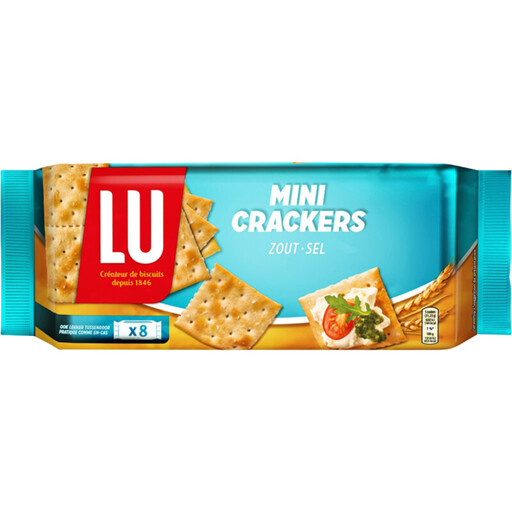
Why this fits the profile: The pack contains eight portions of duo-crackers. This makes portioning and serving during a drinks party straightforward.
The inner packaging prevents the whole bag from being opened each time. Do note the stated salt content of 2.8g per 100g.
250g; eight inner packs; five duo-crackers per pack; suitable for toppings.
We've put together a full, up-to-date list of products that fully meet these strict selection criteria and comply with current European safety regulations.
Store crackers according to the instructions on the pack: cool, dry and out of direct sunlight, and keep the packaging tightly sealed after opening. Moisture is a major cause of a soft texture. So use an opened bag within the recommended period and check that the packaging is undamaged.
For a drinks party, you can combine different textures: mini crackers for finger food, plain crackers for cheese and a seasoned variety such as paprika or sour cream & onion for eating on their own. Serve dips separately so that crispy crackers don't go soft too quickly.
Small, sturdy crackers and bite-size varieties are practical. Wasa Delicate Crackers Sea Salt explicitly states that they can be eaten with dip. Plain saltines are also suitable when you want the flavour of the dip to take centre stage.
Not automatically. Check which grain is actually listed in the ingredients and compare the nutritional values. According to the product information, Wasa Lightweight Crackers are made from 100% wholemeal rye flour. Also pay attention to any allergens present, such as gluten and milk.
That depends on the packaging, storage and humidity. Seal the inner bag or pack immediately after use and store it in a dry place away from heat. Always refer to the date and storage instructions on the packaging. Products with individual inner packs can be handy when you use them over several occasions.
