
Vandaag of morgen in huis

Kwaliteit gegarandeerd

Welkomstaanbiedingen ontgrendelen: GRATIS bezorging | Tot 80% korting | Gratis 30 dagen JoyPlus-proefperiode
Download de app
Are you looking to buy Chinese snacks but find it tricky to compare flavours, ingredients and portion sizes? Packaging often features terms like Sichuan, mala, konjac and “crispy”, yet the differences in taste, allergens and salt content can be considerable. With this practical guide, you’ll discover which spicy Chinese snacks, tofu snacks and Chinese crisps suit your snacking occasion.
According to the nutritional information, konjac snacks often contain fewer calories per 100g than crisps or meat snacks. That doesn’t automatically make them suitable for everyone. Also pay attention to salt, fat, portion size and ingredients. A konjac snack, for example, can contain between 3 and 8 grams of salt per 100g, depending on the flavour variant.
“Spicy”, “hot pot” and “mala” give you an idea, but not a fixed heat scale. Sichuan snacks often combine chilli with Sichuan pepper. That pepper can create a tingling or numbing sensation in the mouth, which is different from regular chilli. If you’re after a milder snack, it’s better to try a small pack first.
Many vegetarian Chinese snacks, such as dried tofu and konjac, contain soya. Wheat, gluten, sesame or sulphites may also be present. Always check the current ingredients list on the packaging. Product information can change, and the packaging is the final authority.
First, look at the source of the snack:
The allergens should be clearly identifiable in the product information. If you’re unsure about soya, wheat, sesame, fish, egg or sulphites, it’s wiser to skip than to guess.
Compare products on the same basis. An individual sachet of 9 or 18 grams can be handy, but a box sometimes contains 20 to 28 portions. Pay particular attention to:
A lower energy value doesn’t tell you everything about the overall nutritional composition or the amount you actually eat.
Ready-to-eat snacks are convenient for home, on the go, parties or with a drink. Individually wrapped products are practical for portion control and sharing. Before buying, check the net weight, the best-before date and the storage instructions.
Many snacks can be eaten straight after opening. Some meat products need to be refrigerated after opening and used within a limited time. Store unopened packs in a cool, dry place away from direct sunlight, exactly as stated on the label.
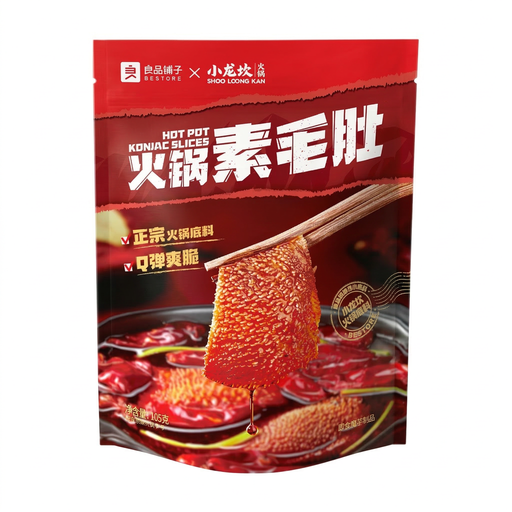
Why this fits the profile: A compact 105g pack is ideal for trying a hot-pot-style flavour without committing to a large box. According to the product information, this snack is ready-to-eat.
The ingredients list and nutritional values are clearly stated. You can see, for example, 3.4g of salt per 100g and soya listed as an allergen.
105g, smooth and firm konjac texture, hot-pot seasoning and ready to eat.
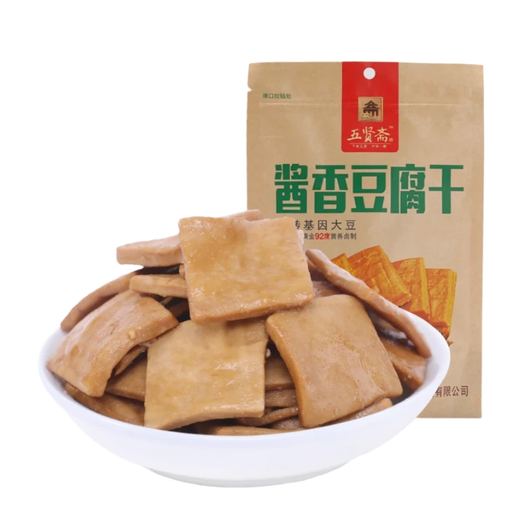
Why this fits the profile: This tofu snack is ideal if you’re after a firm bite, soya flavour and a plant-based snack for home or with a meal.
The product information explicitly lists soya and wheat. This means you can check in advance whether it suits any allergies or a gluten restriction.
108g, individually vacuum-packed, 18g of protein per 100g according to the label and ready-to-eat.

Why this fits the profile: The box of 20 individual sachets is practical for parties, gaming nights, the office or regular snacking on the go.
The portions are pre-divided. The packaging also lists konjac flour, chilli, Sichuan pepper, soya and wheat, so you can check the flavour and allergens.
360g total, 20 sachets of 18g, chewy texture and a Sichuan-style seasoning.
We’ve put together a full, up-to-date list of products that fully meet these strict selection criteria and comply with current European safety regulations.
Konjac snacks, tofu snacks, dried tofu and some gluten-based snacks are possible choices. Always check the ingredients list. A product may contain soya, wheat or sesame, and “vegetarian” does not automatically mean allergen-free.
This varies by product. Sichuan snacks often combine chilli and Sichuan pepper, which can create a tingling or numbing sensation alongside the heat. Look at the flavour description and consider starting with a small pack.
The shelf life is stated on the packaging and varies by product. Store unopened snacks according to the instructions given. After opening, some products need to be sealed properly, while certain meat snacks must be refrigerated and consumed within 48 hours.
