
Same-day & Next-day Delivery

Quality Guaranteed

Unlock Your Welcome Offers: FREE Delivery | Up to 80% OFF | Free 30-day JoyPlus trial
Download the APP
Are you looking to buy Chinese bao buns for a quick breakfast, a dim sum meal, or a frozen snack? The difference between buns, soup dumplings and filled bao is more important than many packets suggest. A soft exterior, for example, tells you little about the amount of filling, the cooking method or the allergens.
Most buying mistakes come down to three common pitfalls:
Chinese steamed buns are not all the same. Look out for the differences between:
Always check the instructions on the packet. “Ready to steam” does not automatically mean “ready to eat”.
A product weight of 300 or 480 grams does not tell you how much filling you get. The ingredients list gives you a better idea. For example, the Freshasia Xiao Long Bao with Pork Filling states 30% pork, while the FRESH ASIA Meat Buns list 21% pork. These are verifiable facts from the product information.
Also pay attention to:
With vegetarian bao buns, it is wise to read the full ingredients list. A product with mushrooms and vegetables may, for example, contain soya, sesame, garlic, ginger or wheat.
Many Chinese dumplings and bao buns contain wheat and gluten. Soya and sesame are also common in savoury fillings. Xiao long bao with pork may also contain prawns. Check the bold allergens on the packet, especially if you have a food allergy.
For frozen products, the following generally applies:
The exact instructions on the packet take priority. Brand descriptions about taste or traditional preparation are product claims made by the brand; therefore, judge the ingredients, nutritional values and cooking method for yourself.
For many products, steaming bao buns is the simplest method. Place a steamer basket over boiling water and lay the buns in it with space between them. You can use perforated baking paper or small pieces of baking paper to stop the bottoms from sticking.
Many frozen products can be steamed straight from the freezer. According to the product information provided, timings range from approximately 8 to 12 minutes. Larger or raw buns may need longer. Check that the filling is piping hot all the way through before serving.
Extra care is needed with soup dumplings. Let them cool briefly and open them carefully, as the broth inside can be scalding hot. For a classic combination, you can serve black rice vinegar and strips of ginger alongside.
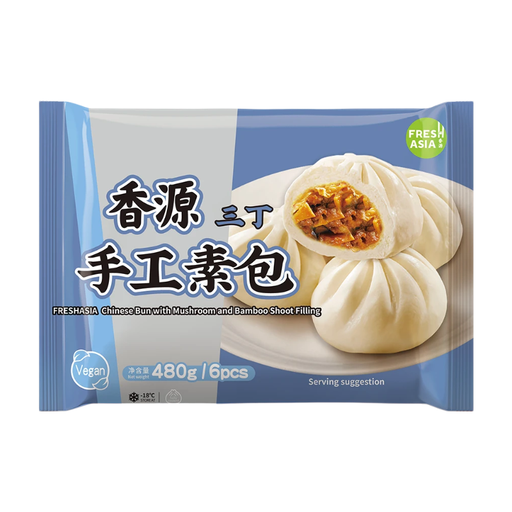
Why this fits the profile: A savoury option without meat, suitable as a simple lunch, snack or light meal. According to the product information, the buns can be steamed straight from the freezer.
The product information gives specific percentages: 12% bamboo shoot and 10% mushroom. The steaming method is also clearly stated.
480 grams per pack; savoury filling with mushrooms and bamboo shoots; store at -18 °C or colder.
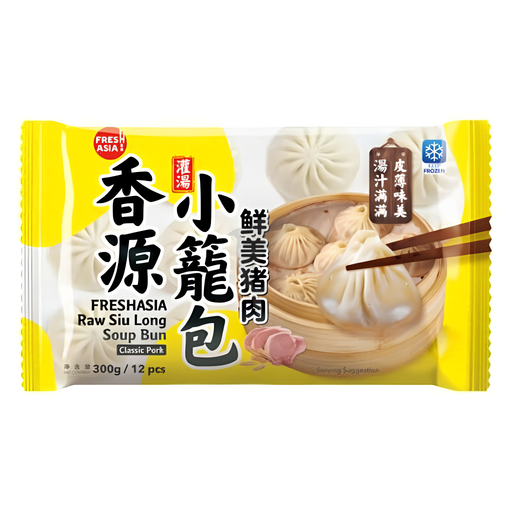
Why this fits the profile: For those who want to recreate the soup dumpling experience at home and are willing to steam and serve them carefully.
The packet states that you can steam the product from frozen, with a recommended time of 8 to 10 minutes. Prawns and other allergens are listed.
300 grams; 30% pork according to the ingredient information; 190 kcal per 100 grams.
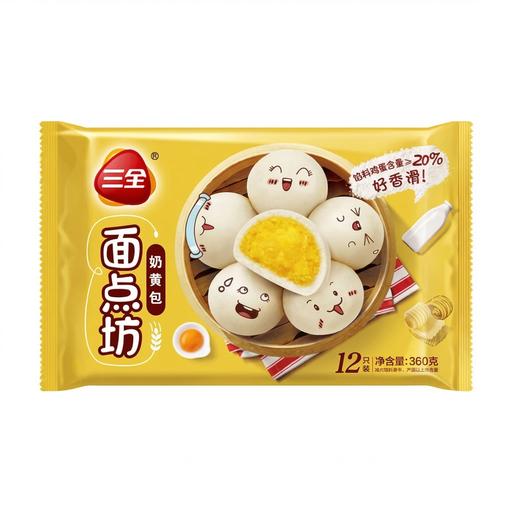
Why this fits the profile: Handy for households that want to keep a sweet breakfast option, dessert or snack in the freezer and steam a few buns at a time.
The cooking instructions are specific: steam straight from the freezer for 10 to 12 minutes. The ingredients list milk, egg, soya and wheat.
360 grams; sweet custard filling; suitable for steaming without defrosting first.
We have put together a full, up-to-date list of products that fully meet these strict selection criteria and comply with current European safety regulations.
It depends on the product and the size. According to the product information available, 8 to 12 minutes is typical for steaming from frozen. Check that the centre is piping hot all the way through and always follow the instructions on the packet.
Only if the packet explicitly says so. Many Chinese steamed buns are designed for a steamer basket. A microwave can heat the outside unevenly, especially with soup dumplings. Therefore, use the recommended cooking method.
Store them at -18 °C or colder until the best-before date on the packet. Once opened, it is best to use the contents straight away or according to the instructions. Do not refreeze thawed bao buns.
