
Same-day & Next-day Delivery

Quality Guaranteed

Unlock Your Welcome Offers: FREE Delivery | Up to 80% OFF | Free 30-day JoyPlus trial
Download the APP
Chinese bao buns are soft, steamed buns with a savoury or sweet filling. They work well for a quick lunch, a dim sum meal, breakfast, or a family snack. In online shops you'll find bao buns with pork, vegetarian fillings, sesame, custard, and mushrooms.
But an appealing product name doesn't tell you everything. Pay close attention to the filling, allergens, cooking method, and quantity per pack. That way, you won't end up buying frozen bao buns that don't suit your dietary preferences, freezer space, or available cooking time.
Bao buns, Chinese steamed buns, and xiao long bao are often listed in the same category, but the products are different. A classic bao bun usually has a soft, thicker dough layer around the filling. Xiao long bao often contains hot broth and has a thinner skin. The cooking method and serving temperature are therefore important.
Also check whether the product is raw, partially cooked, or ready to eat. Many frozen bao buns need to be fully steamed first.
A 2.5 kg pack can be handy for catering, a party, or a large household. For one or two people, however, that quantity can be impractical. So look at the net weight, the number of pieces, and the shelf life after opening.
With smaller packs of 240 to 480 grams, you can try different flavours without using up much freezer space.
Wheat and soya are common in the dough or in soy sauce. Depending on the variety, sesame, milk, egg, crustaceans, or molluscs may also be present. A vegetarian bun doesn't automatically mean it has few ingredients or is soya-free.
Always read the current packaging before buying. Product information can change, and the packaging is the definitive source for allergens, nutritional values, and cooking instructions.
For a savoury meal, you can choose steamed buns with meat such as pork, char siu, or a combination of pork and prawns. A filling with mushrooms, cabbage, radish, or tofu skin is suitable if you're looking for vegetarian bao buns. Do check that the ingredients list doesn't contain animal-based flavourings or sauces.
Sweet bao buns are great for breakfast, a snack, or dessert. Consider black sesame, custard, brown sugar, sweet potato, or red date. The nutritional values vary widely: a sesame or custard filling, for example, contains more sugar and fat than some vegetable fillings.
Most Chinese steamed buns in this selection are steamed straight from frozen. The recommended times are usually between 8 and 15 minutes, depending on size and filling. Don't let the buns touch each other, so the steam can circulate properly.
Check whether microwave cooking is allowed. For some products, steaming is the recommended method. Meat, egg, and crustacean fillings must be piping hot all the way through before serving. Do not eat products with raw dough or raw filling without cooking them first.
Store frozen products at -18 °C or below and do not refreeze thawed bao buns. Compare nutritional values per 100 grams, not just per bun. Pay attention to salt, sugar, fat, and protein content.
A 300 g pack is practical for a small meal or to combine with noodles and vegetables. Packs of 450 to 480 grams make more sense for multiple people. For professional or heavy use, a bulk pack may be more worthwhile.
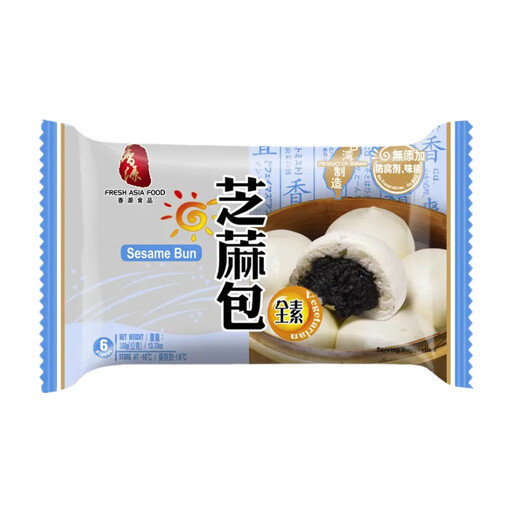
Why this fits the profile: A sweet option with black sesame paste and a manageable 390 g pack. According to the product description, steaming from frozen is enough for a snack or dessert.
The flavour direction and cooking method are clearly described. Do note the allergens present: wheat, sesame, and milk.
Sweet black sesame filling, 390 g net weight, and a stated steaming time of 8–10 minutes.
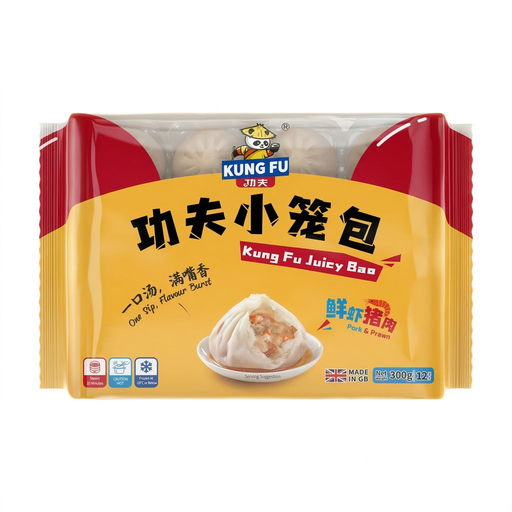
Why this fits the profile: For fans of a savoury filling with pork, prawn, and broth. According to the product information, the filling contains at least 23% pork and visible pieces of prawn.
The product description mentions both the type of meat and the crustaceans. This makes checking for allergens easier, but the product is not suitable if you have an allergy to prawn, soya, wheat, sesame, or milk.
300 g pack, 8–10 minutes steaming, and a combination of meat, prawn, and broth.
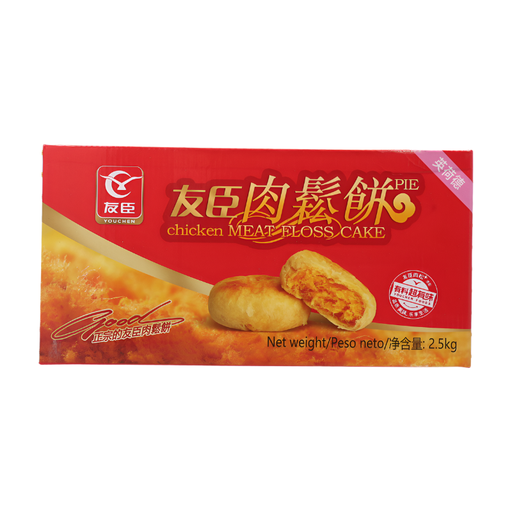
Why this fits the profile: The bulk pack with 66–70 portions is aimed at gatherings, tea times, catering, or households that want a regular supply on hand.
You can see the net weight and estimated number of portions upfront. According to the description, the product is ready to eat and served at room temperature.
2.5 kg contents, approximately 66–70 portions, and a ready-to-eat serving suggestion.
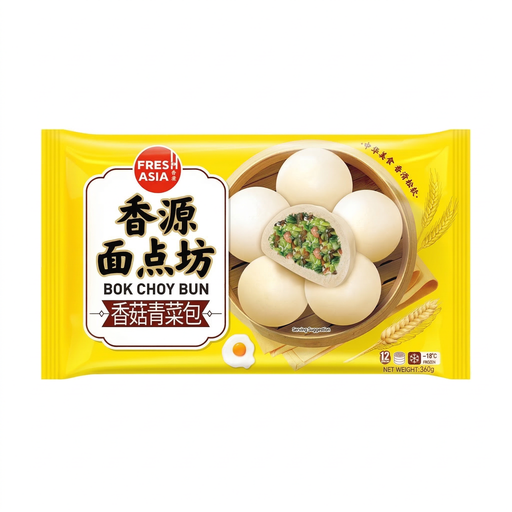
Why this fits the profile: A vegetarian choice with mushrooms and vegetables in a 360 g pack. The buns are designed to be steamed from frozen.
The product information explicitly states the filling is vegetarian. Do check the allergens: wheat, soya, garlic, ginger, spring onion, and sulphites.
360 g contents, mushroom and vegetable filling, and a cooking method that only requires steaming.
We've put together a full, up-to-date list of products that fully meet these strict selection criteria and comply with current European safety regulations.
Most frozen bao buns need about 8 to 12 minutes after the water has come to the boil. Larger meat buns may take around 15 minutes. Always follow the instructions on the packaging.
This varies by product. Some vegetarian bao buns mention a microwave method, while others recommend steaming only. If using the microwave, you can add a few drops of water and cover the bun, but only use a method stated on the packaging.
Store them at -18 °C or below until the stated best-before date. Once thawed, most products should not be refrozen. After opening, check the packaging and instructions for further information.
