
Vandaag of morgen in huis

Kwaliteit gegarandeerd

Welkomstaanbiedingen ontgrendelen: GRATIS bezorging | Tot 80% korting | Gratis 30 dagen JoyPlus-proefperiode
Download de app
Cheese crackers are perfect for drinks, a snack board, on the go, or as a savoury bite between meals. Yet not all cheese-flavoured crackers are the same. Some varieties contain real cheese, while others rely mainly on flavourings and salt. Size, packaging and nutritional value can also vary significantly.
If you only look at the front of the packet, you might end up paying for a big cheese image when the product actually contains very little cheese. With this practical buying guide, you can compare cheese biscuits, savoury crackers, mini cheese crackers and cheese rice cakes on verifiable points.
The label “cheese crackers” or “crackers with cheese flavour” on its own tells you very little about the actual cheese content. Always check the ingredients list and, if stated, the quantitative ingredient declaration. For example, g’woon Cheese Crackers lists 14% cheese, alongside 5% cheese powder. TUC Cheese Crackers lists 0.1% cheese powder in the ingredients. These are clearly different product profiles, even though both have a cheesy taste.
According to the brand’s own information, the flavour in some products comes partly from flavourings, milk powder, whey or cheese powder. So don’t judge solely on the product name or image.
Compare the net weight, the number of portions and the price per 100 grams. A pack with several small bags can be handy for a picnic or drinks, but a larger bag may work out cheaper per gram. Wasa Cheese Sandwich comes as 3 x 31 grams; g’woon Cheese Crackers contains 200 grams and Lu Multi-Cereal Crackers 250 grams.
Also check whether the pack is resealable after opening. Crispy crackers absorb moisture quickly. A pack that doesn’t seal properly can become less pleasant to eat before the best-before date is reached.
Crispy cheese crackers can vary in energy, fat and salt per 100 grams. For instance, TUC Cheese Crackers states 501 kcal and 2.1 grams of salt per 100 grams. g’woon Rice Waffles Cheese states 441 kcal and 1.2 grams of salt per 100 grams. Snack A Jacks Cheese Rice Wafers contains 382 kcal and 1.2 grams of salt per 100 grams according to the product information.
Use nutritional values as a comparison tool, not as a health claim. The right choice depends on when you’ll be eating them, your portion size and personal preference.
If you want a clear cheese taste, start by looking at the ingredients. G’woon Cheese Crackers lists 14% cheese and 5% cheese powder. Verkade Shuttles Cheese Onion contains 9% dried cheese and 4% dried onion according to the product information. Deli Di Paolo Grissini Wave Parmigiano Salt contains 7.5% Parmigiano Reggiano PDO.
There’s no fixed amount of cheese that suits everyone. However, the percentage does make products easier to compare. With some cheese biscuits, the flavour is mainly enhanced with herbs, onion, basil or flavourings.
For a snack board, sturdy cheese crackers or grissini are handy because they’re less likely to break under a dip or slice of cheese. Mini cheese crackers are ideal for small portions and party nibbles. Sandwich varieties already have a filling, so you can eat them straight from the pack.
For on the go, individually wrapped products like Wasa Cheese Sandwich are practical. For home use, a bag or larger box of loose crackers may be more appealing.
Always check the current label. Many cheese crackers contain wheat or other gluten-containing cereals and milk. Some varieties also mention soya, sesame, egg or sulphites. Wasa Cheese Sandwich contains rye, milk and sesame according to the product information. ULKER CIZIVIC Sandwich Cracker with Cheese Cream lists gluten, milk, sulphites and soya as allergens.
The packaging is the deciding factor, especially if you have an allergy or intolerance. Also check the best-before date, storage instructions and any “may contain” warnings.
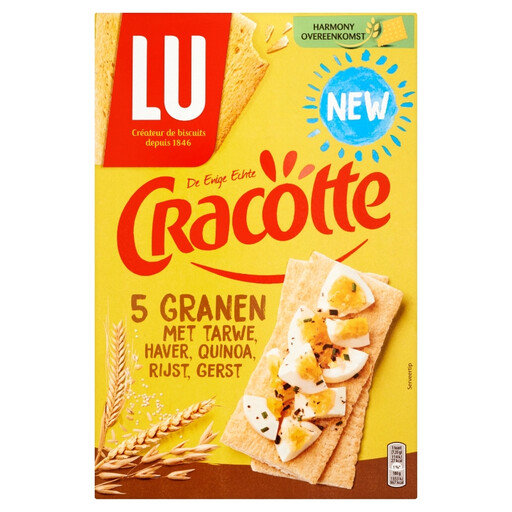
Why this fits the profile: This 250-gram pack offers a neutral base for cheese, spreads and other toppings. The crackers are made with five grains and don’t have a specific cheese flavour.
The ingredients and nutritional values are clearly stated. You choose your own cheese and control the flavour, rather than relying on a vague cheese-flavour label.
250 grams per pack, approximately 34 crackers and 4.7 grams of fibre per 100 grams according to the product information.
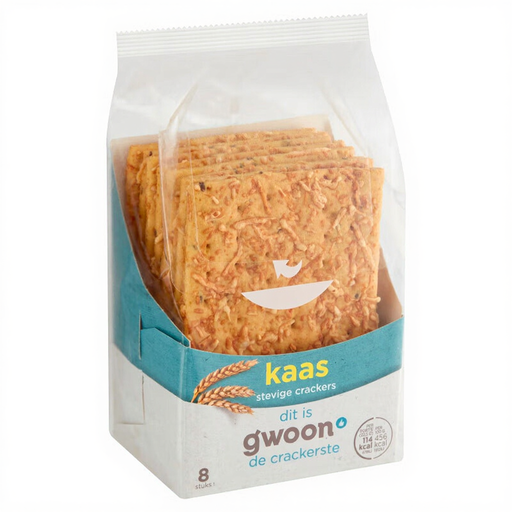
Why this fits the profile: A sturdy cracker with an explicitly stated cheese percentage, designed for snacking and drinks.
The label states 14% cheese and 5% cheese powder. This makes the cheese content easier to assess than with products that only mention “cheese flavour”.
200 grams content, 15.4 grams of protein and 1.28 grams of salt per 100 grams according to the product information.
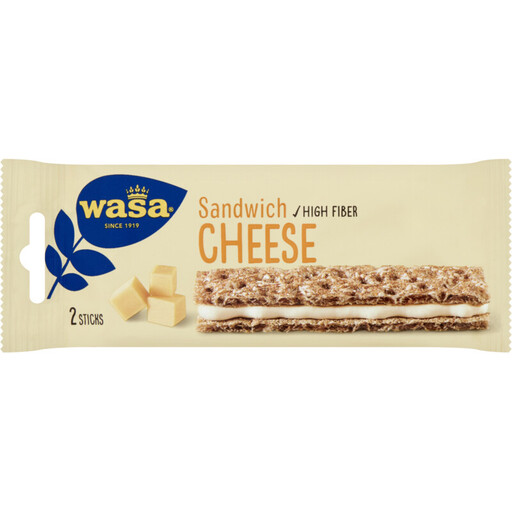
Why this fits the profile: The individual portions are ideal for on the go, at the office or as a snack without needing to bring separate dip or toppings.
The portion packaging means you don’t have to open the whole amount at once. Do check the allergens: this product contains rye, milk and sesame.
Three packs of 31 grams, made with wholemeal rye flour and containing 14 grams of fibre per 100 grams according to the product information.
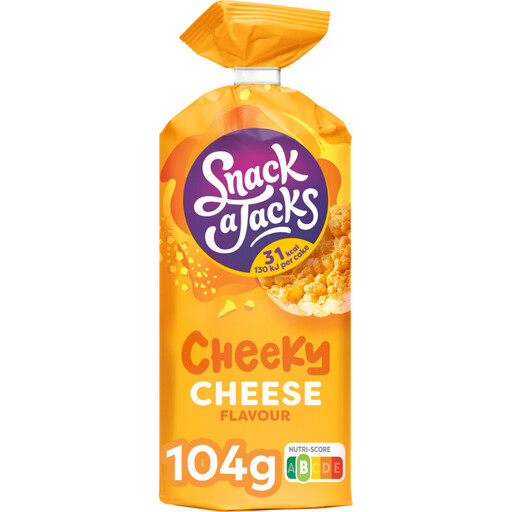
Why this fits the profile: These cheese rice cakes are thin and crispy, and come in a roll of 13 pieces. They suit anyone looking for a light texture rather than dense cheese biscuits.
The product information lists rice, maize and a cheese-flavour mix separately. This makes it clear that it’s a rice cake with cheese flavour, not a traditional cheese biscuit product.
104 grams per roll, 13 wafers and 382 kcal per 100 grams according to the stated nutritional values.
We’ve put together a full, up-to-date list of products that fully meet these strict selection criteria and comply with current European safety regulations.
Yes, many varieties are designed as snack crackers or crackers for serving with drinks. Pay particular attention to the size and sturdiness. Grissini and firm cheese biscuits generally hold up well next to dips and toppings; thin rice cakes are lighter and can break more easily.
Store them according to the label in a cool, dry place, away from heat, light and moisture. Seal the pack carefully or use an airtight container. Check the packaging for damage and stick to the stated best-before date.
Cheese crackers may contain cheese or cheese powder as an ingredient, but the name doesn’t indicate a fixed cheese percentage. Crackers with cheese flavour sometimes rely mainly on flavourings, milk components or flavour enhancers. Always compare the ingredients list and nutritional values before making your choice.
