
Vandaag of morgen in huis

Kwaliteit gegarandeerd

Welkomstaanbiedingen ontgrendelen: GRATIS bezorging | Tot 80% korting | Gratis 30 dagen JoyPlus-proefperiode
Download de app
Anyone looking to buy cat food will quickly come across terms such as “natural”, “grain-free” and “rich in animal proteins”. These words only mean something if you also check the full composition, nutritional status and suitable life stage. Attractive packaging is no guarantee that the food is right for your cat.
Grain-free cat food contains no grains, but that does not mean every cat needs it. Grain-free recipes may contain ingredients such as pulses, potato or quinoa instead. Always check the full ingredients list rather than relying only on the front of the packaging.
Not every product is complete cat food. Some wet fillets, creams and toppings are intended as complementary food or a treat. The label should clearly state whether the product is complete or complementary. A complementary product cannot simply replace your cat’s daily food.
Cat food with lamb, chicken or fish may suit different preferences, but the life stage remains more important. Kitten food is formulated for growth and has different nutritional guidelines from cat food for adult cats. Also check the pack size: a 1.5 kg bag is not automatically better value if your cat refuses the food or is given too much.
Look for the legally required description on the packaging, such as “complete food for cats” or “complete and balanced”. Products such as Sheba Filets Chicken & Tuna and MjAMjAM Cat Cream are described in the supplied product information as complementary food or snacks. Do not use these as your cat’s only daily meal.
For a complete product, also check:
Ingredients are generally listed in descending order by quantity. If chicken, lamb, quail or fish appears first, it is an important ingredient in the recipe. However, be wary of broad descriptions such as “meat and animal derivatives” if you want to know exactly which protein source your cat is eating.
With dry cat food, analytical values are useful for practical comparisons. For example, Farmina N&D Quinoa Cat Digestion Lamb 1.5 kg lists 36% crude protein, 20% crude fat and 10% moisture. Farmina N&D Prime Cat Lamb 1.5 kg also lists 36% protein and 20% fat. These are product specifications from the product information; they do not automatically predict how every cat will respond to the food.
Dry food is easy to measure and store. Wet food generally contains a high proportion of moisture and is often sold in pouches, tubs or tins. Do not compare only the price per pack: also consider the price per kilogram and the daily amount required.
When choosing wet cat food, pay particular attention to:
A gradual change over at least five to seven days can help avoid sudden dietary changes. Always follow the instructions on the packaging and adjust the quantity according to weight, activity level and individual needs.
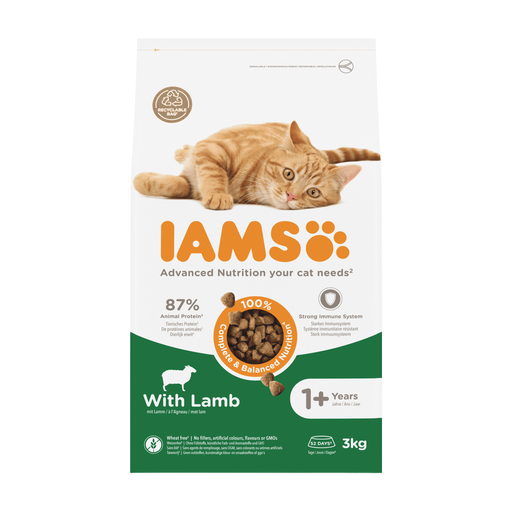
Why it suits this profile: The 3 kg pack is a practical choice for anyone who wants to try dry cat food without immediately buying a large supply. The product is intended for adult cats from 1 year of age.
The product information clearly states the target group of adult cats and identifies lamb as the flavour variant. Before buying, check the current label wording and feeding guidelines.
Dry food for adult cats, lamb as the stated protein variant and a practical 3 kg pack.
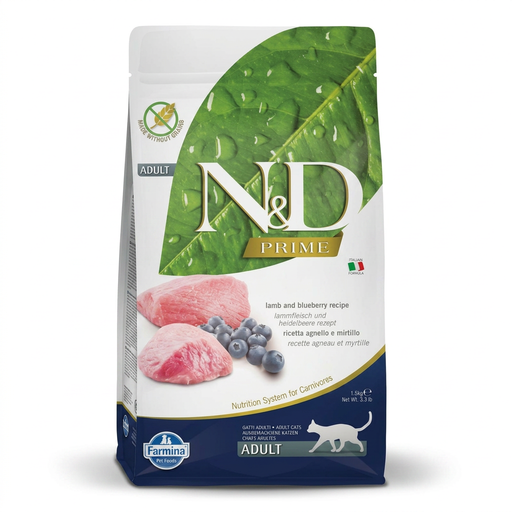
Why it suits this profile: This Farmina cat food is a grain-free dry food option containing lamb, herring, egg and fish oil. The analytical information lists 36% crude protein and 20% crude fat.
The recipe identifies specific animal ingredients, while the product information states that it is complete food. This allows you to compare marketing language with verifiable details.
Grain-free recipe, 1.5 kg pack, lamb as a prominent protein source and taurine listed as an added nutrient.
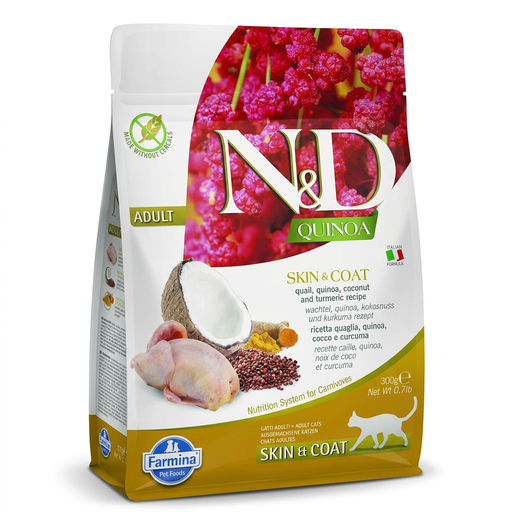
Why it suits this profile: The small pack is suitable for trying a recipe before committing to a larger quantity. According to the product description, the recipe contains quinoa and fish oil, with omega-3 and omega-6 values listed.
You do not have to buy a large bag before knowing whether your cat will accept it. The analytical values and ingredients are specified in the product information.
300 grams, grain-free according to the product description, with stated omega-3, omega-6, DHA and EPA levels.
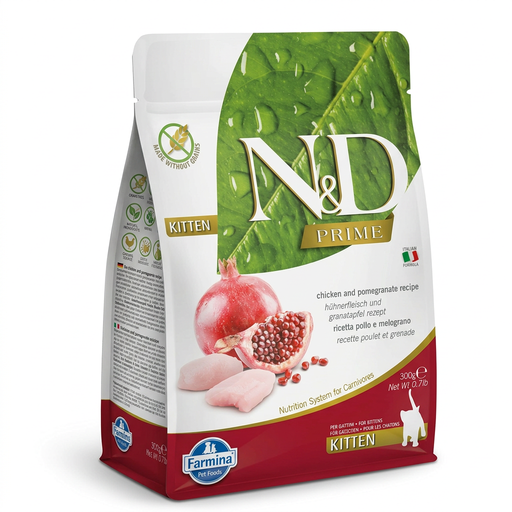
Why it suits this profile: According to the product information, this product is intended for kittens. The small pack allows for a controlled introduction during the growth stage.
The life stage is specified clearly, so you will not confuse it with cat food for adult cats. Follow the kitten feeding guidelines on the packaging.
Indicated for kittens, with chicken as the named animal ingredient and a 300-gram pack.
We have put together a complete, up-to-date list of products that fully meet these strict selection criteria and the applicable European safety regulations.
Use this quick check before placing your order:
If your cat has a known food sensitivity or medical condition, it is wiser to consult a vet than to rely solely on marketing claims.
Choose a product labelled as complete food for adult cats. Then compare the feeding guidelines with your cat’s weight and activity level. A recipe containing chicken, lamb or fish is primarily a matter of composition and acceptance; no single protein source is automatically suitable for every cat.
That depends on the daily portion, the brand and the moisture content. Compare the price per kilogram as well as the amount your cat needs each day. Wet food is often sold in small portions, while dry food usually keeps for longer after opening. A combination can be practical, provided the total quantity is adjusted to your cat’s energy needs.
Ideally, allow five to seven days for the transition. Start by mixing a small amount of the new food into the familiar food, then gradually increase it. Stop or slow down the change if your cat refuses the food or develops clear digestive problems. Always provide fresh drinking water and follow the instructions on the packaging.
