
Vandaag of morgen in huis

Kwaliteit gegarandeerd

Welkomstaanbiedingen ontgrendelen: GRATIS bezorging | Tot 80% korting | Gratis 30 dagen JoyPlus-proefperiode
Download de app
A bowl that cracks in the microwave after one use, a salad bowl that isn't dishwasher-safe, or dessert dishes that turn out to be too small. Choosing the right bowl seems simple—until you make a poor choice. Functionality is just as important as aesthetics. This guide will help you make an informed decision based on material, application, and care, ensuring you buy bowls that perfectly suit your needs.
Before making a purchase, it's helpful to consider a few key specifications. These factors determine how and for what purpose you can use a bowl.
The material affects durability, maintenance, and potential uses.
Not every bowl is suited for every task. Consider what you will primarily use the bowl for.
Check the dimensions and care instructions. Will the bowl fit in your kitchen cabinet and, more importantly, in the dishwasher? A stackable bowl set saves valuable storage space. The symbols for dishwasher, microwave, and oven safety are typically found on the bottom of the product.
Based on the criteria above, we've selected bowls that excel in specific use cases.

Why We Chose It This large bowl from 5five combines a bamboo exterior with a white interior. With a 30 cm diameter and a 3000 ml capacity, it's perfect for serving large salads or as a fruit bowl on the countertop.
Pros
Who It's For For those who regularly serve salads to guests or are looking for a spacious, decorative fruit bowl. Note that this product requires handwashing and should not be soaked in water.

Why We Chose It This ivory white bowl from Secret de Gourmet is made of porcelain and features a subtle, ribbed texture. Its 600 ml capacity makes it a versatile choice for soup, cereal, or noodles.
Pros
Who It's For For anyone seeking multifunctional soup bowls or breakfast bowls for daily use. Its easy-care nature makes it a practical addition to any dinnerware set.
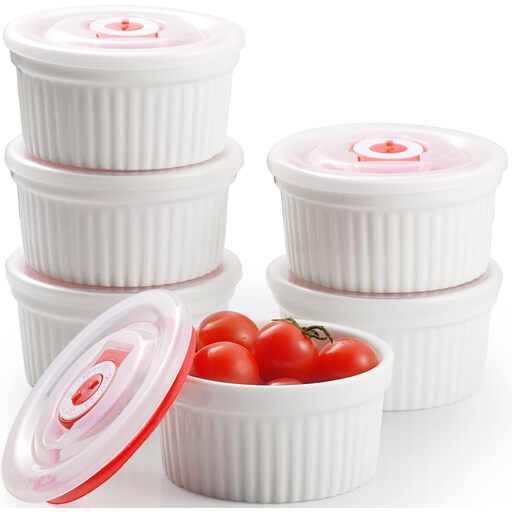
Why We Chose It This bowl set from Dafuceramic includes six porcelain ramekins with a capacity of approximately 236 ml (8 oz). According to the manufacturer, the porcelain is lead-free and non-toxic. The included lids with a date dial are a practical feature for storing leftovers or prepping meals.
Pros
Who It's For For the home cook who enjoys baking and serving individual dishes like crème br?lée, soufflés, or small pies. The lids also make this set convenient for meal prepping. Please note: the lids are not oven-safe.
The products above offer solutions for specific needs, from a large salad bowl to a set of oven-safe ramekins. Are you looking for a broader selection to complement your current dinnerware or to build a completely new, uniform set? A collection of white bowls provides a timeless and versatile foundation that pairs with any table decor.
Explore our range of White Dinnerware for more porcelain dishes, deep plates, and bowls in various sizes.
1. What is the difference between porcelain and ceramic? Porcelain is a specific type of ceramic, made from a finer clay (kaolin) and fired at a higher temperature (approx. 1200-1400 °C). This makes it harder, less porous, and more durable than many other ceramic types like earthenware. In practice, this means porcelain is often more resistant to chips, scratches, and temperature changes.
2. Are all bowls oven-safe? No, definitely not. Only bowls explicitly marked as oven-safe should be used in the oven. These are typically products made of porcelain, stoneware, or special glass. Materials like bamboo, melamine, or most plastics are not suitable for the oven and can melt, crack, or release harmful substances. Always check the manufacturer's product information.
3. How do I choose the right size soup bowl? A standard soup bowl has a capacity between 500 and 700 ml, which is sufficient for a main course soup. For an appetiser or broth, a smaller 300-400 ml bowl will suffice. A wider, shallower model cools down faster, while a deeper, narrower model keeps the soup warm for longer.
Joybuy Product Recommendation Officer
