
Vandaag of morgen in huis

Kwaliteit gegarandeerd

Welkomstaanbiedingen ontgrendelen: GRATIS bezorging | Tot 80% korting | Gratis 30 dagen JoyPlus-proefperiode
Download de app
Buying Asian drinks might seem straightforward, but the wide selection can make it hard to compare your options. Looking for a Japanese fizzy drink for a party, a tropical fruit drink to enjoy at home or a multipack of Mogu Mogu? Flavour, quantity and packaging matter more than an eye-catching label alone.
Look out for these common pitfalls:
First, decide what type of drink you’re looking for:
A 200 ml bottle is ideal as a single serving or as part of a tasting session. A 300 or 320 ml bottle may be more practical with a meal or at a party. A pack such as Mogu Mogu 320 ml × 6 means fewer individual purchases, while a box of 24 cans or bottles is better suited to more frequent use.
Always compare:
Read the label before serving, especially if you’re buying for children, guests or a group that includes people with allergies. Some products state that they don’t contain any of the 14 major EU allergens, but always check the current packaging.
Also look out for:
According to the product information, HATA Ramune Strawberry lists colouring E129, among other ingredients. JP Hatakosen Ramune Muscat carries a warning about E102, according to its product information. This isn’t a general assessment of either product, but it is something to consider when deciding what to buy.
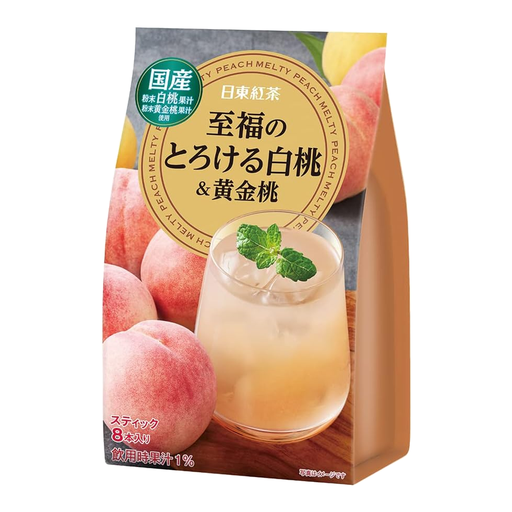
Why it suits this profile: This powdered drink is compact to store and a good choice if you want to try a peach drink without buying several bottles.
The packaging lists the ingredients and storage instructions. You can decide how to prepare it and how large to make each serving.
Product of Japan; powdered drink in an 88-gram box; peach flavour according to the product description.
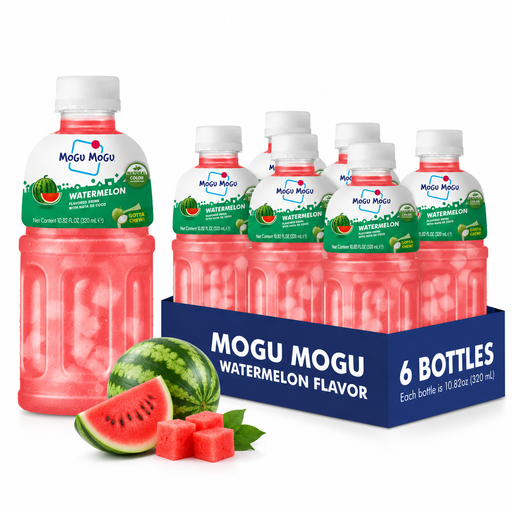
Why it suits this profile: The six individual bottles are ideal for a planned meal, a picnic or sharing with a group.
The volume and pack size are clearly stated: six 320 ml bottles. This makes it easier to work out how much you’ll need in advance.
Watermelon flavour; 15% nata de coco according to the product information; best served chilled.
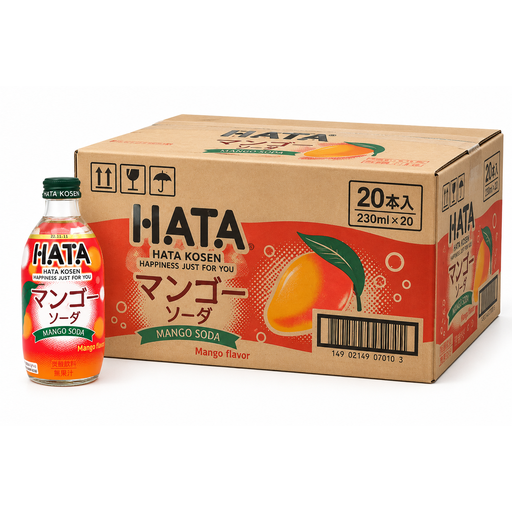
Why it suits this profile: A box of 24 bottles is practical for hospitality businesses, larger gatherings or keeping a regular supply of Japanese soda on hand.
The product information gives the volume per bottle and nutritional values per 100 ml. This makes it easier to plan your stock and servings.
24 bottles of 300 ml; carbonated mango flavour; made in Japan according to the product information.
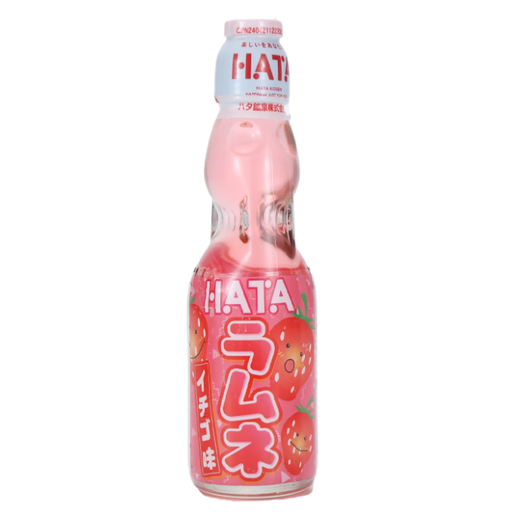
Why it suits this profile: The bottle with its glass marble makes for a distinctive serving experience with a Japanese meal, at a themed party or during a tasting session.
The bottle holds 200 ml and the product information includes clear opening instructions. You’ll know in advance that it’s best suited to a single serving.
Strawberry flavour; carbonated; traditional bottle with a glass marble; serve chilled according to the product information.
We’ve put together a complete, up-to-date list of products that meet these strict selection criteria and current European safety requirements.
A 200 or 300 ml bottle is a practical choice if you want to try one flavour. Ramune, lychee drinks and mango juice are easy options to start with. If you’d rather try something with an unusual texture, choose a small bottle of Mogu Mogu or KATO with nata de coco.
Store Ramune in a cool place, away from direct sunlight and heat, as directed on the label. Many varieties are best served chilled. Once opened, keep the drink in the fridge and consume it within the time stated on the packaging.
Not necessarily. Check the nutritional information per 100 ml. The Mogu Mogu Zero Summer Berries product information states that it contains no sugar and includes sweeteners, but the exact nutritional values and ingredients may vary between packs. Always check the current label before ordering.
