
Same-day & Next-day Delivery

Quality Guaranteed

Unlock Your Welcome Offers: FREE Delivery | Up to 80% OFF | Free 30-day JoyPlus trial
Download the APP
Anyone looking to buy almonds online will quickly come across dozens of varieties: raw almonds, roasted almonds, salted almonds, unsalted almonds and seasoned snacks. The differences are not limited to flavour. The ingredients list, nutritional values, packaging and intended use all help determine whether a product is right for you.
As a Joybuy Product Recommendation Officer, I filter the most important product information so you can compare marketing claims with verifiable specifications.
For some products, the ingredients list consists of 100% almonds. Other varieties are roasted in oil or contain sugar, syrup, flavourings and flavour enhancers. Always check the ingredients before ordering.
For example, g'woon Almonds Raw & Unsalted - 200g lists only almonds as an ingredient. According to the product information, g'woon Roasted & Salted Almonds - 150g consists of 97% almonds, sunflower oil and 0.7% salt. You can notice the difference in both flavour and nutritional value.
A 500-gram bag may seem appealing if you eat almonds regularly or use them for baking. However, a larger pack can be less practical if you consume them slowly. Nuts may lose their crunch and aroma after opening.
Alongside the total price, consider:
For everyday use, 500-gram almonds are practical. For taking on the go or trying a flavour for the first time, 30 to 200 grams is often a more sensible choice.
Almonds naturally contain fats, protein and fibre, but flavoured nut snacks may also contain sugar, syrup or relatively high levels of salt. Use the nutritional table per 100 grams as your basis for comparison. Also pay attention to the serving size: a small snack pack is not the same as a complete meal.
Claims such as “low in sugar”, “gluten-free” or “high in fibre” should be supported by the product information or packaging. According to the product description for the Kind Caramel Almond Nut Bar - 90 g, the bar contains, among other nutrients, 16 grams of protein, 40 grams of fat and 0.72 grams of salt per 100 grams. These product characteristics come from the brand and sales information; check the packaging for the current composition.
Raw almonds generally have a mild, natural flavour and work well in breakfast dishes, baking recipes and salads. The g'woon raw variety lists 591 kcal, 24 grams of protein, 13 grams of fibre and 0.03 grams of salt per 100 grams.
Roasted almonds have a more intense aroma and a crunchier texture. Check whether oil or additional seasoning has been added. Sunflower oil is listed among the ingredients of the g'woon roasted variety.
Some snacks are not only roasted but also covered with a coating. As a result, their nutritional values can differ considerably from those of natural almonds.
Choose unsalted almonds when you want to control the amount of salt in a recipe or snack bowl yourself. In the supplied product information, the salt content of salted varieties ranges from 1.0 grams per 100 grams for g'woon and Anatolia to 0 grams for the raw g'woon variety.
For seasoned almonds, the ingredients list is particularly important. HBAF Almond Garlic Bread Flavor lists, among other ingredients, breadcrumbs, garlic powder, milk and soya. According to the label, HBAF Almond Wasabi Flavor contains almonds, milk, soya and mustard, among other ingredients. These products may therefore be unsuitable for people with certain allergies or dietary requirements.
Almonds are tree nuts. Also check for warnings about possible traces of peanuts, other nuts, milk, soya, gluten or sesame. If in doubt, the label on the packaging you receive should be treated as the definitive source.
Nuts should generally be stored in a cool, dry place away from direct sunlight. Seal an opened bag securely. Products with a coating or oil may lose their texture more quickly. Also take note of warnings for young children: whole nuts can pose a choking hazard.
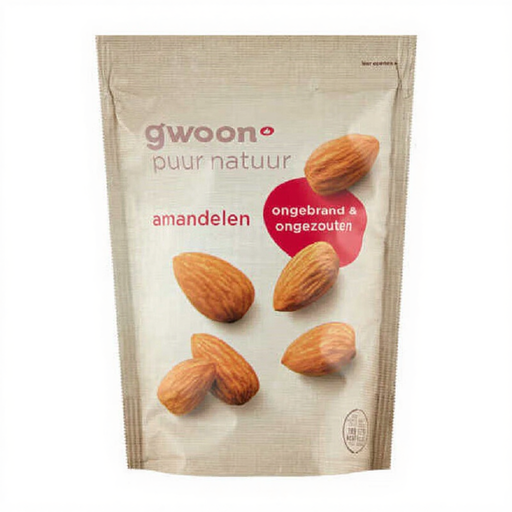
Why This Fits Their Persona: A straightforward pack for anyone trying raw, unsalted almonds for the first time or planning to use them in yoghurt, baking and salads.
The ingredients list contains almonds only, making it easy to avoid added oil, salt and flavourings.
200 grams; 24 grams of protein and 13 grams of fibre per 100 grams according to the product information; salt content of 0.03 grams.
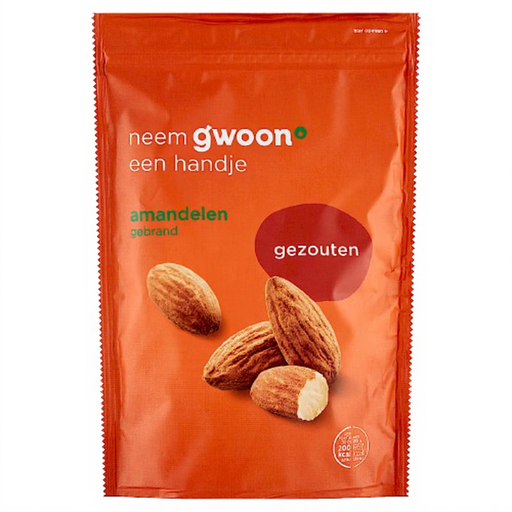
Why This Fits Their Persona: Ideal for anyone who wants to take a crunchy, savoury almond snack to the office, on a walk or to enjoy with drinks.
The stated contents—97% almonds, sunflower oil and 0.7% salt—make it clear what you are buying.
150 grams; resealable bag according to the product description; 21 grams of protein and 11 grams of fibre per 100 grams.
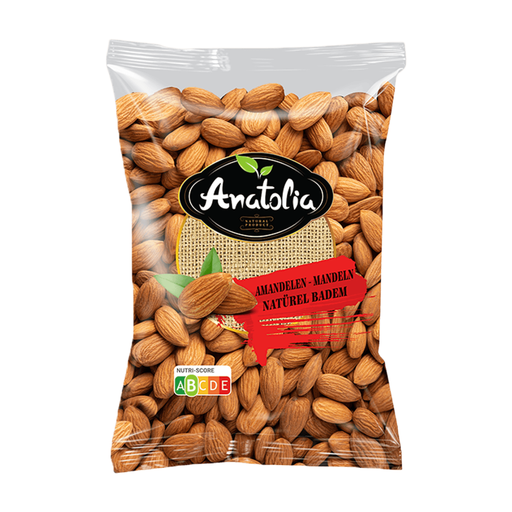
Why This Fits Their Persona: A generous supply for regular bakers, anyone who adds almonds to breakfast dishes or those looking to replenish their pantry.
The packaging states 100% natural almonds and 0 grams of salt per 100 grams. No seasoning or coating is listed.
500 grams; suitable for snacking, baking, cooking and using as a topping; 578 kcal and 21 grams of protein per 100 grams according to the label.
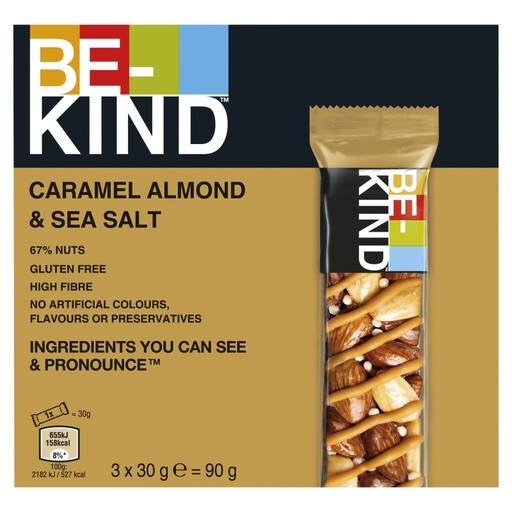
Why This Fits Their Persona: An individually wrapped nut bar for train journeys, bike rides, work or keeping in your bag when you are out and about.
The product information clearly lists a caramel coating, honey, glucose syrup and sea salt. It is therefore clear that this is not a natural almond bar.
90 grams; individually wrapped; according to the description, 16 grams of protein and 0.72 grams of salt per 100 grams.
Browse a current selection of almond products and nut snacks, and compare flavour, quantity, ingredients and intended use.
Anyone looking to buy nuts online should review the product page and the label together. Product information can change; the packaging you receive contains the current details on allergens, shelf life and nutritional values.
That depends on how you define “healthy” and on how the almonds are prepared. Raw almonds generally contain no added salt or oil when this is reflected on the label. Roasted almonds may contain additional oil or salt, but they offer a different texture and flavour. Always compare the nutritional table and ingredients list.
A large bag may have a lower price per 100 grams, but this varies by product and promotion. Calculate the price per 100 grams and consider how long the product will keep after opening. For regular use in baking, salads or breakfast, 500 grams can be a practical choice.
Store the packaging in a cool, dry place away from direct sunlight. Seal a resealable bag securely or transfer the almonds to an airtight container. Always follow the manufacturer’s storage instructions and do not use the product if the packaging is damaged.
