
Same-day & Next-day Delivery

Quality Guaranteed

Unlock Your Welcome Offers: FREE Delivery | Up to 80% OFF | Free 30-day JoyPlus trial
Download the APP
Looking to buy almonds for everyday snacking, breakfast, baking or a sharing platter? You’ll soon come across plenty of options: unsalted almonds, roasted varieties, flavoured nut snacks and large 500 g packs. The differences aren’t just about flavour and price. Ingredients, allergens, salt content and storage advice also help determine whether a product is right for you.
Look out for these three common pitfalls:
Raw almonds haven’t been roasted and usually have a mild, natural flavour. They’re ideal for porridge, yoghurt, salads and homemade nut mixes. A product that lists only “almonds” as an ingredient gives you a clear idea of what’s inside.
Roasted almonds have a more intense flavour and a firmer crunch. Check whether oil, salt or spices have been added. Some products, for example, contain 97% almonds, sunflower oil and a small amount of salt. That’s different from a product made with 100% almonds.
The salt content can vary between salted almonds. For example, Anatolia Roasted Salted Almonds lists 1.0 g of salt per 100 g. G’woon Roasted & Salted Almonds also lists 1.0 g of salt per 100 g, with 97% almonds and sunflower oil as ingredients.
Flavoured almonds often contain more ingredients, such as sugar, syrup, flavourings, milk ingredients or sweeteners. Nutsholic Almond Strawberry, for example, lists 19.7 g of sugar per 100 g. This makes it different from unsalted almonds, even though almonds are still the main ingredient.
For sweet or savoury snacks, check for allergens such as almonds, milk, soya, wheat and mustard. A product may also contain traces of other nuts or peanuts. If you have an allergy, always check the current packaging.
A 500 g pack of almonds is handy if you use them regularly, bake with them or have a large household. For occasional snacking, a pack of 120 to 200 g may be more practical. This may help the almonds stay fresh for longer after opening.
Store almonds as directed on the packaging: usually in a cool, dry, dark place, in a tightly sealed container. Check the best-before date too, and ideally use an opened pack promptly. Nuts naturally contain fats, which can affect their flavour and smell over time.
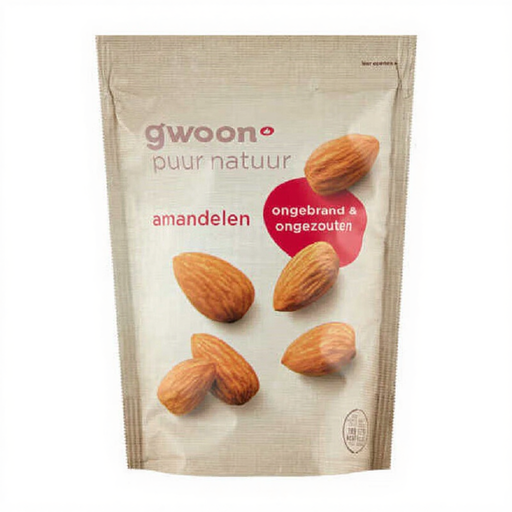
Why it suits this profile: A straightforward choice if you’re new to almonds and want something without a strong flavour or added spices. The 200 g pack is suitable for snacking, breakfast and baking.
The ingredients list contains almonds only. No added flavourings, sugar or salt are listed.
100% almonds according to the product information; 24 g of protein, 13 g of fibre and 0.03 g of salt per 100 g.
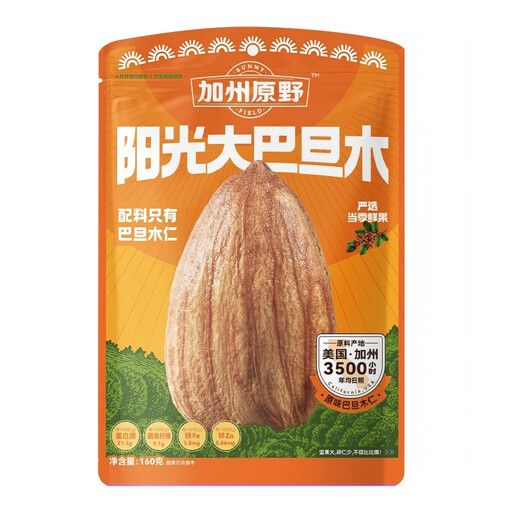
Why it suits this profile: A good choice if you want a pure almond flavour and whole kernels for snacking, yoghurt, granola, salads or baking.
The product information lists almond kernels as the only ingredient, so you’re not paying for a flavour coating or extra sweeteners.
160 g pack; 100% almond kernels according to the ingredients list; suitable for a range of uses.
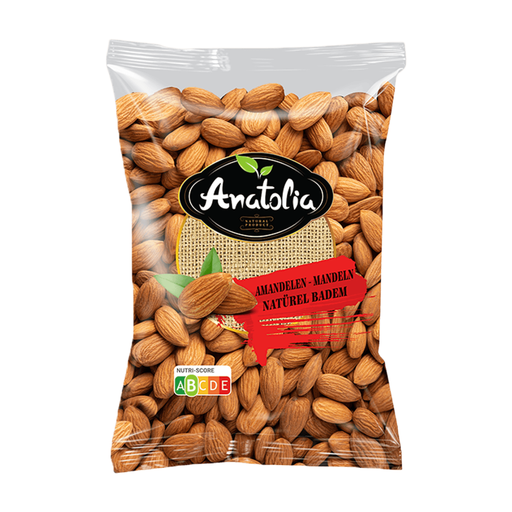
Why it suits this profile: A large pack for households that often use almonds in recipes, salads and yoghurt, or as an everyday snack.
The pack contains 500 g, and the ingredients list states 100% natural almonds. This makes it easy to compare the price per 100 g.
500 g pack; 0.00 g of salt per 100 g according to the product information; suitable for snacking and cooking.
We’ve put together a full, up-to-date list of products that meet these strict selection criteria and the applicable European safety regulations.
Almonds as a snack are a handy way to add variety when you choose a flavoured option. Try milk, strawberry, garlic bread or wasabi flavours. Be sure to check the nutritional information per 100 g. A flavoured snack may contain more sugar, salt or saturated fat than a plain variety.
A small pack, such as 30 g BT21 Wasabi Almond, is handy for when you’re out and about or as a treat. A larger bag, such as Bestore Milk-Flavored Almonds at 500 g, is better for sharing regularly, but you’ll need to take extra care to seal it properly and check its shelf life. For more variety, you could also choose an almond mix or mixed nuts. Check what percentage of the mix is almonds and which other nuts have been added.
If you want to buy nuts online, don’t rely on product photos alone. Check the full product page, ingredients, allergens, nutritional information, net quantity and storage instructions before you order.
It depends on your taste and how you plan to use them. Unsalted almonds have a mild flavour, so they work well in breakfast dishes, baking recipes, salads and homemade mixes. Check the ingredients list to see whether the product contains almonds only.
Shelf life varies by product and packaging. Store opened almonds in a cool, dry place in a tightly sealed container. Always check the date and instructions on the packaging. If you’re unsure, don’t eat them if the smell, taste or texture seems unusual.
A larger pack may cost less per 100 g, but that isn’t always the case. Compare the total price, weight and ingredients. Only buy a larger pack if you use almonds regularly and can store them properly.
