
Vandaag of morgen in huis

Kwaliteit gegarandeerd
Download de app
Categorieën

Choosing an air purifier can be tricky. You're often bombarded with specifications, and the promises can be overwhelming. How do you know which model truly fits your needs without overpaying for features you won't use? It's easy to make the wrong choice.
This article will help you make an informed decision. We'll break down the key specifications and present a selection of models with their features, allowing you to decide what matters most to you.
Focus on the facts. These four parameters determine an air purifier's effectiveness for your specific situation.
The Clean Air Delivery Rate (CADR) is the most important metric. It indicates how many cubic metres of clean air a device can deliver per hour. A higher CADR means faster and more effective purification.
Manufacturers often translate this into a recommended coverage area in square metres (m²). Check the room you intend to use the purifier in (living room, bedroom) and compare it with the specifications. A device with insufficient capacity for a large room will barely improve air quality.
Most air purifiers use a multi-layer filtration system. The key component is often the HEPA filter (High-Efficiency Particulate Air).
No one wants a disruptive appliance in their home. The noise level, expressed in decibels (dB), is especially crucial for an air purifier in the bedroom or office. Pay attention to the value on the lowest setting or in 'sleep mode'. A value around 20-25 dB is generally considered very quiet, comparable to a whisper. A value above 50 dB is comparable to a normal conversation and can be perceived as disruptive.
Modern air purifiers often offer extras such as:
Consider whether these features add value for you. A basic model with manual controls can be just as effective at cleaning the air.
Below is a selection of air purifiers, analysed based on their specifications.
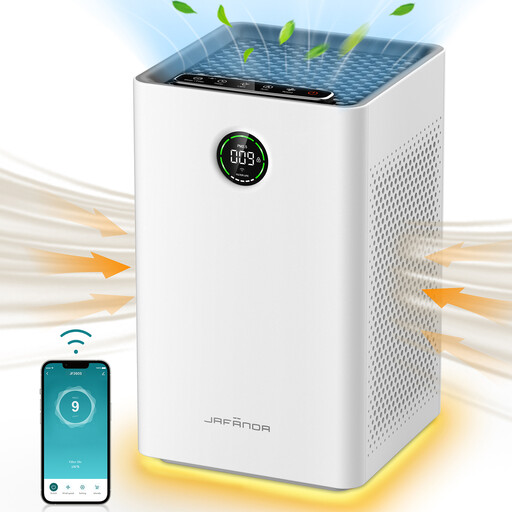
Why this product: This model combines solid capacity with extensive smart features. The built-in PM2.5 sensor provides real-time insight into air quality, and the auto mode adjusts its operation accordingly.
Pros:
Who is it for: For users who value convenience and technology. The combination of app control, auto mode, and quiet operation makes it a great all-rounder for living rooms and bedrooms.
Check out the Jafända Air Purifier JF260S
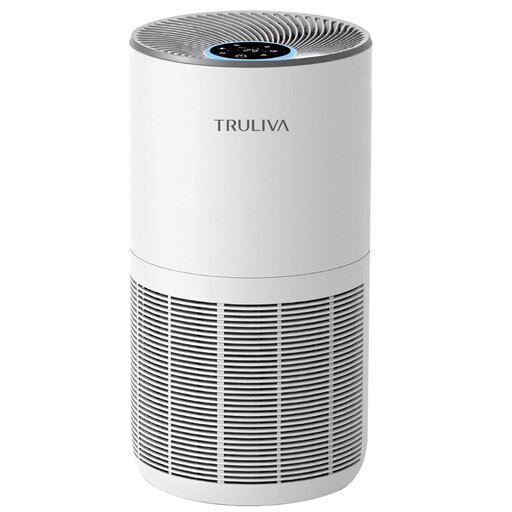
Why this product: The TRULIVA KJ450 stands out with its very high purification capacity. Its 360-degree air intake is designed to circulate air quickly and efficiently in a large space.
Pros:
Who is it for: Ideal for larger living rooms or open-plan spaces where rapid and powerful air purification is desired. Particularly relevant for households with pets or individuals with severe allergies who need a high CADR.
Check out the TRULIVA H13 HEPA Air Purifier
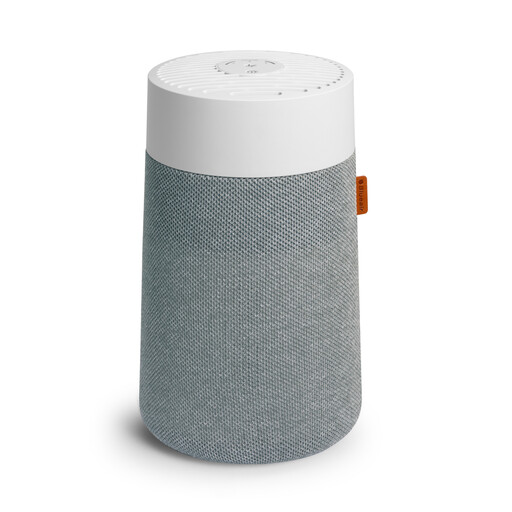
Why this product: This model from Blueair focuses on simplicity and effectiveness in a compact design. It's designed for smaller rooms and is easy to move thanks to its light weight and simple controls.
Pros:
Who is it for: For those seeking an effective, no-nonsense air purifier for a smaller space like a bedroom, nursery, or home office. The focus is purely on air purification, without extra smart features.
Check out the Blueair Blue Pure Mini Max
Every space and situation is unique. Sometimes a different size, a specific feature, or another price point is exactly what you need. If the selection above doesn't fully meet your needs, there are more options available.
Explore our full range of home air filters for more options.
A filter's lifespan depends on the model, usage intensity, and the level of air pollution. Most manufacturers recommend replacing a HEPA filter every 6 to 12 months. Many modern devices have an indicator that tells you when it's time for a replacement.
For optimal performance, place the air purifier in the room where you spend the most time. Ensure there is enough space around the device (usually 30-50 cm) so the air intake and outlet are not blocked. Do not place it in a corner or directly against a wall.
An air purifier with a HEPA filter is designed to filter allergens like pollen, dust mites, and pet dander from the air. By reducing the concentration of these particles in your indoor air, the device can help reduce triggers that may cause allergic reactions. It is a tool to improve air quality, not a medical treatment.
Author: Joybuy Product Recommendation Officer