If you want to photograph butterflies up close and capture fine details, choosing the right macro lens matters more than the camera body alone. For butterflies further from the path, optical zoom may be more practical. A camera with a fixed lens means fewer separate components to carry, while a system camera offers more lens options but may require an extra lens and add weight. Check the chosen lens’s focusing distance and magnification, and assess the weather protection of the body and lens separately. On land managed by Staatsbosbeheer, follow the local access rules.
Who is this buying guide for?
For capturing fine details
You want to fill the frame with wings and other small details, and you’re happy to wait for a butterfly to settle. The right macro lens and precise focusing are key considerations. OM SYSTEM lists a maximum magnification of 1:1 for the M.Zuiko Digital ED 60mm F2.8 Macro.
For taking photos from the path
You want to photograph butterflies beyond the permitted path and prioritise optical reach over maximum macro magnification. Check the rules for the location: Staatsbosbeheer directs visitors to the access signs for the rules that apply on its land.
For walking light
You want to be able to grab your camera quickly and take into account the number of separate lenses, the weight of the complete kit and its weather protection. A fixed lens means fewer components to carry, but also less choice if you want to use a different lens.
What should you look for?
System camera with a macro lens
A good fit if: you can get close enough from the path and want to capture details of a stationary butterfly.
Bear in mind: the macro lens is a separate component, and the focusing distance is not the same as the clear space in front of the lens.
System camera with a choice of lenses
A good fit if: you want to be able to tackle different distances and types of wildlife photography with your choice of macro or telephoto lens.
Bear in mind: the lens must fit the mount; check the stabilisation available with your chosen body and lens combination.
Bridge camera with a fixed zoom lens
A good fit if: you want to frame butterflies at varying distances without changing lenses.
Bear in mind: the minimum focusing distance may vary at different zoom settings, and the lens cannot be changed.
Compact camera with close-up modes
A good fit if: you want to carry little extra equipment and mainly photograph butterflies you can approach closely.
Bear in mind: the fixed lens limits your options if you want to use a different lens later; also consider whether the framing will work for butterflies further from the path.
| Consideration |
What to look for |
Who is this important for? |
| Fine details |
Check the exact lens’s maximum magnification, lens mount and focusing distance. The focusing distance doesn’t tell you how much clear working space there is in front of the lens. |
If I want to capture wing details up close, I look for a suitable macro lens and precise focusing. Around 31% of consumers prioritise close-up detail when choosing. |
| Distance from the path |
Compare the optical zoom range and focusing distance at the zoom setting you expect to use. Don’t assume you can leave the path. |
When I want to photograph a butterfly from the permitted path, useful reach matters more to me than maximum macro magnification. Around 31% of consumers give reach from the path top priority. |
| Carrying weight |
Compare the weight of the complete kit, including your chosen lens, and check the protection of the body and lens separately. |
If I want to carry few separate components on a walk, I add the body and lens together. Around 23% of consumers prioritise lightweight equipment. |
| Focusing in changing light |
Check the stabilisation available with your chosen body and lens combination, and whether the focusing method suits a stationary or moving butterfly. |
In changing light, I want to know which focusing and stabilisation approach suits my subject. Around 15% of consumers give this top priority. |
Common pitfalls
-
Assuming the kit lens is automatically suitable for macro butterfly photography
A camera body and a suitable macro lens are not the same thing: Canon and OM SYSTEM list the macro lenses mentioned here as separate products.
Before choosing a combination, check what’s included in the kit, the lens mount and the lens’s magnification.
-
Using the shortest focusing distance for every zoom setting
For the Sony DSC-RX10M4, Sony lists different minimum focusing distances for wide-angle and telephoto.
Compare the focusing distance at the zoom setting you’ll use to frame the butterfly.
-
Assuming the body and lens have the same level of protection
OM SYSTEM lists an IP53 rating for the OM-5 Mark II body and an IPX1 rating for the separate 60mm macro lens. These are separate specifications.
Check the specifications and conditions of use for both the body and your chosen lens.
Brands to compare
OM SYSTEM
The models considered range from the Tough TG-7 with its fixed lens to the OM-5 Mark II, which can be paired with a separately available macro lens.
- OM SYSTEM lists a maximum magnification of 1:1 and a minimum focusing distance of 0,19 m for the M.Zuiko Digital ED 60mm F2.8 Macro.
- The TG-7 has a fixed lens; the OM-5 Mark II body’s IP53 rating does not automatically apply to every lens.
Canon
The EOS R10 is a system camera with an RF mount, so you can choose a suitable macro or other lens.
- Canon describes focus bracketing and compositing for the EOS R10, which may suit a subject that stays still long enough.
- Canon says the EOS R10 does not have sensor-shift stabilisation. The RF 100mm macro lens mentioned is a separate component.
Sony
The DSC-RX10M4 is a bridge camera with a fixed zoom lens, allowing you to photograph at different distances without changing lenses.
- Sony specifies a 25× optical zoom and a 24–600 mm equivalent range for the DSC-RX10M4.
- The minimum focusing distance depends on the zoom setting, so use the figure for the setting you’ll actually be shooting at.
Nikon
The Z50II and the separate NIKKOR Z MC 105mm f/2.8 VR S offer a system camera and macro lens option.
- Nikon positions the MC 105mm for macro and close-up photography.
- Check which lens is included with any Z50II kit on offer; a listing for the body does not mean the MC 105mm is included.
Joybuy products
The Joybuy options below are action and vlogging cameras. Before choosing a model for butterfly photography, compare the close-focusing capabilities and optical reach of the exact camera.
 No image available
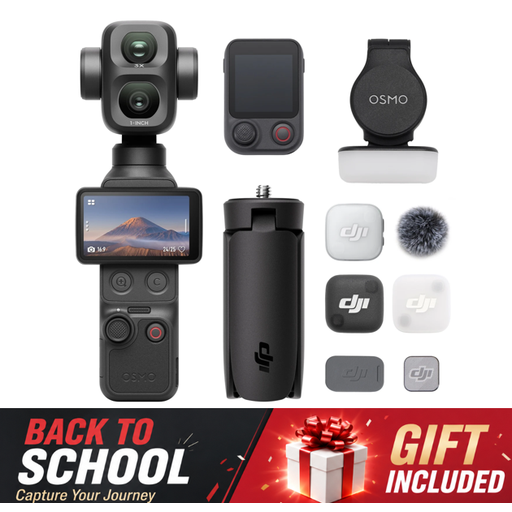
Osmo Pocket 4P Vlog Combo, black
A vlogging camera for anyone who also wants to make vlogs while out walking; check this model’s focusing capabilities for close-up butterfly shots.
Joybuy
 No image available
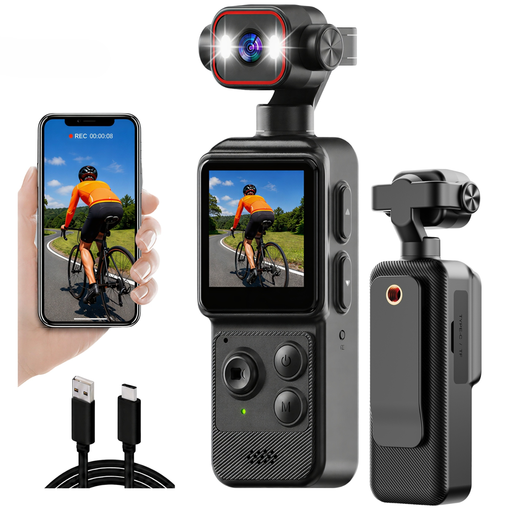
Mini 4K action camera with clip
For anyone interested in the stated clip and 4K resolution; check whether its close-focusing capabilities are suitable for butterfly photography.
The product name lists a 1.54-inch screen, 140° wide-angle lens, app control, LED light and 1200 mAh battery.
Joybuy
 No image available
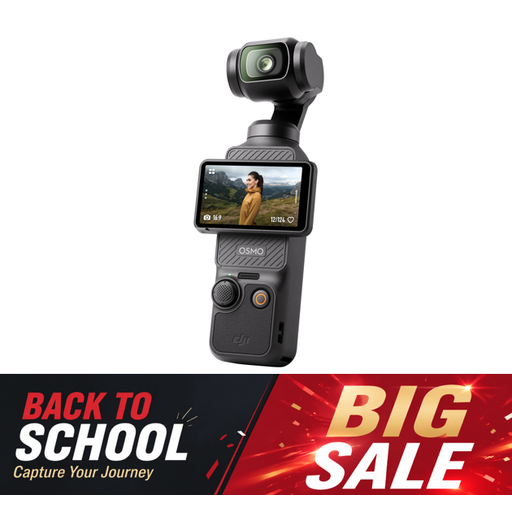
DJI Osmo Pocket 3
A vlogging camera for anyone who also wants to shoot video while out walking; check this model’s close-focusing capabilities for butterfly photography.
The product name lists a 1-inch CMOS sensor, 4K/120fps, 3-axis stabilisation, fast focusing, tracking and a 2-inch rotatable touchscreen.
Joybuy
 No image available
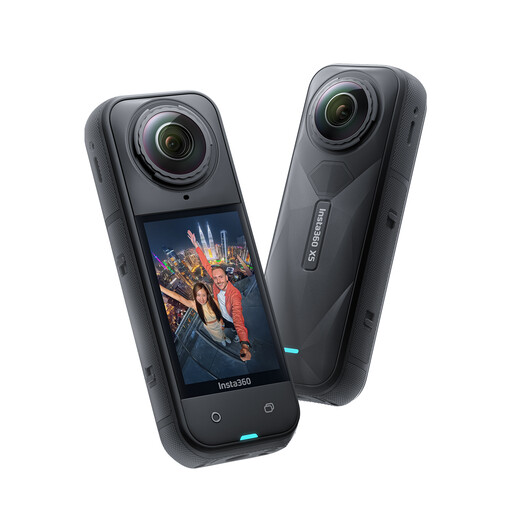
Insta360 X5 waterproof 8K 360° action camera
For anyone considering a 360° action camera; check whether its close-focusing capabilities and stated waterproof rating are right for how you plan to use it.
The product name lists 8K, a replaceable lens, 3-hour battery life, wind protection and stabilisation.
Joybuy
Frequently asked questions
Do I need a macro lens for every butterfly photo?
No. Choose based on how much of the frame you want your subject to fill and how far away it is: a macro lens is designed for close-up detail, while an optical telephoto zoom may be more practical for a butterfly further from the path. With a zoom camera, check the focusing distance at the zoom setting you’ll use.
Can I leave the woodland path to take a photo?
That depends on the area and its local rules. Staatsbosbeheer says that most of its areas can only be accessed via roads and paths, and directs visitors to the access signs for the rules that apply. Don’t assume the same rules apply in an area managed by someone else; the Dutch government also highlights the legal protection of nature areas and species.
How can I reduce dust problems when changing lenses outdoors?
Try to avoid changing lenses in dusty conditions, and check your photos for dust spots. Canon notes that dust and dirt can get onto the sensor when changing lenses. Follow your camera manufacturer’s instructions for cleaning it.
Should I take out extra camera cover?
Not automatically. The Dutch government states that there is no fixed statutory warranty period in the Netherlands; your legal rights when buying as a consumer exist alongside any manufacturer’s or retailer’s guarantee. Before deciding, compare the terms of an additional warranty with the rights you already have.


