Who photographs butterflies in the park?

Photographers who keep their distance

You spot butterflies on flowers beyond arm’s reach and want to photograph them from the path. Compare the telephoto range and the focusing distance at the telephoto end, not just the highest zoom figure. Cameranu and De Vlinderstichting discuss photographing from a distance and from the paths.

Detail seekers

You want to capture wings, antennae and other small details when you can approach calmly. Compare the maximum magnification, focusing distance and the lens that actually comes with the camera. OM Digital Solutions describes the Tough TG-7’s close-up capabilities.

Walkers with a lightweight kit

You take a camera along on an everyday walk in the park and don’t want to keep changing lenses. Weigh up the convenience of a fixed lens against the range and expandability of your kit.

What should you consider when choosing?

Compact camera for close-ups

Choose this option: if you want to take a small camera with you and can approach a butterfly calmly without damaging plants or its habitat. According to the manufacturer, the OM SYSTEM Tough TG-7 can focus as close as 1 cm.

Bear in mind: the built-in lens covers 25 to 100 mm in 35 mm equivalent terms, so being able to focus close doesn’t mean a butterfly further away will fill the frame.

Bridge camera with a fixed zoom lens

Choose this option: if you want to photograph butterflies at different distances from a path without changing lenses. Panasonic gives the LUMIX DC-FZ82D a 20–1200 mm 35 mm equivalent range; Nikon lists 24–3000 mm for the COOLPIX P1100.

Bear in mind: check the focusing distance at the zoom setting you plan to use. For the Panasonic DC-FZ82D, the specified 1 cm applies at the wide-angle end and 150 cm at the telephoto end. Consumentenbond points out that keeping a subject in the frame can be more difficult at high zoom.

Mirrorless camera with a suitable lens

Choose this option: if you want to choose between a macro lens for detail and a telephoto lens for butterflies you can’t approach. Canon specifies an APS-C sensor and RF lens mount for the EOS R50.

Bear in mind: check the exact kit contents, lens mount, magnification and weight of the complete kit. A macro lens doesn’t automatically give you the reach of a longer telephoto lens.

What to consider What should you check? Who is this important for?
Butterflies at a distance Compare the optical range, the focusing distance at the telephoto end and how easy it is to aim the camera at that setting. If I want to photograph a butterfly from the path, I want to know whether the camera can focus at that distance. This is the top buying priority for around 31% of consumers.
Magnifying small details Check the maximum magnification of the lens you’ll use and its corresponding focusing distance. When I want to fill the frame with wings or antennae, I look at magnification and the lens I’ll actually get. Magnifying details is the top buying priority for around 31% of consumers.
Taking photos without changing lenses Check whether the fixed lens can handle both your usual distance and the close-ups you want; if you’re buying a mirrorless camera, check what’s included in the kit. If I want to react quickly when I spot a butterfly, I’d rather choose a setup that doesn’t require me to change lenses first. Simplicity is the top buying priority for around 23% of consumers.
Taking it along on a walk Compare the size and weight of the complete ready-to-use kit, not just the camera body. For an ordinary walk in the park, I want a camera that’s easy to take with me, even if I need an extra lens. Portability is the top buying priority for around 15% of consumers.

Common buying mistakes

  • Assuming the highest zoom figure makes it the best camera for butterflies

    A long range doesn’t necessarily tell you how close the camera can focus at that zoom setting. What’s more, it can be difficult to keep a butterfly in the frame at high zoom.

    Check the focusing distance at the telephoto end and consider whether you can use the range you’ve chosen steadily.

  • Treating a mirrorless camera body or standard kit as a complete macro setup

    The magnification specification for a separate macro lens doesn’t automatically apply to the lens supplied in a camera kit.

    Before buying, check the exact kit contents, the mount and the magnification of the lens you’ll actually receive.

    Dedicated macro photography may call for a separate lens; the equipment you need depends on the kit and lens you choose.

  • Stepping into butterfly habitat to get a close-up

    Walking through the area can damage plants and fragile habitats. De Vlinderstichting advises photographers to stay on the paths.

    Stick to paths wherever site rules require it and, if necessary, take your photo from further away. The Dutch government also explains the duty of care towards nature.

Camera brands to compare

Panasonic

The LUMIX DC-FZ82D is a bridge camera with a fixed 60× optical zoom, for anyone looking for one camera to cover different distances.

  • Panasonic specifies a range of 20–1200 mm in 35 mm equivalent terms.
  • The specified 1 cm macro focus applies at the wide-angle end; at the telephoto end, the specified minimum focusing distance is 150 cm. These are model specifications, not the results of an independent performance test.

OM SYSTEM

The Tough TG-7 offers close-ups in a compact camera with a fixed lens. OM SYSTEM also makes a separate M.ZUIKO DIGITAL ED 90mm F3.5 Macro IS PRO for Micro Four Thirds cameras.

  • According to the manufacturer, the TG-7 can focus as close as 1 cm, and its built-in lens covers 25 to 100 mm in 35 mm equivalent terms.
  • The 90mm macro lens isn’t compatible with the TG-7. These are product specifications, not a statement about the performance of the brand as a whole.

Canon

The EOS R50 is an interchangeable-lens mirrorless camera. A separate RF macro lens is one option for capturing details.

  • Canon specifies an APS-C sensor for the EOS R50. For the RF 100mm F2.8L Macro IS USM, Canon specifies a maximum magnification of 1.4×.
  • The RF macro lens isn’t automatically included with an R50 kit. Check the exact combination and the complete setup.

Nikon

The COOLPIX P1100 is a bridge camera for anyone looking for an exceptionally long optical range in a single fixed lens.

  • Nikon lists 125× optical zoom, a 24–3000 mm 35 mm equivalent range and a macro close-up mode.
  • The maximum range doesn’t prove that the longest telephoto setting is suitable for a nearby butterfly. Consider the focusing distance and how easy the camera is to handle at the zoom setting you intend to use.

Cameras at Joybuy

This selection includes a mirrorless camera with an interchangeable lens and 360° cameras. For each model, check that the listed lens and shooting method suit the distances and details you need for butterfly photography.

Sony ZV-E10 with 16-50mm zoom lens, black

Sony ZV-E10 + 16-50mm Zoom Black

The product listing specifies an APS-C sensor, Sony E mount and a supplied 16–50mm zoom lens. Check whether this range suits the distances at which you want to photograph butterflies.

A strap is listed among the included accessories.

View at Joybuy
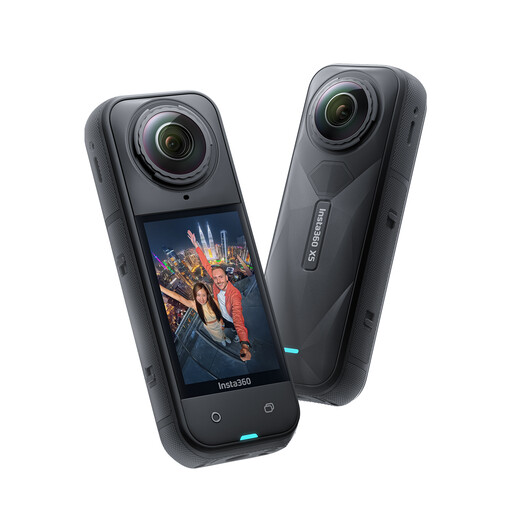
Insta360 X5 waterproof 8K 360° action camera

Insta360 X5 Waterproof 8K 360° Action Camera

The product name identifies this model as a 360° action camera with 8K video. Check whether this way of shooting is right for the butterfly photos you want to take.

View at Joybuy
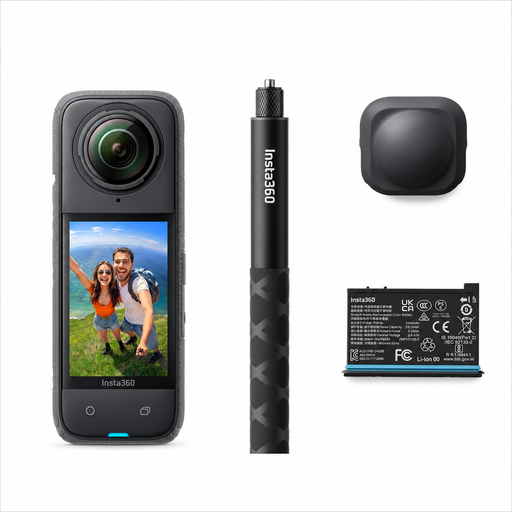
Insta360 X4 Air Starter Bundle, 165 g, 8K 360° camera

Insta360 X4 Air Starter Bundle – 165g 8K 360° Camera

The product name describes a 165 g 360° camera with 8K video. Check whether this style of recording suits the butterfly photos you want to take.

View at Joybuy

Frequently asked questions

Is macro mode the same as high macro magnification?

No, macro mode and maximum magnification aren’t the same thing. Compare the lens’s stated magnification with its focusing distance at the zoom setting you’ll use. For the Panasonic LUMIX DC-FZ82D, the specified distances are 1 cm at the wide-angle end and 150 cm at the telephoto end; these aren’t interchangeable.

Do I always need a tripod to photograph a moving butterfly?

No, you don’t always need a tripod. Cameranu’s advice on insect photography highlights the importance of a fast shutter speed when shooting handheld. Adjust the exposure to suit the conditions and focus on the detail you want. A tripod won’t stop the butterfly itself from moving.

What extra equipment and warranty should I check?

If you’re buying a mirrorless camera, check whether the kit includes the lens you need and whether you want to take a memory card or spare battery with you. In the Netherlands, you’re covered by a statutory guarantee: according to ACM ConsuWijzer, the seller must offer an appropriate free remedy if a product breaks sooner than you could reasonably expect under normal use. There isn’t one fixed guarantee period for all products.

Can I walk among the plants or share photos showing identifiable park visitors?

Treat nature rules and sharing images as two separate matters. De Vlinderstichting advises photographers to stay on the paths; also check the rules for the park where you’re taking photos. According to the Dutch Data Protection Authority, images you keep private are covered by an exception for personal use, but this doesn’t necessarily apply to sharing photos more widely if people can be recognised in them.
