
Family that mainly drinks decaf
You grind several cups of the same beans in the morning and want to set the amount and grind size easily. Melitta and De’Longhi describe models with an adjustable dose or cup selector.


For making several cups of decaf in a row, an electric grinder with a suitable dose setting is a practical place to start. If you also switch between decaf and regular beans, pay particular attention to how you can empty and clean the hopper, grinding chamber and outlet. Baratza explains that coffee can remain in the grinding chamber and outlet after grinding; product specifications don’t tell you how much will be left behind when switching beans in a particular model.
You grind several cups of the same beans in the morning and want to set the amount and grind size easily. Melitta and De’Longhi describe models with an adjustable dose or cup selector.
You grind both decaf and regular coffee and want to remove any residue from the grinder before switching. Baratza explains that grounds can remain in the grinding chamber and outlet.
You choose a grinder mainly for a grind size that suits your filter, cafetière or other brewing method. Check the settings for the exact model and the way you brew.
Best for: grinding several cups of the same decaf beans in a row.
Consider: a larger hopper is handy for one type of bean, but may need emptying when you want to switch.
Best for: switching between decaf and regular coffee, adding only the beans you need each time.
Consider: even after emptying the grinder, grounds may remain in the grinding chamber or outlet; cleaning doesn’t guarantee complete separation.
Best for: grinding small amounts without a motor, if you don’t mind turning the handle by hand.
Consider: grinding by hand takes more effort when making several cups in a row.
| What to consider | What should you check? | Who is this important to? |
|---|---|---|
| Amount needed for breakfast | Check the dose setting and the capacity of both the bean hopper and the grounds container. A cup selector doesn’t provide a fixed dose in grams. | If I’m grinding several cups in a row for the family, I want to set the amount easily. Around 36% of consumers prioritise portion size. |
| Keeping decaf and regular coffee separate | Check how to access and clean the hopper, burrs and outlet. If you want to avoid mixing beans, consider whether a separate grinder would be a better fit. | If I switch between decaf and regular beans, I want to be able to remove any old grounds. Around 29% of consumers prioritise keeping different types of beans separate. |
| Grind size for your brewing method | First decide how you brew your coffee, then check the adjustment range for that exact model. A general description such as ‘fine’ doesn’t tell you whether the grinder is suitable for your espresso machine. | If I always use the same brewing method, I want to be able to adjust the grind to suit it. Around 21% of consumers prioritise having the right grind size. |
| Operation and cleaning | Check which parts you can access and what cleaning steps the instruction manual recommends. Also consider whether you’re happy to carry them out every day. | If I use the grinder every morning, I want to know how much effort it takes to operate and clean. Around 14% of consumers give most weight to the daily upkeep involved. |
A hopper can be handy when grinding several cups of the same beans, but you may need to empty it before switching between decaf and regular coffee. Grounds can also remain in the grinding chamber and outlet.
First, think about how often you switch between types of beans. Then check how to empty and clean the parts on your chosen model. If keeping the beans separate is essential to you, consider getting a separate grinder.
Emptying and cleaning the grinder, and possibly running coffee through it to clear out residue, take extra time and use extra beans.
A general description doesn’t tell you whether the adjustment range is precise enough for your machine. Other brewing methods also need a grind size that suits the way you prepare your coffee.
Check the adjustment range and recommendations for the exact model and your brewing method.
Decaf still contains some caffeine. Residue from regular coffee in a shared grinder is another possible source of mixing.
Consider the caffeine content of decaf and possible residue in the grinder as two separate things. Don’t rely on cleaning to guarantee zero caffeine.
Melitta describes the Molino as an electric burr grinder for brewing methods including filter coffee and cafetière.
De’Longhi describes the KG79 as an electric grinder with an adjustable grind size and a cup selector.
Wilfa describes the Svart Aroma as an electric grinder with conical burrs, a timer and settings for brewing methods including filter coffee and cafetière.
Baratza’s Dutch manufacturer website presents the Encore mainly for filter brewing.
HARIO describes the Skerton N as a compact hand grinder with adjustable settings.
This selection includes a filter coffee maker with an integrated grinder, electric grinders and hand grinders for different quantities and brewing methods.
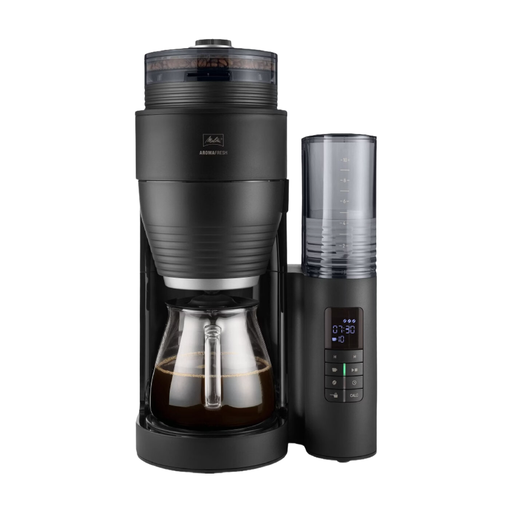 No image available
Ideal if you want to make several cups of filter coffee and are looking for an integrated grinder; this is a coffee maker, not a standalone grinder.
Integrated ceramic grinder; 11 grind settings; setting for 2–10 cups.
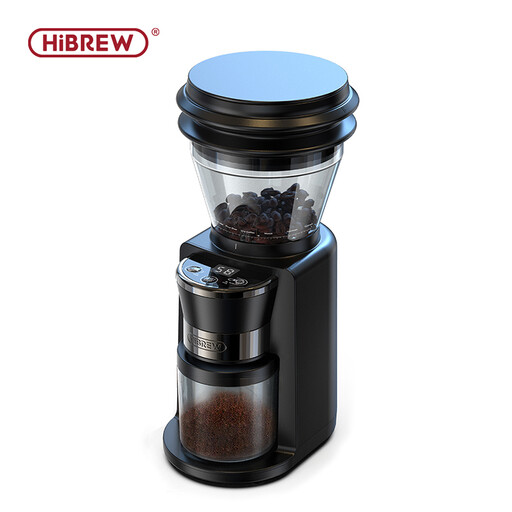 No image available
Ideal if you’re looking for an electric grinder with settings for different brewing methods and an adjustable dose.
34 grind settings; digital dose setting; 210 g bean hopper and 100 g grounds container. Listed brewing methods include espresso, Turkish coffee and pour-over.
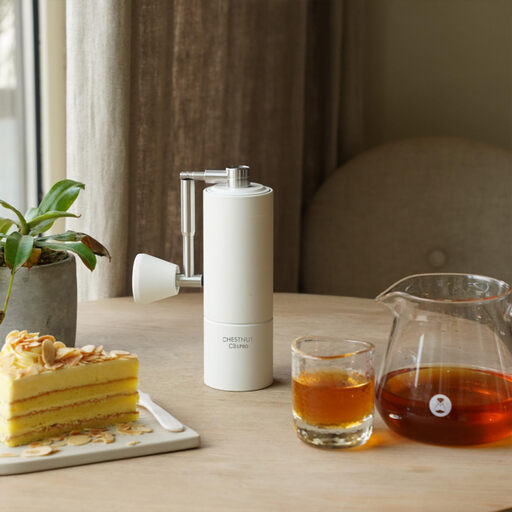 No image available
Ideal if you want to grind small amounts by hand and adjust the grind size yourself; grinding several cups takes extra turns of the handle.
S2C conical burrs; adjustable grind from espresso to French press; stainless steel; foldable handle.
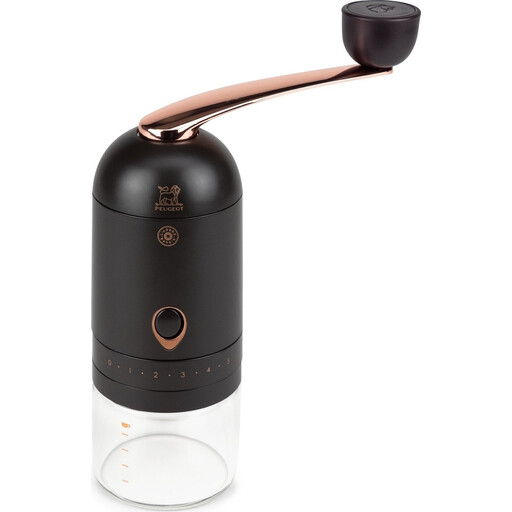 No image available
Ideal if you’re looking for a hand grinder and want to adjust the grind size yourself; grinding several portions in a row takes extra effort.
U’Select settings; the product description says a brush and measuring spoon are included.
Not just because it’s decaf: first choose a grind size that suits your brewing method, then adjust it if needed for the beans you’re using. Melitta lists different settings for filter coffee and cafetière on the Molino; these don’t automatically apply to other grinders.
First empty the hopper, then follow your model’s instructions for cleaning the burrs and outlet. Baratza advises unplugging its grinders before brushing the grinding chamber and outlet. According to Baratza, running a small amount of coffee through the grinder after changing the setting removes transitional grounds, but doesn’t guarantee complete separation of caffeine.
No. The Netherlands Nutrition Centre gives an average of around 3 mg of caffeine per 125 ml cup of decaf. This is an average nutritional figure, not a measurement of your beans or a statement about medical suitability.
According to the Dutch government, you’re entitled to a product that works properly in the Netherlands, and you should contact the seller if there’s a problem. There’s no fixed statutory guarantee period; what you can reasonably expect depends on the circumstances. A manufacturer’s guarantee is in addition to your statutory rights.