For cafetière coffee, start with a burr grinder that lets you choose a coarse grind, then assess the result using your own cafetière filter. If you’re grinding for guests, an electric grinder can save you some manual effort; a hand grinder may suit you if you don’t mind grinding in several batches. Baratza lists a 120 g grounds bin for the Encore ESP, while Hario gives the Skerton PRO a bean capacity of 100 g: these are different capacity measurements.
Which grinder is right for you?
Host making a full cafetière
You want to grind enough for several people without constantly emptying a small grounds bin or spending ages turning a handle. Compare the grounds capacity with the effort involved in each batch. For example, Baratza lists a 120 g grounds bin for the Encore ESP.
Cafetière drinker who wants less sediment
Your main priority is an adjustable coarse grind that suits your cafetière filter. Baratza and Fellow both highlight the importance of coarsely ground coffee for cafetière brewing; check the results with your own filter.
Occasional coffee grinder
You usually grind small amounts and weigh up compact storage against the extra effort involved when you have guests. Hario and Timemore list different capacities for their hand grinders, so check which capacity applies to the exact model variant.
What should you look for in a coffee grinder for a cafetière?
First, check that you can select a coarse grind. Then compare the amount you need with the capacity of the grounds bin or grinder, and consider the effort involved, storage space and whether you’ll use it for other brewing methods.
| What to consider |
What should you check? |
Who is this important for? |
| Coarse grind setting |
Check that the grinder can produce a coarse grind, then adjust it to suit your cafetière filter; having more settings doesn’t, by itself, guarantee a more even grind. |
When I make coffee in a cafetière, I want a coarse grind that suits the filter and doesn’t let too many fine particles through. Around 36% of consumers put grind size first. |
| Serving guests |
Compare the amount you’ve measured out with the grounds capacity; a bean hopper and a grounds bin are not the same thing. |
When I make a full cafetière for friends, I want to know whether the whole batch will fit at once. Around 29% of consumers prioritise the amount needed for guests. |
| Effort and storage |
Weigh up the space the grinder takes against how many manual grinding sessions you’d be happy to do for a larger batch. |
If I usually grind small amounts, I want to be able to store the grinder easily and don’t mind a bit more manual effort when guests come over. Around 21% of consumers prioritise compact size and occasional use. |
| Other brewing methods |
Check the grind range listed for the exact grinder and the brewing methods you actually use. |
If I use brewing methods other than a cafetière, I want to know whether one grinder can handle them all without paying for settings I won’t use. Around 14% of consumers prioritise using a grinder for multiple brewing methods. |
Pitfalls to avoid when choosing
-
Confusing the bean hopper capacity with the grounds bin capacity
These figures refer to different things. Wilfa lists a 250 g bean hopper for the Svart Aroma; that doesn’t tell you how much ground coffee the grounds bin can hold.
Compare the amount you’ve measured with the listed grounds capacity of the exact model variant.
-
Assuming espresso settings are automatically useful for cafetière coffee
For the Encore ESP, Baratza specifies settings 1–20 for espresso and 21–40 for filter coffee and cafetière brewing, among other methods. You don’t need an espresso setting if you only use a cafetière.
First consider the coarse grind, the size of your batch and how much manual effort you’re happy with.
-
Choosing a small hand grinder without checking how much you need for guests
According to Timemore, the standard Chestnut C3 has a 20 g grounds cup. One Fellow recipe uses 60 g of coffee, but the amount you need depends on your recipe and cafetière.
Measure out your own batch and check the capacity of the complete model variant; a larger batch may take several grinding sessions.
Brands to consider
Baratza
According to Baratza, the Encore ESP is an electric burr grinder with settings for cafetière coffee and other brewing methods.
- Baratza lists a 120 g grounds bin and settings 21–40 for filter coffee and cafetière brewing, among other methods.
- The espresso settings may be unnecessary if you only use a cafetière. The listed specifications are not an independent measurement of grind consistency.
Hario
The manual Skerton PRO is worth comparing if you occasionally want to measure out a larger amount of beans.
- Hario lists a bean capacity of 100 g and an adjustable ceramic burr set.
- You’ll still need to grind by hand. Hario says only the glass part is dishwasher-safe; follow the cleaning instructions for the burr set and let it dry completely.
Wilfa
According to Wilfa, the electric Svart Aroma has a setting for cafetière or press pot brewing, as well as a timer.
- Wilfa lists conical burrs and a 250 g bean hopper.
- The 250 g capacity refers to the bean hopper, not the grounds bin. Check the grounds bin capacity separately against the amount you want to make.
Timemore
According to Timemore, the manual Chestnut C3 is intended for smaller batches; if you’re grinding for guests, you may need to grind more than once.
- For the standard C3, Timemore lists a 20 g grounds cup and steel burrs.
- Timemore also offers other configurations. Check the full model variant and its capacity rather than assuming the same specifications apply to a different version.
Joybuy products for cafetière coffee
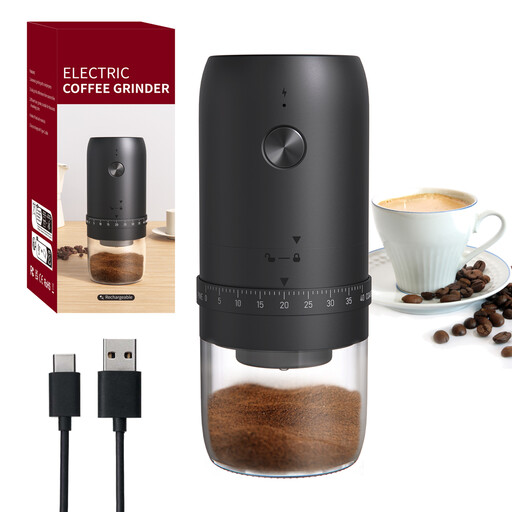
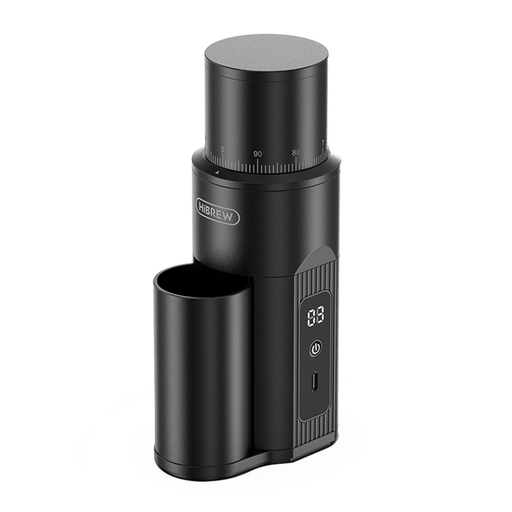
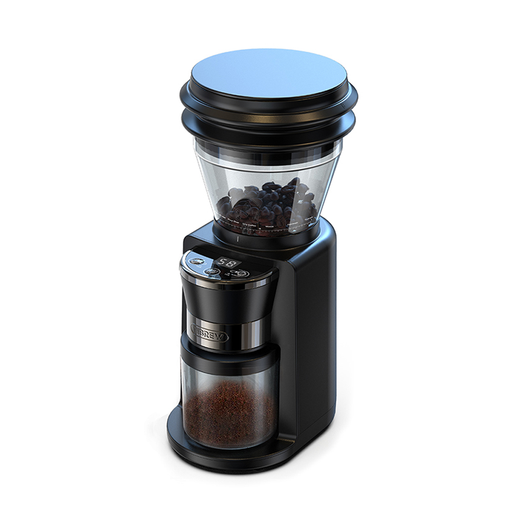
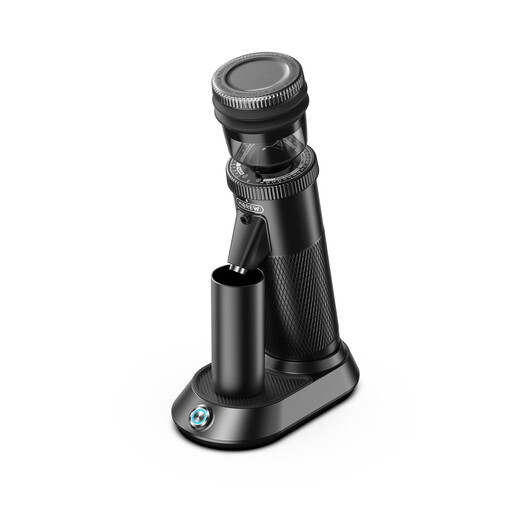
The products below are electric coffee grinders. Check that the grind settings and grounds capacity of the exact model variant suit your cafetière and the amount you want to make.
 No image available
Cliton Electric Coffee Grinder Black
If you’re grinding for guests, check that the grind settings and grounds capacity suit your cafetière and the amount you want to make.
View at Joybuy
 No image available
HiBREW G5MINI coffee grinder
If an adjustable grind setting is important for your cafetière, check that the coarseness you want is within the grinder’s range.
The product name lists conical burrs, 100 grind settings, a dual 5200 mAh battery system, 420 stainless steel and an aluminium alloy body.
View at Joybuy
 No image available
HiBREW G3 automatic coffee grinder
The listed grind settings may be useful if you want to adjust the grind for your cafetière; check that the coarsest setting suits your filter.
The product name lists 40 mm conical burrs and a 31-step scale.
View at Joybuy
 No image available
HiBREW G5 automatic coffee grinder
If you want to adjust the grind for cafetière coffee, check that the listed settings cover the grind size you’re looking for.
The product name lists 48 mm conical burrs and 36 adjustment levels.
View at Joybuy
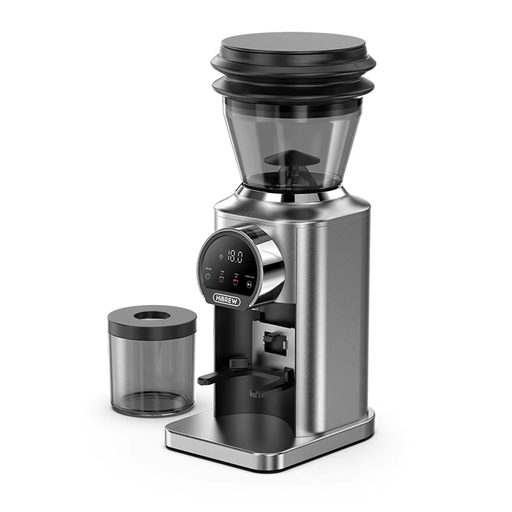 No image available
HiBREW G3 Plus coffee grinder
If you want to adjust the grind for your cafetière, check that the coarse setting suits your cafetière filter.
The product name lists titanium-coated stainless steel burrs and 31 adjustment levels.
View at Joybuy
Frequently asked questions
How do I adjust a coffee grinder for my cafetière?
Start with a coarse setting and assess the result in your own cafetière. If a lot of fine grounds pass through the filter, adjust the grind; the right setting varies between grinders and brewing equipment. Baratza and Fellow both explain why coarsely ground coffee is important for cafetière brewing.
How much coffee should I grind when I have guests?
First work out how much coffee your cafetière and recipe call for, then compare it with the capacity of the exact grinder variant. Fellow gives 60 g of coffee to 840 g of water as one example; that isn’t a fixed amount for every cafetière.
How do I clean a coffee grinder?
Follow the instructions for your model. Baratza advises removing coffee residue from the grinding chamber and outlet, and drying removable parts thoroughly after washing. According to Hario, only the glass part of the Skerton PRO is dishwasher-safe.
What warranty and cooling-off period apply to a purchase in the Netherlands?
According to the Dutch government, if there’s a problem with a product, the seller must provide a solution; the Netherlands doesn’t have a fixed statutory warranty period for every product. For online purchases from a business, a 14-day cooling-off period applies in many cases. Check the terms and exceptions that apply to your purchase.


