What should you look for when buying?
First, check the ingredients, allergens and texture of the option you’ve chosen. Then compare the pack size with what your household will actually use.
| What to consider | What to check before buying | Who should consider this? |
|---|
| Ingredients |
Read the ingredients list. Is it made with wholegrain breakfast cereals and contains no added sugar or salt, as recommended by the Netherlands Nutrition Centre for this breakfast alternative? |
If I’m serving something other than bread for breakfast, I want to know whether the muesli I’ve chosen fits that dietary choice. Around 42% of consumers prioritise the ingredients. |
| Texture and allergens |
Check the pieces in the muesli and read the current ingredients and allergen information. Ask about the school or childcare policy before packing it. |
If it contains whole nuts or an allergen that’s relevant to my child, I want to know before buying whether this option is suitable. Around 33% of consumers prioritise this check. |
| Pack size |
Compare the net weight and price per kilo of the options you’re considering; also check how to store the pack once it’s opened. |
A large bag is only useful for my household if we’ll use the contents and can store them properly. Around 25% of consumers prioritise this consideration. |
Muesli on Joybuy
These products are crunchy muesli, available as a multipack or a single bag. For a toddler’s breakfast, check the ingredients, allergens and texture of each option before considering the pack size.
 No image available
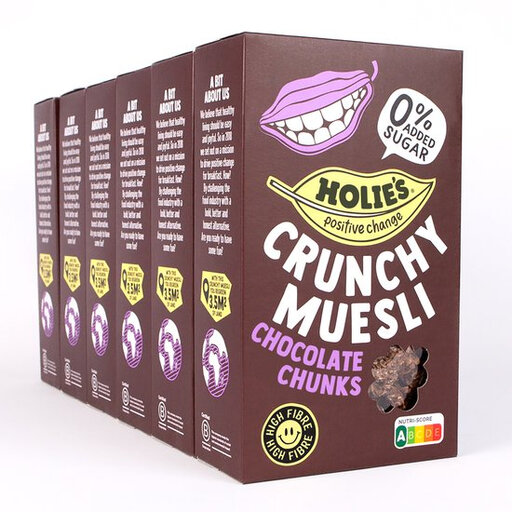
Holie's Crunchy Muesli Chocolate Chunks, 6 × 400 g
A multipack for households that regularly enjoy this crunchy chocolate muesli.
Check the pieces and read the current label to make sure the ingredients and allergens are suitable for your child. If you’re packing it for school or childcare, ask about their policy.
View on Joybuy
 No image available
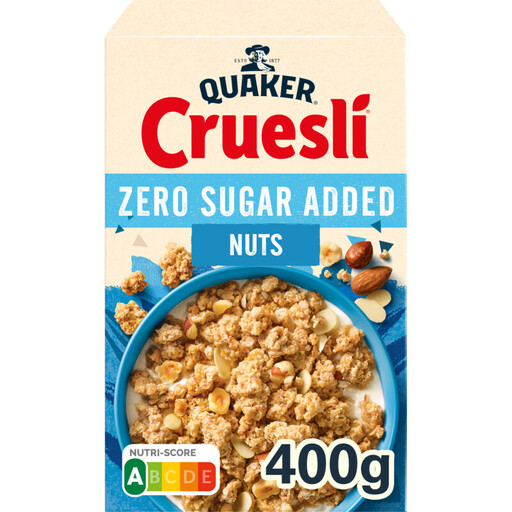
Quaker Cruesli Nuts Zero Sugar, 400 g
A single bag of nut muesli for anyone who’d rather buy one pack than a multipack.
The name Zero Sugar doesn’t replace the need to check the ingredients and nutritional information. Check the nut pieces too before giving this muesli to a toddler.
View on Joybuy
 No image available
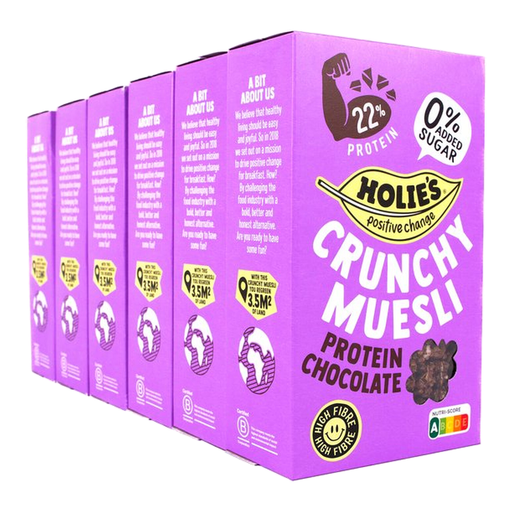
Holie's Crunchy Muesli Protein Chocolate, 6 × 400 g
A multipack for households that regularly enjoy the crunchy chocolate variety.
Use the current packaging to check the nutritional information, ingredients and allergens. Don’t assume it’s suitable for a toddler just because Protein appears in the product name. Check the texture too.
View on Joybuy
Frequently asked questions
Can a toddler have muesli for breakfast?
Yes. As an alternative to bread, the Netherlands Nutrition Centre lists muesli or other wholegrain breakfast cereals with no added sugar or salt for children aged 1 to 3. It also advises that the child eats two slices of bread at another time of day.
What should I do if the muesli contains whole nuts or hard pieces?
First, consider whether your child can chew the pieces safely; the Netherlands Nutrition Centre advises caution with whole nuts for young children. If in doubt, choose a different texture and stay nearby while they’re eating.
Where can I find gluten-containing cereals on the packaging?
Check the ingredients list for the types of cereals listed, such as wheat, rye or barley. The Netherlands Food and Consumer Product Safety Authority explains the mandatory allergen labelling on packaged foods; always check the current label for the option you’ve chosen.
How do I compare a multipack with a single large bag?
Compare the net weight and price per kilo of the specific packs at the same time of purchase. Then consider whether you’ll use the contents and can store them according to the label; a larger pack doesn’t, by itself, mean it’s suitable for your toddler.


