What should you consider when buying?
Start with your portion plan and the ingredients you can offer. Then choose a pack format that suits the preparation and storage facilities available.
| Consideration |
What to look for |
Who should pay particular attention? |
| Cost per usable quantity |
Compare the same type of fruit by price per kilogram and work out how many packs your portion plan requires. |
If I want to buy enough for the planned number of portions and avoid having much left over, I look at the usable quantity. Around 29% of consumers prioritise cost per usable quantity. |
| Ingredients and allergens |
Check the label of the exact product, including information about allergens present and possible traces. |
If I need to assess and communicate ingredients and allergens to guests, I check the product information before serving it. Around 23% of consumers prioritise allergen management. |
| Portioning and replenishing |
Check whether you’re buying a large bag, a bundle of separate bags or individual portions; also read the preparation instructions. |
If I need to replenish the food at different breaks, I want to know how much preparation is involved in opening and portioning it. Around 18% of consumers prioritise ease of serving. |
| Mindful snack portions |
Check both total and added sugars, then decide what portion is right for your service. |
If I’m planning portions for guests, I want to take the nutritional information into account without treating the portion shown on the label as daily guidance. Around 18% of consumers prioritise portion awareness. |
| Leftovers and storage |
Read the storage instructions on the pack, including for opened products; don’t assume there’s one standard storage period. |
If I have unopened stock or opened packs left over, I want to know in advance how they need to be stored. Around 12% of consumers prioritise manageable leftover stock. |
Joybuy dried fruit products
These Joybuy product options are related to dried fruit as a conference snack. Check the contents and ingredients of each product before planning how much you’ll need.
 No image available
OHLA dried guava 180 g
The product description says this dried guava is suitable as a snack; work out how much you need based on your planned portions.
The pack contains 180 g. The ingredients are listed as 95% guava, sugar and preservative.
The product description recommends storing it in a cool, dry place.
Joybuy
 No image available
PHILIPPINE BRAND dried mango 100 g
The product description mentions individually wrapped snack portions; check that the pack suits the number of guests you want to serve.
The pack contains 100 g. The ingredients are listed as mango, sugar and E223 (sulphites).
Joybuy
 No image available
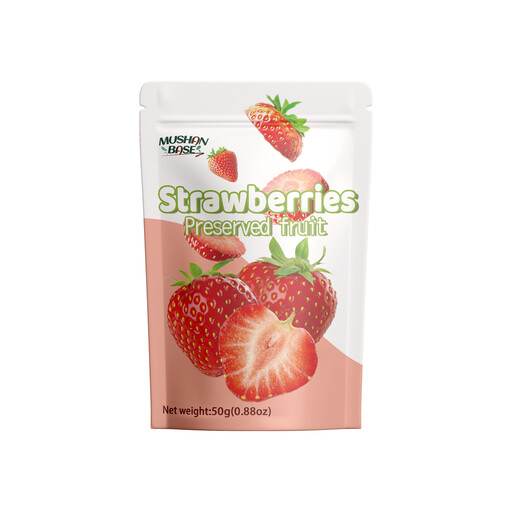
MUSHAN BASE dried strawberry slices 50 g
The product description says the strawberries are ready to eat; take the 50 g pack size into account when planning.
The ingredients are listed as dried strawberries and sugar.
The product description recommends resealing the pack securely after opening.
Joybuy
 No image available
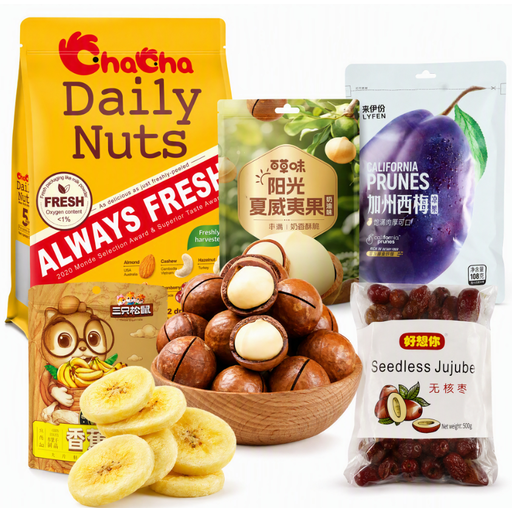
Full of Fruit Flavor nut and dried fruit mix, 5-pack, 1,073 kg
This bundle combines dried fruit and nuts; only consider it if that combination suits the ingredients you want to offer guests.
The bundle contains five products with a total weight of 1,073 kg. The product description mentions banana chips, red dates and Californian plums, among other ingredients.
The description lists tree nuts and aspartame in the plums. According to the product description, refrigerate after opening and consume within one day.
Joybuy
Frequently asked questions
How do you calculate how much dried fruit you need?
Multiply the number of portions planned by the weight you want to serve per portion. For example, 100 portions of 20 g require 2 kg of fruit; a 750 g bag will provide 37 full portions, with 10 g left over. The Netherlands Nutrition Centre recommends a maximum of 20 g of dried fruit per day; that’s different from a purchasing calculation or the portion size shown on a label.
What do you need to arrange if you serve the fruit unpackaged?
Make sure the relevant allergen information is available for the products you actually serve. The Netherlands Food and Consumer Product Safety Authority explains that information can be provided in writing or electronically alongside the product, or given verbally under certain conditions. If information is given verbally, it must be available immediately before purchase, also be available in writing or electronically for staff and inspectors, and be accompanied by a clearly visible notice.
Can you serve all dried fruit without preparation?
Follow the instructions on the pack for the exact product. Albert Heijn says the raisins reviewed are ready to eat, while PLUS advises rinsing its Tutti frutti with lukewarm water before use. For professional food preparation or processing, you must also follow the applicable food safety plan or a suitable hygiene code.
Does vegan or no added sugar mean a product is suitable for every guest?
No. Assess the ingredients, allergens and nutritional information separately. PLUS Tutti frutti is labelled vegan but lists sulphites. Albert Heijn says its 750 g pack of raisins contains no added sugar, but does contain 59 g of total sugars per 100 g.
How should you store opened leftovers?
Follow the storage instructions on the pack you receive. Albert Heijn says to store the raisins in a cool, dark, dry place. Once opened, AH Gewelde gedroogde abrikozen must be refrigerated at a maximum of 7 °C and have a limited shelf life. These product instructions aren’t a general storage period for all types of dried fruit.


