What should you look for when buying?
Start with how you’ll use them and when you’ll eat them; then compare the pack, ingredients and storage instructions.
| What to consider |
What should you check? |
Who does this matter most to? |
| Value of the pack |
Compare the same type by price per kilo and take your usage into account. Albert Heijn lists different pack sizes in its AH Terra range. |
If you regularly use almonds at home and want to know whether you’ll get through a larger bag, consider the amount you use per serving; around 31% of consumers prioritise this consideration. |
| When to eat them around a ride |
Check the carbohydrates per 100 g and per serving. KNWU Fondo identifies carbohydrates as the main source of energy while cycling; the Netherlands Nutrition Centre highlights when to eat and the impact of fat, protein and fibre shortly before exercise. |
If you’re planning a snack around a ride, you’ll want to know what role almonds play and when other food may be needed. Around 31% of consumers prioritise food that suits the timing of their ride. |
| Ingredients and preparation |
Check whether oil, salt or other ingredients have been added. Unsalted doesn’t automatically mean a product contains only almonds. |
If you want a simple ingredients list or prefer a flavoured option, the label will help you decide; around 19% of consumers prioritise ingredients. |
| Quantity and storage |
Choose a pack size that suits your usage and check the storage advice. The Netherlands Nutrition Centre advises storing nuts in a cool, dark and dry place and keeping them well sealed. |
If you only use almonds occasionally or often switch between different nuts, you’ll want a quantity you can store appropriately; around 13% of consumers prioritise stock management and avoiding waste. |
| Allergens |
Check the ingredients and allergen warnings on the pack for the person who will be eating the almonds. Almonds are themselves a tree nut allergen. |
If you’re buying for someone with a relevant food allergy, you’ll need to check the product information carefully; around 6% of consumers say checking allergens is their main concern when buying. |
Almonds at Joybuy
These Joybuy products range from smaller packs to 500 g bags, with natural, roasted and salted options.
 Image unavailable
Jia Zhou Yuan Ye Original Almond Kernels 160 g
The 160 g pack suits anyone looking for a smaller quantity to match their usage.
The product description lists almond kernels as the only ingredient and says they’re ready to eat.
Contains almonds and isn’t suitable for anyone with an almond allergy. Don’t use it as your sole fuel for intense rides.
View at Joybuy
 Image unavailable
g'woon Almonds Raw & Unsalted 200 g
This 200 g pack is an option if you want a smaller quantity for occasional or varied use.
The title says Raw & Unsalted; the product description lists almonds as an ingredient and advises keeping the pack sealed after opening.
Contains almonds and isn’t suitable for anyone with an almond allergy. Don’t use it as your sole fuel for intense rides.
View at Joybuy
 Image unavailable
Anatolia Roasted Salted Almonds 500 g
The 500 g pack suits anyone looking to balance a larger supply against their usage.
The product title describes roasted, salted almonds.
Contains added salt and almonds; not suitable for anyone with an almond allergy. Don’t use it as your sole fuel for intense rides.
View at Joybuy
 Image unavailable
Anatolia Badem Natural Amandel 500 gr
This 500 g pack is for anyone looking to match a larger quantity to household use.
The product description lists almonds as the only ingredient and advises storing them in a cool, dry place and sealing the pack after opening.
Contains almonds and isn’t suitable for anyone with an almond allergy. Don’t use it as your sole fuel for intense rides.
View at Joybuy
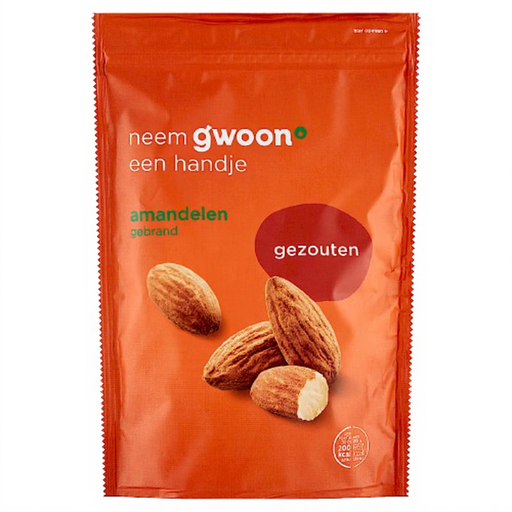 Image unavailable
g'woon Roasted & Salted Almonds 150 g
The 150 g pack is a smaller option if you’d rather buy a limited quantity.
The product description lists 97% almonds, sunflower oil and 0.7% salt, as well as resealable packaging.
Contains added salt and almonds; the description also warns that it may contain traces of peanuts and other nuts. Don’t use it as your sole fuel for intense rides.
View at Joybuy
Frequently asked questions
Are almonds a complete food for a long bike ride?
No. Treat almonds as everyday food or an extra snack, not as a complete source of ride fuel. KNWU Fondo identifies carbohydrates as the main source of energy while cycling; the Netherlands Nutrition Centre says carbohydrates can be beneficial during endurance exercise lasting more than an hour.
Should I eat almonds just before setting off?
Not necessarily: when to eat depends on your training and how your body responds. The Netherlands Nutrition Centre advises having a proper meal around two to three hours before exercise, and warns against large portions and foods high in fat, protein or fibre immediately before exercise.
Is 25 g the standard serving for a cyclist?
No. 25 g is the serving size Albert Heijn gives for the AH Terra packs reviewed. This information helps you compare pack sizes, but it isn’t a personal sports nutrition recommendation.
How should I store an opened bulk pack?
Store almonds in a cool, dark and dry place, and seal the pack or storage container tightly. The Netherlands Nutrition Centre’s storage guide says opened unsalted almonds keep for six months in a kitchen cupboard and one year in the freezer; follow the product-specific advice too, and don’t eat mouldy or rancid almonds.
What allergen information must appear on packaging in the Netherlands?
According to the Netherlands Food and Consumer Product Safety Authority, allergen information must appear on the label of prepacked foods; almonds are among the tree nuts that must be listed. From 1 January 2026, the NVWA will also check rules on warnings about possible cross-contamination during inspections. Such a warning is different from an ingredient that is actually present in the product.


