
Vandaag of morgen in huis

Kwaliteit gegarandeerd

Welkomstaanbiedingen ontgrendelen: GRATIS bezorging | Tot 80% korting | Gratis 30 dagen JoyPlus-proefperiode
Download de app
LED lighting may seem straightforward to choose, but product pages don’t always explain what you’ll need in practice. For example, a high lumen rating tells you little if the light is positioned incorrectly. Terms such as ‘waterproof’, ‘solar’ and ‘long-lasting’ can also be used rather loosely. For a home in the Netherlands, rain, limited winter sunshine, installation and charging options are especially important.
Use this guide to compare LED lighting based on verifiable specifications. You’ll find a suitable solution for your garden, patio, garage, workshop or camping trip.
Lumens indicate the total amount of light, but don’t automatically tell you how far or how narrowly the beam will shine. A work light with a wide beam can illuminate a space evenly, while an LED torch is designed to produce a more focused beam. So also check the type of reflector, the available light modes and the distance you need to cover.
High light output is usually unnecessary for mood lighting, such as LED string lights or solar garden lights. For a garage, driveway or building site, direction, stability and a wide spread of light are more important.
Solar outdoor lighting uses a solar panel and a built-in battery. Its performance depends on where it’s positioned, the panel’s orientation and the number of hours of direct sunlight it receives. In a Dutch winter or in a shady spot, the light may stay on for less time than the product description suggests.
So check:
IP44 lighting is protected against solid objects larger than 1 mm and splashing water. This makes IP44 suitable for a sheltered balcony, covered area or exterior wall that isn’t regularly exposed to direct jets of water.
IP65 lighting offers greater protection against dust and jets of water. It’s a better fit for a more exposed spot in the garden, on a driveway or on an outside wall. However, IP65 doesn’t mean you can place a light underwater. Always check the installation instructions too, as well as the protection rating of the plug, remote control and charging port.
Use lumens to compare models within the same product category. A 180 lm light is mainly suitable for an entrance or decorative lighting. A model rated at 3000 lm is designed to cover a much larger area, but could be too bright for a small garden.
Colour temperature affects the ambience:
For a rechargeable torch, check the battery capacity, charging port and charge indicator as well as the lumen rating. A USB-C light is handy if you already use the same cable for other devices. A telescopic zoom can switch between a narrow spotlight and a wider beam.
An outdoor wall light connected to a 230 V mains supply must be installed by a qualified electrician, in line with the product information. Models with a GU10 fitting are often sold without a bulb. You’ll need to buy a suitable LED bulb separately and make sure you don’t exceed the maximum wattage.
A portable light with a motion sensor or solar outdoor lighting doesn’t need fixed wiring. However, check how it’s mounted. A magnetic light needs to be attached to a flat, sturdy surface. For a work light on a stand, the base, cable and adjustability matter more than a decorative design.
Aluminium can help create a sturdy casing and dissipate heat, while plastic keeps the weight down. No material can replace the right IP rating and correct installation. Don’t position a light where water could collect in the charging port, controller or connection.
For camping lights and LED torches, portability is another factor to consider. A handle, stable base or hanging loop makes them easier to use in a tent, garage or garden.
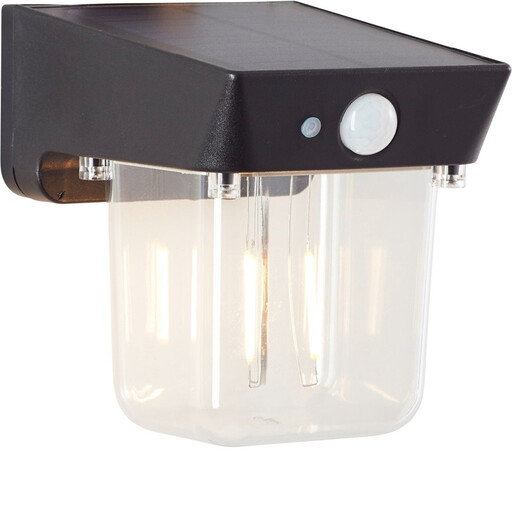
Why it suits this profile: This compact wall light combines an integrated LED, solar panel and motion sensor. It’s ideal for an entrance, balcony or sheltered garden wall where fixed wiring isn’t available.
The specifications list 180 lm, 2 W, IP44 and an integrated battery. This makes it clearer that the model is designed for focused, sheltered outdoor lighting rather than a large area.
Solar power, motion sensor, warm white light at 2700 K and a compact height of 11.5 cm.

Why it suits this profile: This model is designed to provide broad lighting for a driveway, garage, patio or garden, and has three adjustable light heads.
The product information lists 3000 lm, a 180° detection angle, three modes and IP65. You can therefore choose based on coverage and protection, rather than relying on advertising alone.
302 LEDs, three light heads, 1800 mAh battery, solar panel and IP65 rating.
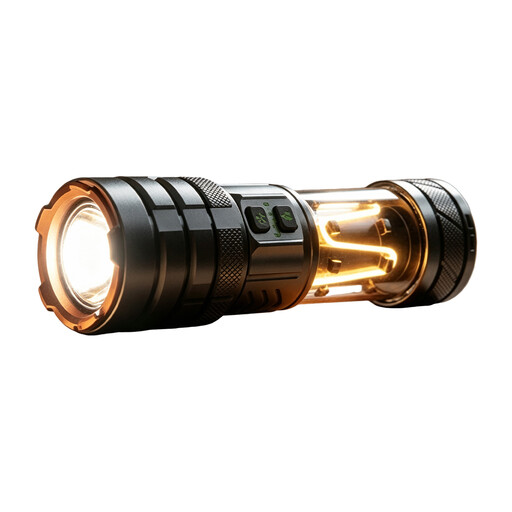
Why it suits this profile: This rechargeable torch is designed for camping, walking, household use and the workshop. Its combination of spotlight and lantern modes makes it versatile.
The stated 3000 mAh battery, USB-C connection and telescopic zoom make the power supply and light range easy to check.
Aluminium casing, USB-C charging, 3000 mAh battery, adjustable spotlight and warm white lantern light.
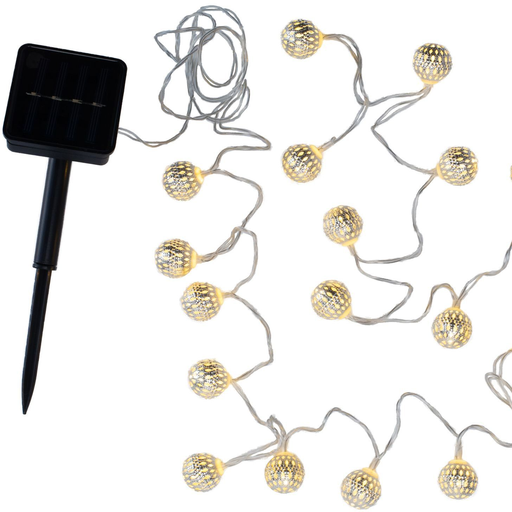
Why it suits this profile: These LED string lights are designed to decorate a patio, fence, balcony or garden path without needing a mains connection.
The 5 m length, 20 lights and four lighting modes give you a clear idea of the coverage and ambience in advance.
Solar power, 20 globe-shaped LEDs, automatic operation and installation with a ground stake or attachment to a fence.
Position a solar panel where it will receive as much direct sunlight as possible. Keep the sensor clear of branches and, after installation, check that the light doesn’t shine into anyone’s eyes. An outdoor wall light needs a sturdy surface that’s suitable for mounting.
A GU10 wall light supplied without a bulb needs extra attention to the fitting, maximum wattage and IP rating. The supplied product information for the Aigostar B-02 lists both IP65 in the product name and IP44 in the description. So always check the latest product specifications before installing this model in a fully exposed area.
For camping lights and work lights, charge the batteries in advance, keep them dry and don’t look directly into the beam. For a fixed electrical installation, switching off the power isn’t enough if you don’t know how to make the connection. Ask a qualified installer to do the work.
We’ve put together a complete, up-to-date list of products that meet these strict selection criteria and the relevant European safety requirements.
Calculate energy use using the wattage and how long the light is on. A 10 W light left on for five hours uses 0.05 kWh. Multiply this by your energy rate. Solar outdoor lighting doesn’t use mains electricity while it’s on, but you should still factor in the purchase price and battery life.
Lifespan varies depending on the model, heat dissipation, battery and conditions of use. Check the stated operating hours and see whether the LED is integrated. With an integrated light source, you usually can’t replace just the LED. With GU10 lighting, you can generally choose and replace the bulb separately, as long as you stay within the stated limits.
It depends on where it’s installed. IP44 protects against splashing water, but not direct jets of water or immersion. Ideally, use IP44 under a covered area or on a sheltered wall. For an exposed location, a product with a suitably higher IP rating, such as IP65, is generally a better choice.
