
Vandaag of morgen in huis

Kwaliteit gegarandeerd

Welkomstaanbiedingen ontgrendelen: GRATIS bezorging | Tot 80% korting | Gratis 30 dagen JoyPlus-proefperiode
Download de app
A new built-in oven can seem like an easy choice on paper. Many models have a black glass front, fan oven, grill and a capacity of around 70 litres. But small differences in dimensions, cleaning and controls can become noticeable after you buy. Especially when renovating a kitchen or replacing an old appliance, you’ll want to make sure the oven fits the housing and doesn’t come with features you’ll hardly use.
As a Joybuy Product Recommendation Officer, I focus on the practical details in product information. When comparing an electric oven, look out for these three common pitfalls.
An oven with a capacity of 70 or 71 litres might seem appealing for a family, but its external dimensions and the housing dimensions determine whether it will actually fit. So don’t just check the capacity. Also look at:
A standard 60 cm oven often has a front width of around 59.4 cm. For many models, the housing width is around 56 to 56.8 cm. Measure the existing housing at several points; older kitchen units aren’t always perfectly straight.
Not every oven with a self-cleaning function works in the same way.
A pyrolytic oven can be useful if you regularly roast and grill, but check its electricity consumption, ventilation requirements and which accessories are suitable for pyrolysis beforehand. Treat claims about cleaning results as information supplied by the brand, not as a guarantee that manual cleaning will never be needed.
A multifunction oven may offer fan cooking, top and bottom heat, a grill, a pizza setting, steam or automatic programmes. These are useful if you’ll actually use them. For simple baking, an oven with five clear programmes may be more practical than one with a complicated menu.
Also consider the difference between an oven with fan cooking and one with only top and bottom heat. Fan cooking circulates hot air using a fan, which can be useful when baking on several shelves. An oven with a grill is suitable for browning and crisping, but needs extra attention as the top can brown quickly.
For a household with several people, a 70-litre oven is handy for casseroles, multiple baking trays or larger joints. Models with a capacity of 66 to 72 litres fit many standard built-in kitchens.
A mini oven or freestanding oven with a capacity of 30 to 45 litres is worth considering for a smaller kitchen, student room or temporary home. Place it on a stable, heat-resistant worktop, not in a standard built-in housing unless you’ve checked the ventilation requirements.
Compare the energy rating alongside the consumption per cycle. A label alone doesn’t tell you how much electricity the oven will use in your circumstances. For example, the available product information lists the Siemens iQ500 HB579GBR3 at 0.94 kWh per cycle using conventional cooking and 0.69 kWh using fan cooking. The AEG OU5PB40ZSM lists 0.93 kWh for conventional cooking and 0.52 kWh using the fan.
You can also use an energy-efficient oven more efficiently by avoiding unnecessarily long preheating, keeping the door closed while cooking and preparing several dishes at once when the recipe allows. Always check the energy label and technical data sheet for the specific model.
A dial is straightforward and familiar. A display or touchscreen can make extra programmes and timers easier to manage. Also check whether the model has a child lock, automatic shut-off, an interior light and a suitable electrical connection.
A built-in oven with a rated power of, for example, 3,000 to 3,600 watts must be connected in line with the installation instructions. If you’re unsure, have a qualified installer take care of the electrical connection and installation. Leave enough ventilation space around a freestanding oven, as stated in the manual.
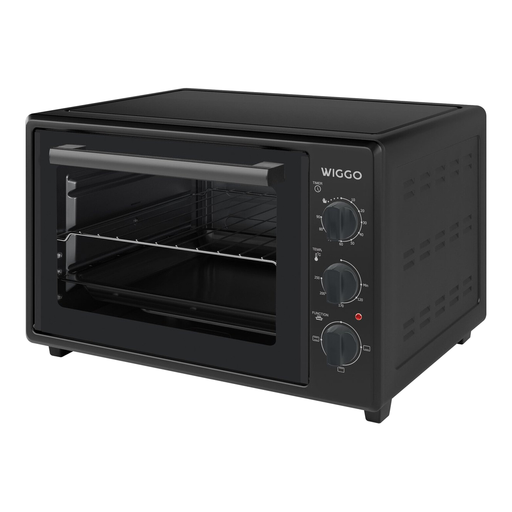
Why it suits this profile: This freestanding mini oven has a capacity of 35 litres, a 90-minute mechanical timer and three heating functions. That keeps the controls simple for everyday use.
The product information clearly lists a 35-litre capacity, 1,800 watts, four shelf positions and a maximum temperature of 250 °C. The limited number of functions makes it easier to compare.
35 litres, interior light, double-glazed door, and a baking tray and wire shelf included.
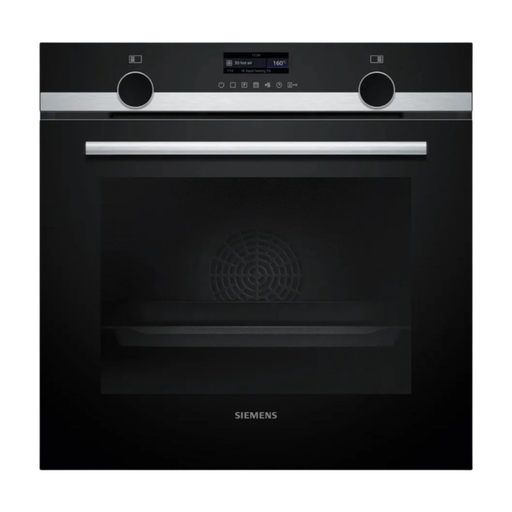
Why it suits this profile: This built-in model combines a 71-litre capacity with fan cooking, a grill, rapid preheating and a TFT display with a dial.
The specifications list the housing dimensions and energy consumption separately. They also clearly state that there’s no steam or microwave function.
71 litres, A+ energy rating, fan cooking, grill, hydrolysis and pyrolysis according to the product information.
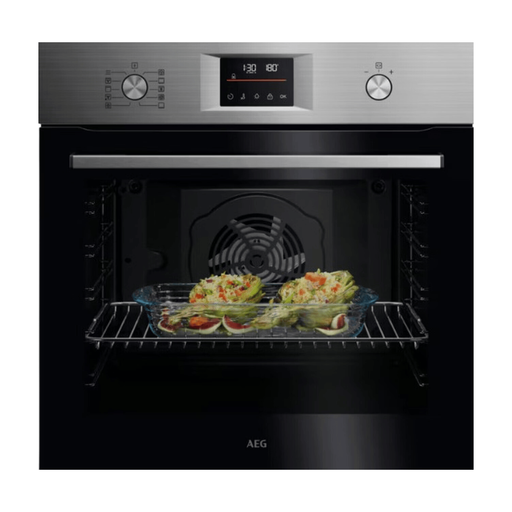
Why it suits this profile: The listed 45 cooking programmes, pyrolytic cleaning and maximum temperature of 300 °C make it a good match for those who bake, roast and grill frequently.
The technical data sheet lists the capacity, energy information and cooking programmes separately. Be sure to check the stated housing dimensions carefully before installation.
72 litres, A++ energy rating, pyrolytic cleaning and 0.52 kWh using the fan, according to the product information.
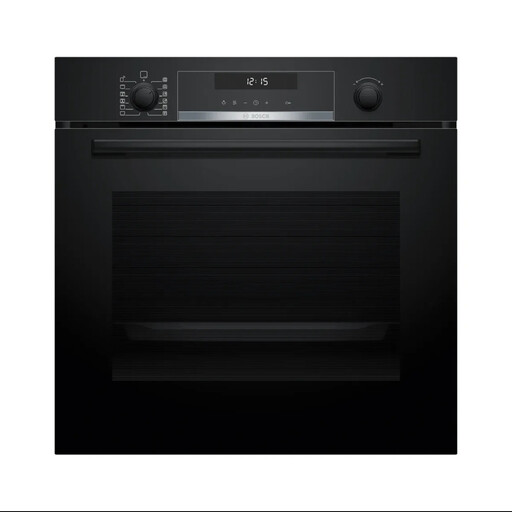
Why it suits this profile: The oven has a 71-litre capacity, 3D fan cooking, an Air Fry function according to the product description, and automatic programmes.
The product sheet lists separate functions for fan cooking, grilling, defrosting and pyrolytic cleaning. This lets you compare the features themselves rather than relying on marketing names.
A+, 71 litres, temperature range of 30–275 °C, telescopic rails and pyrolytic cleaning according to the product information.
We’ve put together a full, up-to-date list of products that meet these strict selection criteria and current European safety requirements.
No. The front may be around 60 cm wide, but the required housing width and height vary by model. Measure the housing and compare it with the official installation specifications. Also check the depth and ventilation opening.
Its lifespan depends on how it’s used, maintained and installed, as well as on its components. Regular cleaning, closing the door gently and avoiding unnecessary overloading can help reduce wear. Keep your proof of purchase and installation details for any warranty or servicing needs.
That depends on the power rating, heating function, temperature and length of use. The consumption per cycle shown on the energy label gives you a point of comparison. According to the product specifications, some models may use less energy for fan cooking than for conventional heat, but actual consumption varies by programme and what you’re cooking.
