
Vandaag of morgen in huis

Kwaliteit gegarandeerd

Welkomstaanbiedingen ontgrendelen: GRATIS bezorging | Tot 80% korting | Gratis 30 dagen JoyPlus-proefperiode
Download de app
A built-in oven needs to do more than simply look good in your kitchen. The housing dimensions, energy consumption, capacity and cleaning method all determine whether you’ll enjoy using it for years to come. Marketing terms such as “multifunctional”, “self-cleaning” and “air fry” sound appealing, but without the technical details, they don’t tell you enough.
A standard 60 cm built-in oven is usually around 59.4 to 59.6 cm wide externally. However, the required housing is narrower. Always check:
A model with a different height, such as a compact oven of approximately 45 cm, will not necessarily fit a standard housing. For example, the Samsung NQ50T8939BK has a product height of 45,60 cm and a capacity of 50 litres. This makes it suitable for a lower housing, but not automatically for the space intended for a traditional oven.
A multifunction oven may offer settings for fan cooking, conventional heat, grilling, pizza or air frying. That doesn’t mean you can fit several large dishes inside at once. Pay particular attention to the capacity:
A fan oven distributes heat using a fan. For cooking on multiple levels, the design of the air circulation system is also important. Check how many shelf positions there are and which accessories are included.
There is a clear difference between:
An oven with steam cleaning generally uses less intense heat than pyrolysis, but it is mainly intended for light soiling. For stubborn, baked-on residue, manual cleaning is still required. Also check whether baking trays and telescopic rails need to be removed from the oven during a pyrolysis programme.
Measure the existing housing in three places. Older kitchen units may be crooked or differ from the nominal dimensions. Most models in this selection require a housing of approximately 59.5 cm high, 56.8 cm wide and 55 cm deep.
Pay attention to the connection rating. Models such as the Bosch HBA534BB3 and Bosch HBA514BB3 have a stated power rating of 3400 watts. The Samsung NQ50T8939BK is listed with a power rating of 2500 watts. An appliance with a fixed connection, as indicated for the Samsung, must be installed in accordance with the instructions and local regulations. If in doubt, ask a qualified installer to check the connection.
A built-in electric oven with a capacity of 66 to 72 litres generally offers more room for family meals. Also check the maximum temperature. In this selection, it ranges from 250 °C for the Wiggo WO-BFA610 to 300 °C for the AEG OU5PB40SM.
An oven with a grill is useful for gratinating and browning. An oven with an air-fry function uses a perforated tray and circulating hot air; the result depends on the quantity, type of food and cooking settings. Treat the function as an additional cooking option rather than a replacement for every deep-fat fryer.
The product information gives several models an energy rating of A or A+. European energy labels may vary by product type and measurement method. When buying, therefore, check the official energy label and the consumption per cycle in conventional and fan-assisted modes.
A lower consumption figure per cycle can be beneficial, but actual consumption depends on preheating, temperature, programme and cooking time. A smaller oven can be practical for small portions, while a larger oven may be more efficient when you prepare several dishes at the same time.
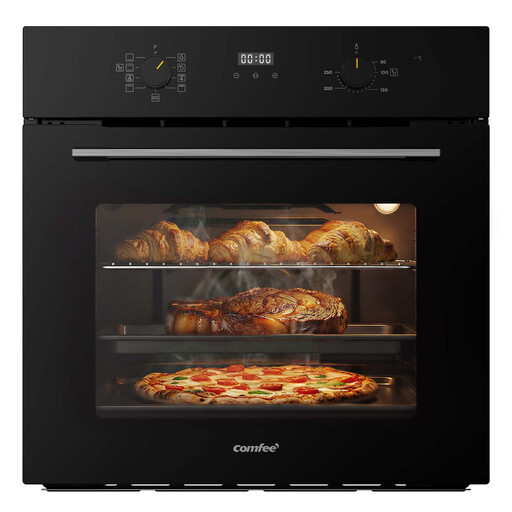
Why it suits this profile: A straightforward choice for anyone looking for a spacious black built-in oven with basic functions, without immediately opting for advanced programmes.
The product information lists 10 functions, fan cooking, a grill, pizza setting and AquaClean steam cleaning. However, check the exact housing dimensions and energy label beforehand.
70-litre capacity, LED display with timer, ECO mode and energy rating A according to the supplied product information.
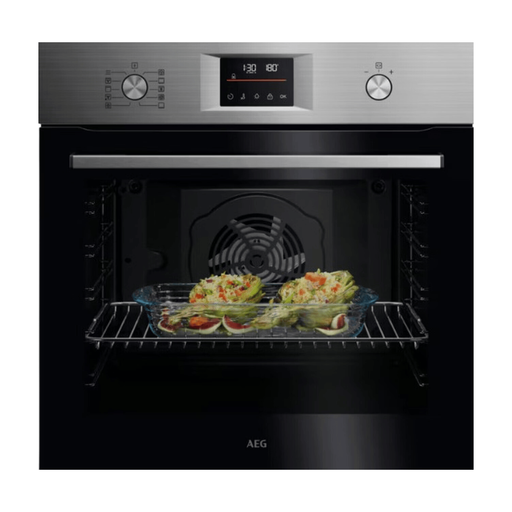
Why it suits this profile: Designed for households that want a wide range of programmes and place a high value on a larger oven capacity.
According to the specifications, the oven uses pyrolytic self-cleaning. Allow for a required housing of approximately 59 cm high, 56 cm wide and 55 cm deep.
72-litre capacity, 45 cooking programmes, maximum temperature of 300 °C and stated energy rating A++.
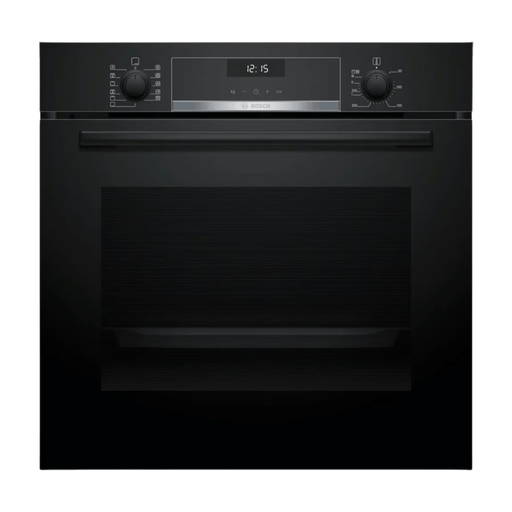
Why it suits this profile: An option for anyone who bakes regularly, uses multiple levels and wants to use an air-fry tray with the oven.
The specifications list 71 litres, 3D fan cooking and eight heating systems. Cleaning consists of EcoClean and a cleaning programme; this is different from pyrolysis.
Air-fry function, 71-litre capacity, temperatures up to 275 °C, telescopic rails and energy rating A+ according to the product listing.
We’ve put together a complete, up-to-date list of products that fully meet these strict selection criteria and the applicable European safety regulations.
A Samsung built-in oven may be worth considering if digital controls, Wi-Fi or a dual cooking compartment are important to you. According to the product information, the Samsung NV7B4540VAS has a capacity of 76 litres, Dual Cook Flex and SmartThings support. For smart features, it’s worth checking which app, network connection and settings are actually required.
A Bosch built-in oven in this selection often focuses on 3D fan cooking, automatic programmes and various cleaning systems. Compare each model to see whether it uses hydrolysis, EcoClean or pyrolysis. An AEG built-in oven may appeal to users looking for a wide range of programmes and a high temperature setting. Always check the official product specifications, included accessories and dimensions before placing your order.
No. “60 cm” usually refers to the external width of the appliance or the kitchen category. The exact housing width, height and depth can vary between models. Measure the housing and compare it with the installation details in the manual.
Its lifespan depends on how often it is used, maintenance, ventilation and correct installation. Cleaning it regularly, avoiding putting heavy pressure on the door and keeping the ventilation openings clear will help limit unnecessary wear. According to the supplied product information, the statutory warranty is at least two years; any additional manufacturer’s warranty varies by brand and model.
This depends on the programme, temperature, heating time and number of hours of use. Compare the consumption per cycle on the energy label. An energy-efficient oven with a fan-assisted setting may use less electricity for certain dishes, but the benefit mainly comes from using it appropriately rather than from the energy rating alone.
