
Vandaag of morgen in huis

Kwaliteit gegarandeerd

Welkomstaanbiedingen ontgrendelen: GRATIS bezorging | Tot 80% korting | Gratis 30 dagen JoyPlus-proefperiode
Download de app
A new built-in oven might seem like a quick choice on paper. Yet many purchases go wrong because of unclear dimensions, features that barely get used, or a cleaning system that doesn’t fit your daily cooking routine. An electric built-in oven needs to do more than just bake well; it must fit the housing, be safely connected, and remain practical to maintain.
In this buying guide, the Joybuy Product Recommendation Officer covers the key points to check and a few models for different user profiles.
A 60 cm oven is usually about 59.4 cm wide, but the required housing size can vary from model to model. Always check the housing width, housing height and housing depth in the technical specifications. For many standard models, the housing width is around 56 to 57 cm and the housing height around 59.5 cm. A different size can cause installation problems, especially during a kitchen renovation or when replacing an older appliance.
A multifunction oven may offer fan-assisted heat, top and bottom heat, grill, defrost, pizza or air-fry functions. That doesn’t mean every feature is necessary. If you mostly bake casseroles and bread, you’re probably better off with a reliable fan oven than with dozens of automatic programmes.
Also pay attention to how brands describe their features. According to Bosch’s product information, 3D Hot Air distributes heat across multiple levels. That is a manufacturer’s product specification, not a guarantee that every dish will give the same result in all conditions.
A pyrolytic oven heats the interior to a high temperature to loosen food residue. After that, you still need to remove the cooled residue and check the accessories according to the manual. Hydrolysis or steam cleaning softens light soiling, but it generally doesn’t replace manual cleaning for baked-on grease.
So check which system is actually offered: pyrolysis, catalytic cleaning, hydrolysis or just a smooth interior surface.
Measure your existing housing before ordering a model. Pay attention to:
A 71-litre oven is suitable for families and larger baking dishes. Models from 66 to 72 litres often offer a practical balance between space and standard built-in dimensions. A 76-litre oven, like the Samsung NV7B4540VAK/U1, can be appealing for large meals, but check the stated housing dimensions extra carefully.
An electric built-in oven works with top and bottom heat, fan-assisted heat or a combination of these. An oven with a grill is handy for gratins, roasted vegetables and browning dishes. For baking on multiple trays at once, it’s worth looking at a fan function and the number of available shelf heights.
A multifunction oven with lots of programmes is especially useful if you regularly prepare different types of food. Also check the maximum temperature. In the supplied specifications, various Bosch and AEG models reach up to 275 or 300 °C, while other models list a lower maximum.
The energy class gives a standardised indication of consumption, but your actual costs depend on usage time, temperature and preheating. An energy-efficient oven with class A or A+ can be worthwhile if you use it frequently. Where possible, also look at the consumption per cycle.
Check the power rating before having it installed. Different models in this selection list approximately 2,500 to 3,600 watts. Have the fixed connection installed in accordance with the installation manual and current regulations. If in doubt, it’s wise to have it checked by a qualified installer.

Why this fits the profile: This oven combines 10 functions, fan-assisted heat, grill and a pizza function with an LED display and timer. That makes it suitable for daily cooking without complicated operation.
The specifications clearly state a capacity of 70 litres, a width of 60 cm and AquaClean with water. So it’s obvious what the cleaning function does and doesn’t do.
Energy class A, fan-assisted heat function, grill, pizza function and a stated power of 3 kW.
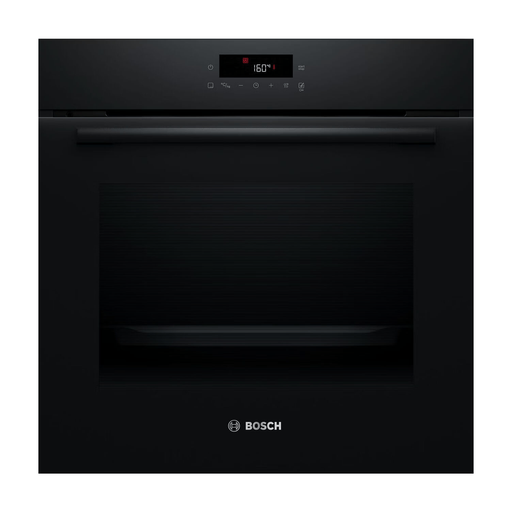
Why this fits the profile: This model offers a capacity of 71 litres, 10 automatic programmes and pyrolytic cleaning for users who cook often and want less manual maintenance.
The product information mentions both pyrolysis and hydrolysis. This means you can check in advance which cleaning function you’ll use and what steps are still needed afterwards.
Energy class A+, 3D Hot Air according to Bosch, touch control and a stated housing depth of 55 cm.
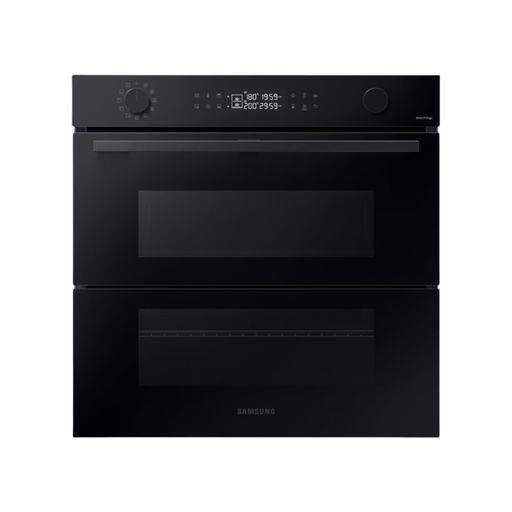
Why this fits the profile: The 76 litre capacity and Dual Cook Flex are interesting for families who want to combine small and large preparations flexibly.
The functions are linked to a concrete use: two zones for different dishes and a large capacity for multiple portions. Do check the housing size of 56 cm wide and 59 cm high.
76-litre capacity, A+ according to the product data, pyrolytic and catalytic cleaning and Dual Cook Flex.
We’ve put together a full, up-to-date list of products that fully meet these strict selection criteria and current European safety regulations.
Have a built-in oven connected according to the supplied manual and check that the circuit and power rating are suitable. Keep ventilation openings clear and do not place flammable materials directly next to or above the appliance. The door, interior and steam outlet can become hot; use oven gloves and keep children at a safe distance.
With a Bosch built-in oven, Samsung built-in oven, AEG built-in oven or Siemens built-in oven, always check the exact model number. Features and dimensions vary within the same brand series. A brand name alone is therefore not enough for a proper comparison.
No. The external width may be similar, but the housing width, housing height or housing depth can differ. Measure your existing space and compare it with the official product specifications.
The lifespan depends on use, installation, maintenance and parts. Regular cleaning, good ventilation and careful use of the door help to limit wear. Keep your proof of purchase and manual for warranty or service queries.
That depends on the power, duration and chosen temperature. Look at the consumption per cycle on the energy label and use fan-assisted heat or an eco function where appropriate. Keeping preheating short and avoiding running the oven empty unnecessarily can help limit consumption.
